

Desert Rose Guide
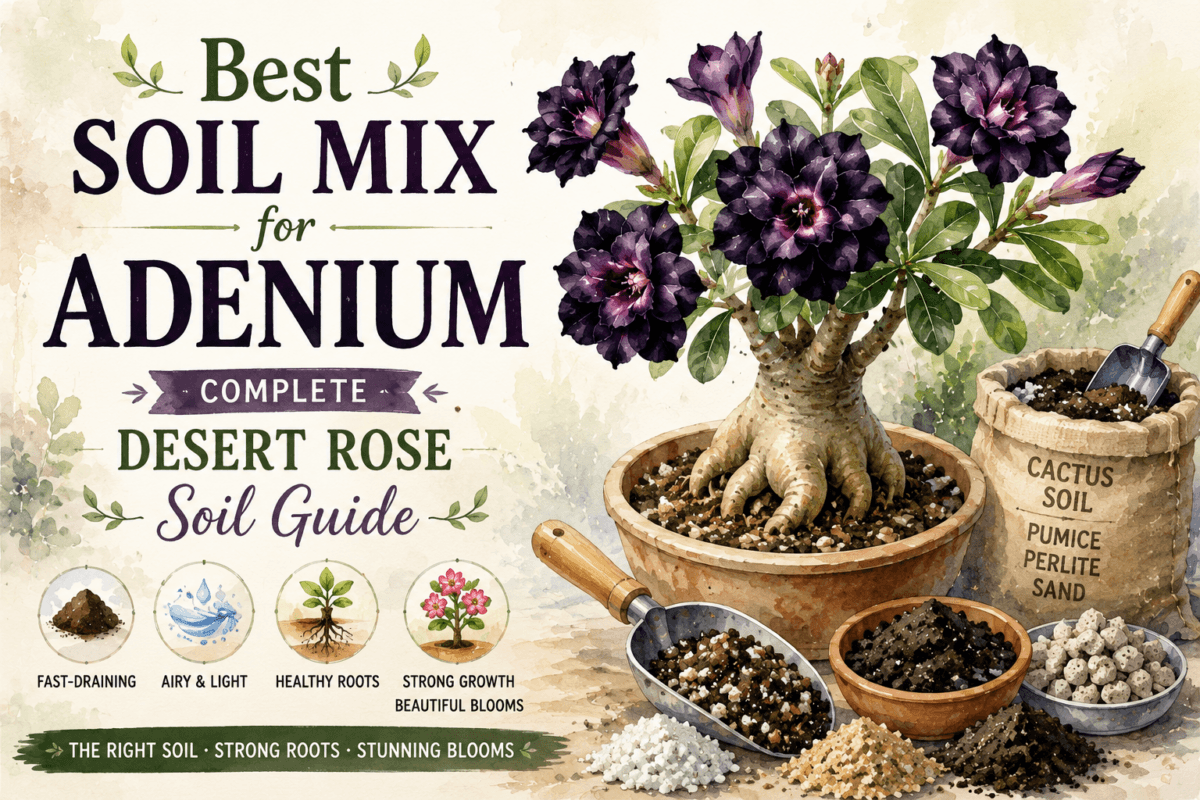
Best Soil Mix for Adenium: Complete Desert Rose Soil Guide
May
Why Soil Mix Is One of the Most Important Parts of Adenium Care
Adenium, commonly known as Desert Rose, is one of the most beautiful and collectible flowering succulents you can grow. It is loved for its thick caudex, sculptural trunk, glossy leaves, and stunning trumpet-shaped blooms. But if there is one part of Adenium care that can make or break your plant, it is the soil mix.
Many Desert Rose problems begin below the surface. Yellow leaves, soft caudex, root rot, poor growth, weak stems, and failure to bloom are often connected to one common issue:
The soil stays wet for too long.
Adenium is not a typical houseplant. It does not like heavy, moisture-retentive soil. It behaves more like a succulent and needs a growing medium that drains quickly, holds enough moisture for the roots to absorb, and allows plenty of oxygen around the root system.
The best soil mix for Adenium should be fast-draining, airy, lightweight, and slightly moisture-retentive without becoming soggy. Once you understand what Adenium roots need, choosing or making the right soil mix becomes much easier.
In this complete guide, you’ll learn what makes a good Adenium soil mix, which ingredients to use, what soil to avoid, how to adjust the mix for different climates, and how to tell if your Desert Rose is growing in the wrong soil.
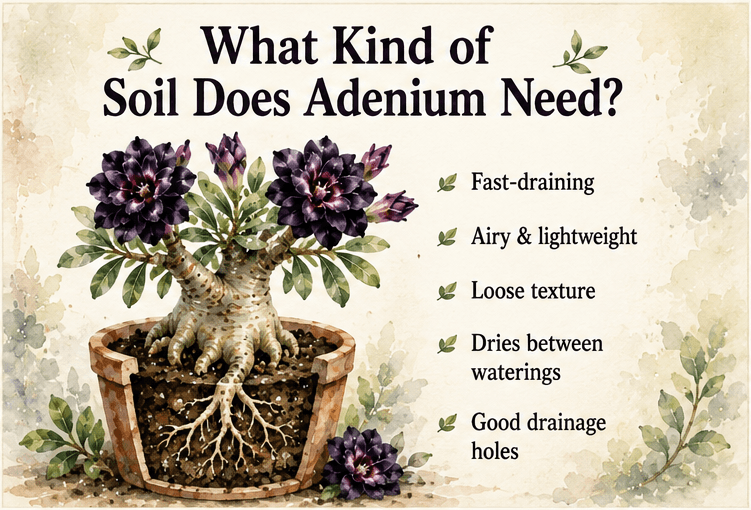
What Kind of Soil Does Adenium Need?
Adenium needs soil that drains quickly but does not become completely useless at holding moisture. This balance is important.
A good Adenium soil mix should allow water to move through the pot easily while still keeping a small amount of moisture available for the roots. After watering, the mix should become moist, then gradually dry out. It should never remain wet, muddy, or compacted for many days.
The ideal Adenium soil should be:
- Fast-draining
- Airy
- Lightweight
- Loose in texture
- Not compacted
- Suitable for succulent-style roots
- Able to dry between waterings
- Used in a pot with drainage holes
Adenium roots need both water and oxygen. If the soil is too dense, the roots cannot breathe properly. If the soil stays wet for too long, the roots may rot.
This is why regular garden soil or dense indoor potting soil is usually not the best choice for Desert Rose.
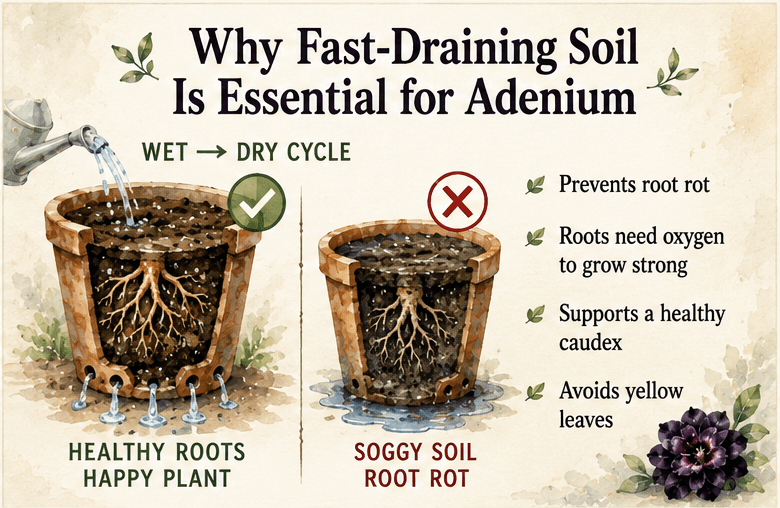
Why Fast-Draining Soil Is Essential for Adenium
Fast drainage is essential because Adenium naturally comes from warm, dry regions where water does not sit around the roots for long periods. The plant stores water in its caudex and roots, which allows it to survive dry conditions.
Because of this water-storage ability, Adenium is much more tolerant of short dry periods than constantly wet soil.
When the soil stays wet too long, several problems can happen:
- Roots lose oxygen
- Fungal growth increases
- Root rot develops
- The caudex becomes soft
- Leaves turn yellow
- Growth slows down
- The plant may collapse
For Adenium, root health is everything. A beautiful plant above the soil depends on healthy, firm roots below the soil.
Fast-draining soil helps create the wet-dry cycle Adenium prefers:
Water deeply → excess water drains out → soil dries gradually → roots breathe again.
This cycle is the foundation of healthy Desert Rose care.
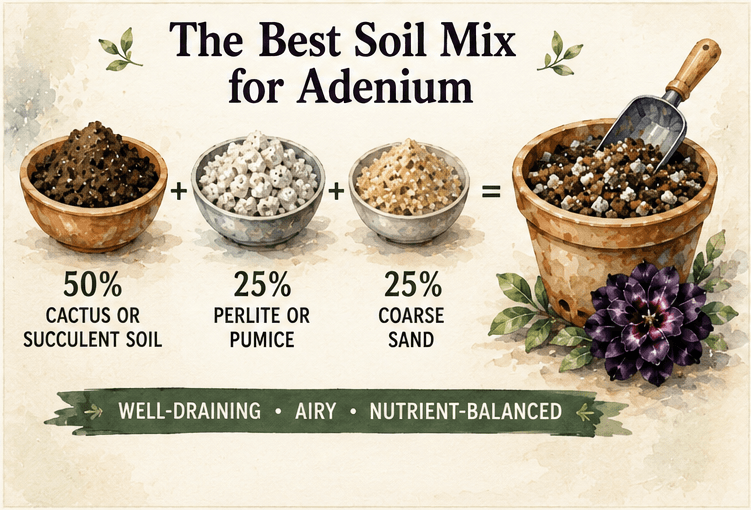
The Best Soil Mix for Adenium
A simple, beginner-friendly Adenium soil mix is:
- 50% cactus or succulent soil
- 25% perlite or pumice
- 25% coarse sand
This mix works well for many growers because it provides a balance of drainage, airflow, and light moisture retention.
The cactus or succulent soil provides some organic matter and nutrients. Perlite or pumice improves air space and drainage. Coarse sand helps create a gritty texture that prevents the mix from becoming too compact.
This is a good starting point for beginners because it is easy to make and works well in many growing conditions.
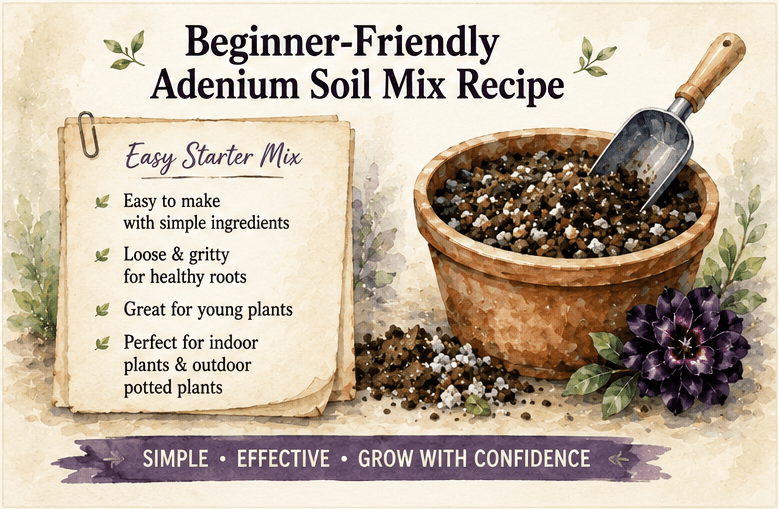
Beginner-Friendly Adenium Soil Mix Recipe
Simple Adenium Soil Mix
Use this formula if you are new to growing Desert Rose:
50% cactus or succulent mix
25% perlite or pumice
25% coarse sand
This mix is suitable for:
- Young Adenium plants
- Indoor Desert Rose plants
- Outdoor potted Adeniums
- Beginner growers
- General care conditions
The key is to make sure the soil feels loose and gritty, not dense or muddy. When you water it, water should pass through easily rather than sitting on the surface.
If your mix holds water for too long, increase the amount of perlite, pumice, or coarse sand.
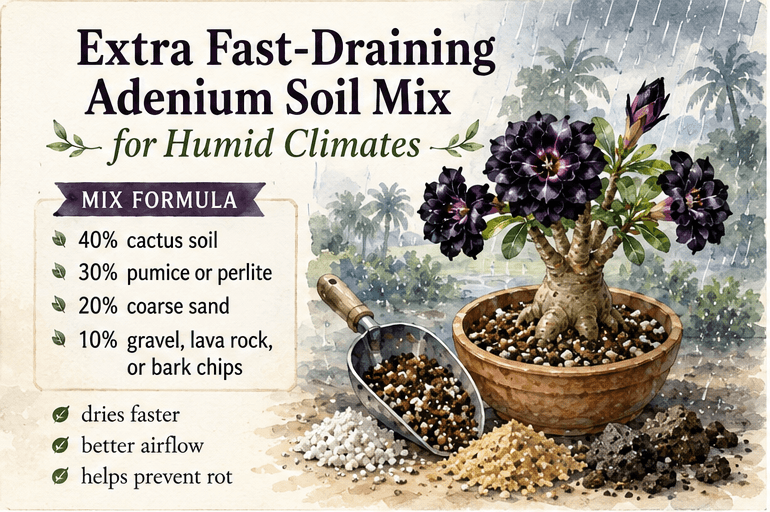
Extra Fast-Draining Adenium Soil Mix for Humid Climates
If you live in a humid or rainy climate, your Adenium soil must dry faster. High humidity slows evaporation, which increases the risk of root rot.
For humid climates, use a more mineral-heavy mix:
- 40% cactus or succulent soil
- 30% pumice or perlite
- 20% coarse sand
- 10% small gravel, lava rock, or bark chips
This mix has better airflow and dries faster than a standard potting mix.
It is especially useful if:
- Your area is humid
- Your plant grows outdoors
- You get frequent rain
- Soil stays wet for many days
- You use plastic or glazed ceramic pots
- You have had root rot problems before
In humid areas, drainage is not just helpful. It is essential.
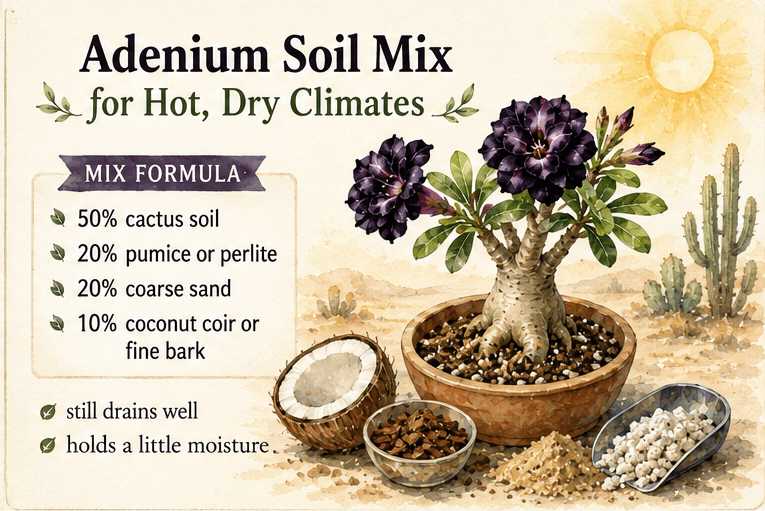
Adenium Soil Mix for Hot, Dry Climates
In hot and dry climates, soil can dry very quickly. While Adenium likes fast drainage, extremely fast drying can stress young plants or cause frequent dehydration.
For hot, dry climates, you can use a mix that drains well but holds slightly more moisture:
- 50% cactus or succulent soil
- 20% pumice or perlite
- 20% coarse sand
- 10% coconut coir or fine bark
This mix still drains well, but the small amount of coconut coir or bark helps retain a little moisture.
Use this type of mix if:
- Your climate is very hot
- Your plant is in terracotta
- Soil dries within one day
- You cannot water frequently
- Leaves wilt quickly after watering
The goal is still to avoid soggy soil. You are only adding a small amount of moisture retention, not turning the mix into regular houseplant soil.
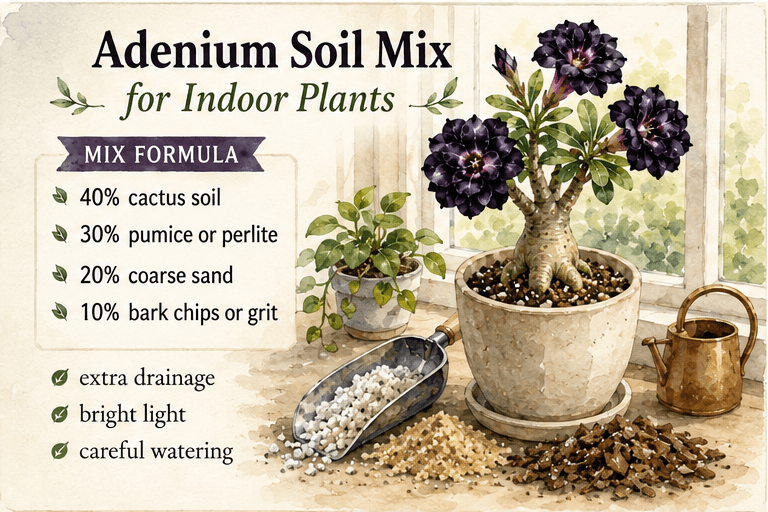
Adenium Soil Mix for Indoor Plants
Indoor Adenium plants usually need extra drainage because indoor conditions often have less sunlight, lower airflow, and slower evaporation.
A good indoor Adenium soil mix is:
- 40% cactus or succulent soil
- 30% pumice or perlite
- 20% coarse sand
- 10% small bark chips or grit
Indoor plants are more vulnerable to overwatering because the soil dries more slowly indoors. This is especially true if the plant is near a low-light window or grown in a glazed ceramic or plastic pot.
For indoor Adenium, always combine fast-draining soil with:
- Bright light
- Warm temperatures
- A pot with drainage holes
- Careful watering
- Good airflow
Even the best soil mix cannot save a plant that is watered too often in low light.
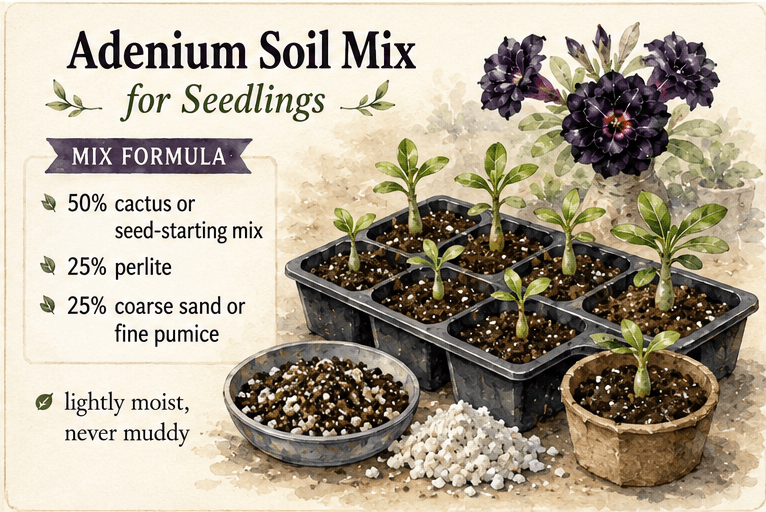
Adenium Soil Mix for Seedlings
Adenium seedlings need a slightly different balance than mature plants. Young seedlings have small roots and less stored water, so they should not dry out too aggressively in the earliest stage.
A good seedling mix should be light, airy, and evenly moist without becoming soggy.
A beginner-friendly seedling mix:
- 50% cactus or seed-starting mix
- 25% perlite
- 25% coarse sand or fine pumice
This mix gives seedlings enough moisture to establish roots while still preventing the soil from staying wet for too long.
For seedlings, the goal is:
Lightly moist, never muddy.
As seedlings grow larger and develop a thicker base, you can gradually move them into a faster-draining, more mature Adenium mix.
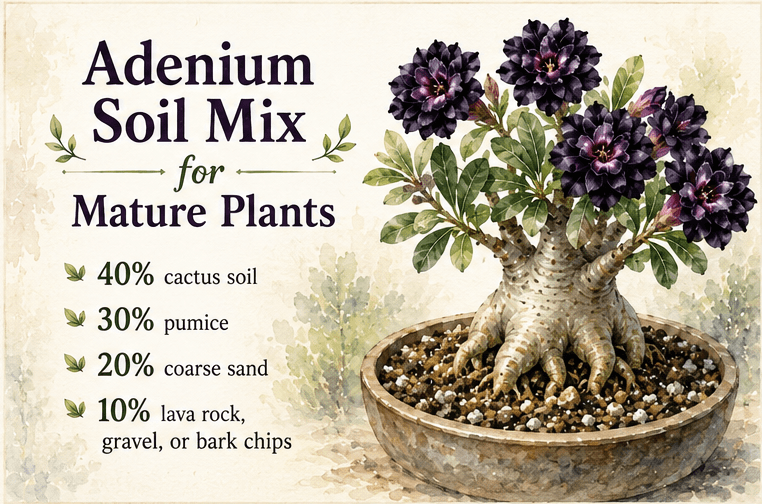
Adenium Soil Mix for Mature Plants
Mature Adenium plants can handle a grittier, faster-draining soil mix than seedlings. Their caudex stores more water, and they usually prefer stronger drying periods between waterings.
A good mature Adenium mix:
- 40% cactus or succulent soil
- 30% pumice
- 20% coarse sand
- 10% lava rock, gravel, or bark chips
This mix helps support strong roots, good airflow, and caudex health.
Mature Adeniums often do best when the soil dries fairly quickly after watering. This encourages a healthy root system and reduces the risk of rot.
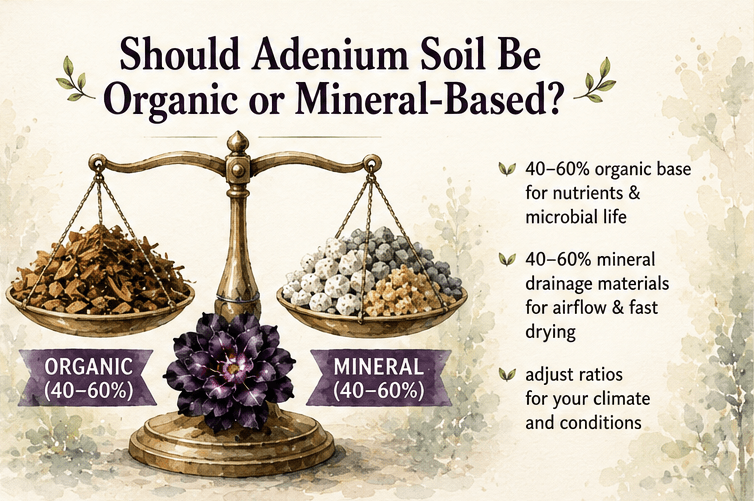
Should Adenium Soil Be Organic or Mineral-Based?
Adenium soil should usually be a balance of organic and mineral ingredients.
Organic ingredients, such as cactus soil, bark, or coconut coir, help retain some moisture and nutrients. Mineral ingredients, such as pumice, perlite, sand, and lava rock, improve drainage and airflow.
For most growers, a good balance is:
- 40–60% organic base
- 40–60% mineral drainage materials
In humid climates, use more mineral materials. In hot, dry climates, use slightly more organic material.
The right balance depends on how fast your soil dries after watering.
Best Soil Ingredients for Adenium
Understanding each soil ingredient helps you customize the mix for your climate and watering habits.
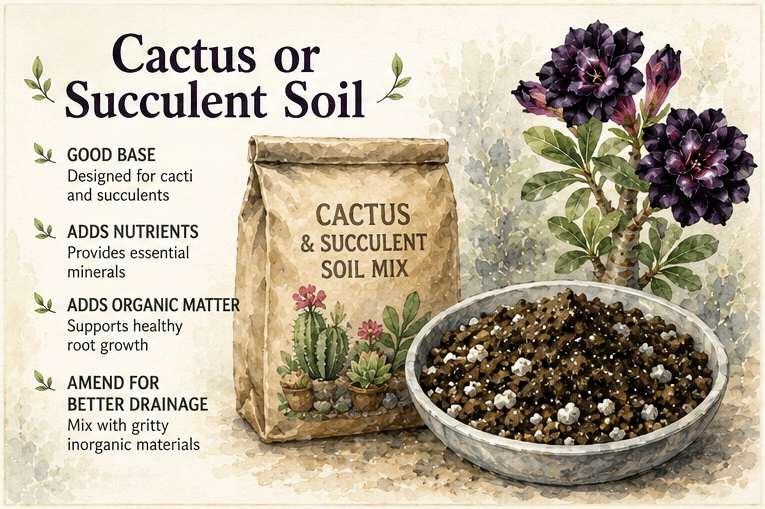
Cactus or Succulent Soil
Cactus or succulent soil is a common base for Adenium mixes. It usually drains better than regular potting soil and contains materials designed for drought-tolerant plants.
However, not all cactus mixes are equal. Some commercial cactus soils still hold too much moisture, especially indoors.
Use cactus soil as a base, but improve it with perlite, pumice, coarse sand, or grit.
Best use:
- Base ingredient
- Provides some nutrients
- Adds organic matter
- Works best when amended for better drainage
Avoid using cactus soil alone if it stays wet for too long.
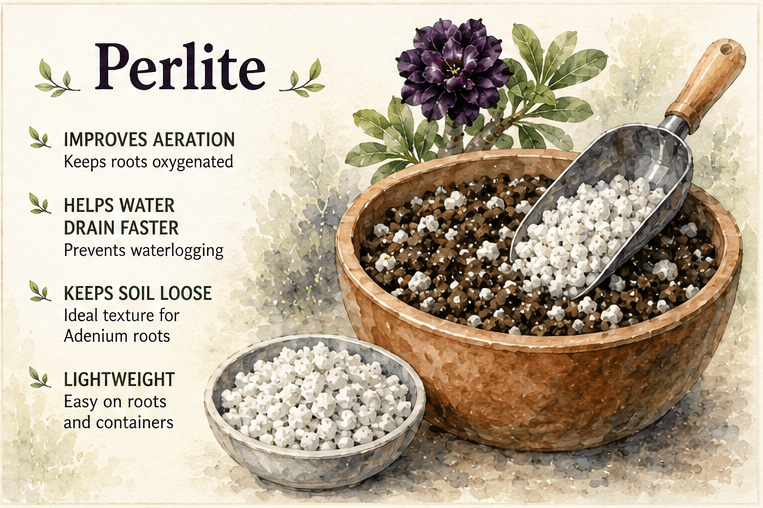
Perlite
Perlite is a lightweight volcanic material that improves drainage and airflow. It is easy to find and commonly used in potting mixes.
Benefits of perlite:
- Improves aeration
- Helps water drain faster
- Keeps soil from compacting
- Lightweight and affordable
- Good for seedlings and indoor plants
One downside is that perlite can float to the surface over time when watered heavily. Still, it is very useful for beginner soil mixes.
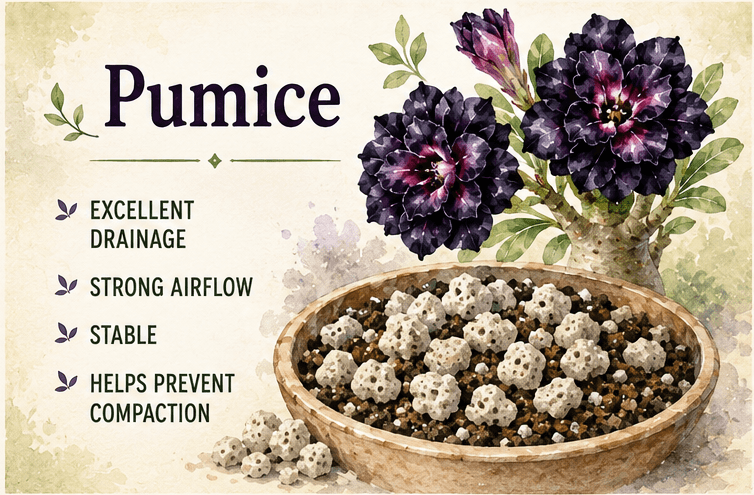
Pumice
Pumice is one of the best soil amendments for Adenium. It improves drainage and airflow while being heavier and more stable than perlite.
Benefits of pumice:
- Excellent drainage
- Strong airflow around roots
- Does not float as easily
- Helps prevent compaction
- Suitable for long-term pot culture
Pumice is often preferred by serious succulent and Adenium growers because it creates a stable, breathable root environment.
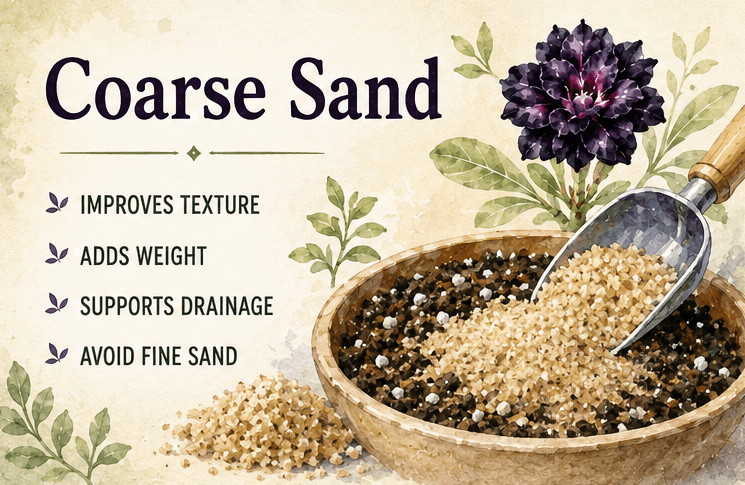
Coarse Sand
Coarse sand helps create a gritty, fast-draining mix. It is useful for improving soil texture and preventing compaction.
Important: use coarse sand, not fine beach sand or play sand.
Fine sand can compact and make drainage worse.
Benefits of coarse sand:
- Improves texture
- Adds weight and stability
- Helps water move through the mix
- Useful for succulent-style soil
If the sand feels powdery or very fine, avoid it.
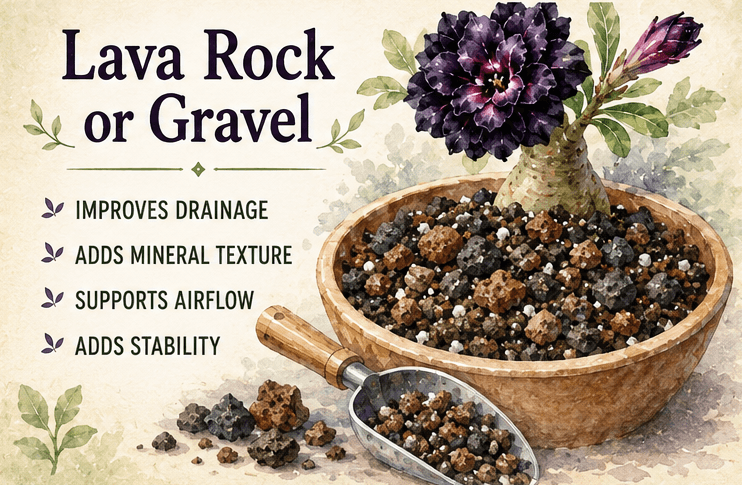
Lava Rock or Gravel
Lava rock, small gravel, or grit can be used to increase drainage and structure. These materials are especially helpful for mature Adenium plants and humid climates.
Benefits:
- Improves drainage
- Adds mineral texture
- Helps prevent soggy soil
- Supports airflow
- Adds weight for stability
Use small-sized particles rather than large rocks. Large rocks do not mix evenly and may create empty gaps instead of improving root conditions.
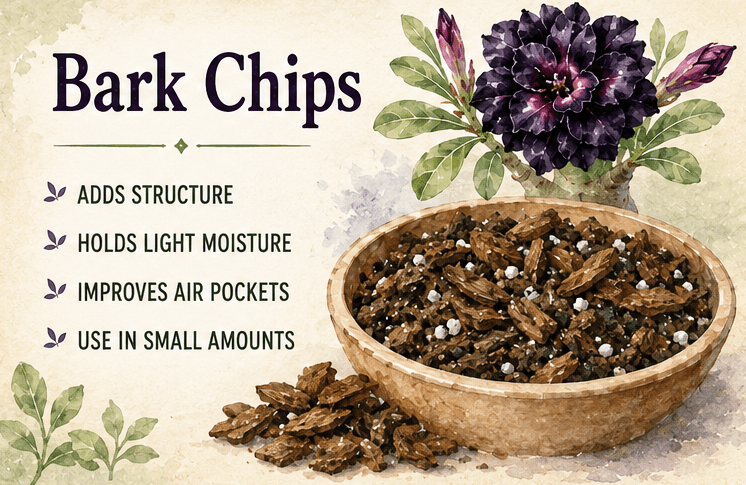
Bark Chips
Small bark chips can add structure and slight moisture retention while keeping the mix airy. They are useful in small amounts, especially for outdoor plants or hot climates.
Benefits:
- Adds structure
- Holds light moisture
- Improves air pockets
- Breaks down slowly
Do not use too much bark because excessive organic matter can hold moisture and break down over time.
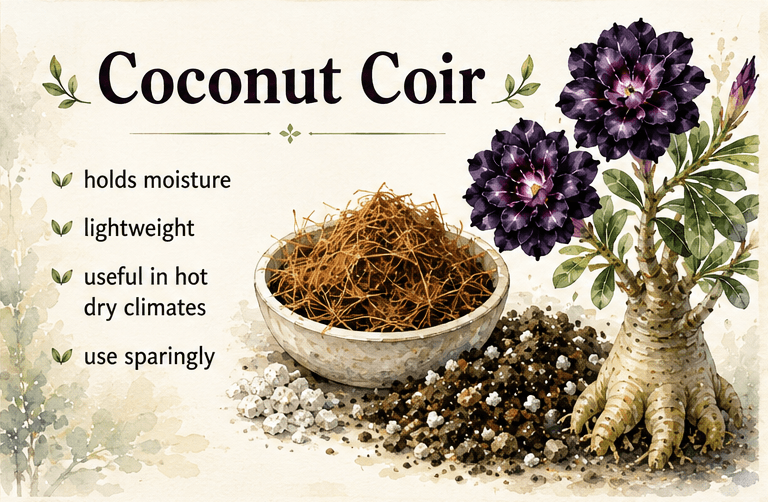
Coconut Coir
Coconut coir can hold moisture, so it should be used carefully. In small amounts, it can help prevent the mix from drying too quickly in hot climates.
Benefits:
- Holds moisture
- Lightweight
- Useful in hot, dry conditions
- Helps seedling mixes stay lightly moist
Use only a small amount for Adenium. Too much coir can keep the soil wet for too long.
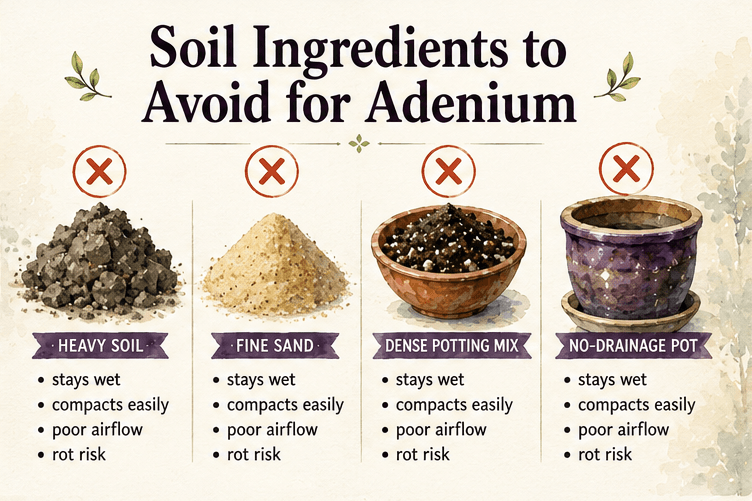
Soil Ingredients to Avoid for Adenium
Just as important as knowing what to use is knowing what to avoid.
Adenium should not be grown in soil that stays wet, compacts easily, or lacks airflow.
Avoid:
- Heavy garden soil
- Clay soil
- Dense indoor potting soil
- Fine sand
- Moisture-control potting mix
- Soil with poor drainage
- Soil that stays wet for many days
- Containers without drainage holes
These materials increase the risk of root rot, especially if combined with frequent watering.
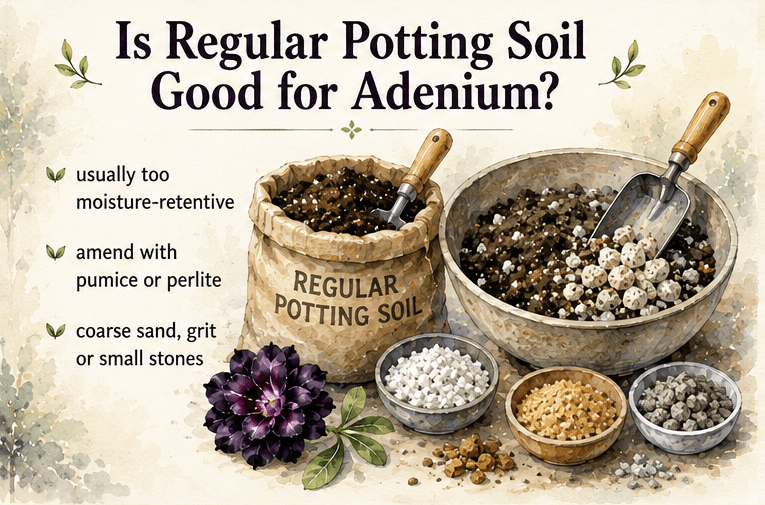
Is Regular Potting Soil Good for Adenium?
Regular potting soil is usually not ideal for Adenium by itself.
Most regular potting soils are designed for leafy houseplants that prefer more consistent moisture. Adenium does not want that kind of environment.
Regular potting soil often:
- Holds too much water
- Compacts over time
- Reduces airflow
- Dries too slowly indoors
- Increases rot risk
If you only have regular potting soil, you can amend it heavily with pumice, perlite, coarse sand, or grit.
A better formula would be:
- 30% regular potting soil
- 35% pumice or perlite
- 25% coarse sand
- 10% gravel or bark
This makes the mix much safer for Adenium.
Should Adenium Soil Be Organic or Mineral-Based?
Adenium soil should usually be a balance of organic and mineral ingredients.
Organic ingredients, such as cactus soil, bark, or coconut coir, help retain some moisture and nutrients. Mineral ingredients, such as pumice, perlite, sand, and lava rock, improve drainage and airflow.
For most growers, a good balance is:
- 40–60% organic base
- 40–60% mineral drainage materials
In humid climates, use more mineral materials. In hot, dry climates, use slightly more organic material.
The right balance depends on how fast your soil dries after watering.
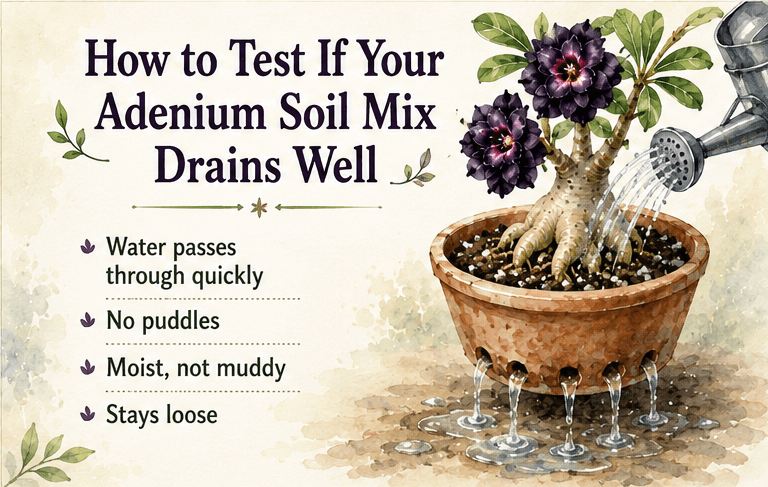
How to Test If Your Adenium Soil Mix Drains Well
You can test your soil mix before using it.
Place the mix in a pot with drainage holes and water it thoroughly.
A good Adenium mix should:
- Let water pass through quickly
- Not form puddles on top
- Feel moist but not muddy
- Stay loose after watering
- Begin drying within a reasonable time
- Not smell sour or swampy
If water sits on the surface or the mix turns dense and muddy, it needs more drainage material.
Add more pumice, perlite, coarse sand, or grit.
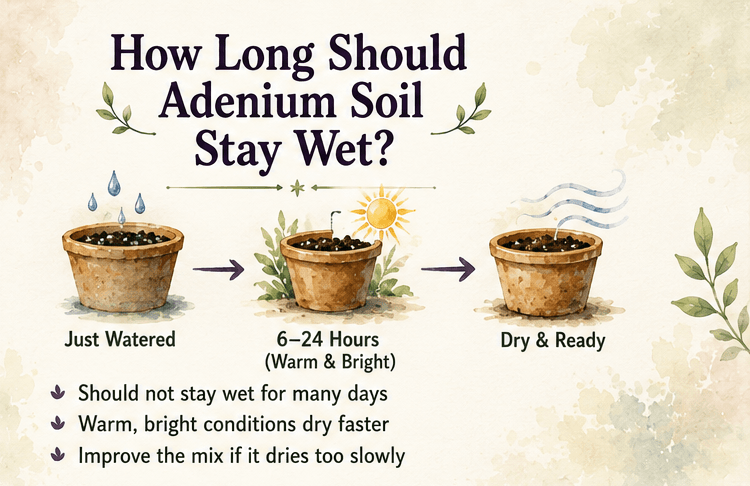
How Long Should Adenium Soil Stay Wet?
There is no exact number that works for every climate, but Adenium soil should not stay wet for many days.
In warm, bright conditions, the soil may dry within a few days. Indoors or in humid climates, it may take longer. The key is that it should gradually dry and not remain soggy.
If your soil stays wet for more than several days after watering, especially indoors, it may be too moisture-retentive.
Factors that affect drying speed include:
- Pot material
- Pot size
- Drainage holes
- Soil ingredients
- Temperature
- Sunlight
- Humidity
- Airflow
- Plant size
If the soil dries too slowly, improve the mix and check your pot choice.
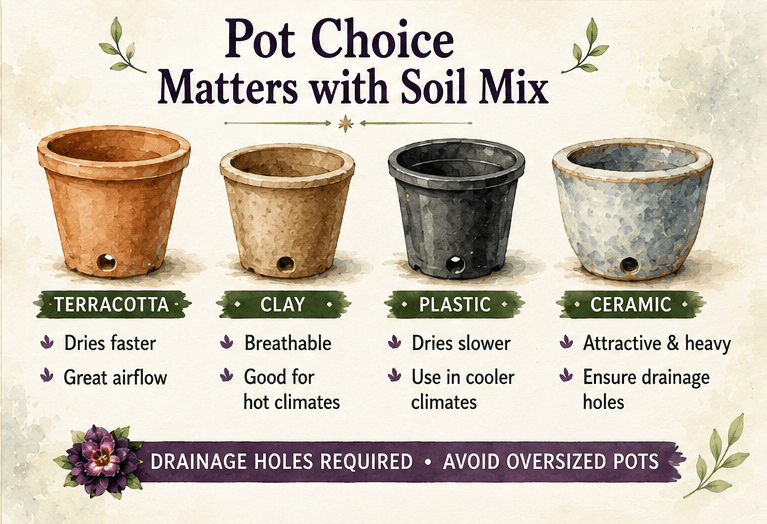
Pot Choice Matters with Soil Mix
Even the best soil mix can fail if the pot does not drain well.
Adenium should always be grown in a pot with drainage holes. Terracotta and clay pots are often excellent choices because they help soil dry faster.
Plastic and glazed ceramic pots can work, but they hold moisture longer. If using these pots, your soil mix should be extra fast-draining.
Avoid oversized pots. A pot that is too large holds too much soil, and too much soil holds too much water.
The best setup is:
- Fast-draining soil
- Pot with drainage holes
- Pot size only slightly larger than the root system
- Good light and airflow
Soil and pot choice must work together.
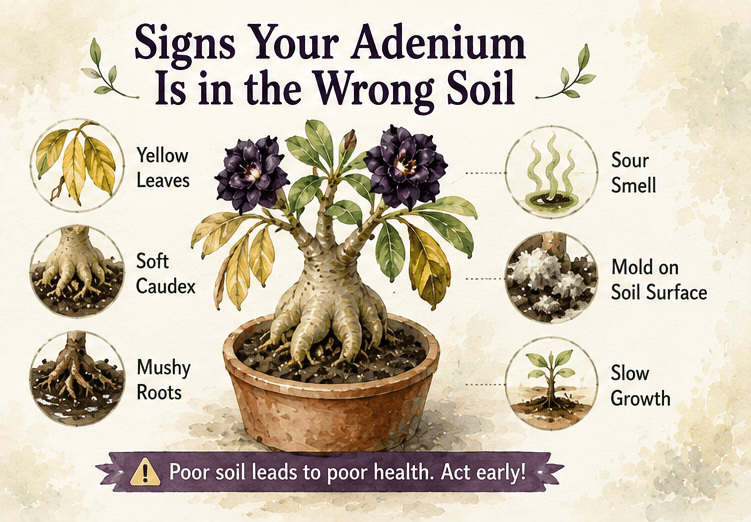
Signs Your Adenium Is in the Wrong Soil
Your Desert Rose may be growing in the wrong soil if you notice:
- Soil stays wet too long
- Yellow leaves
- Soft caudex
- Mushy roots
- Slow growth
- Leaf drop
- Foul smell from soil
- Mold on the soil surface
- Plant becomes unstable
- Repeated root rot problems
If these symptoms appear, check the soil before adding fertilizer or watering more. Many growers mistake soil problems for nutrient problems.
In many cases, repotting into a better-draining mix solves the issue.
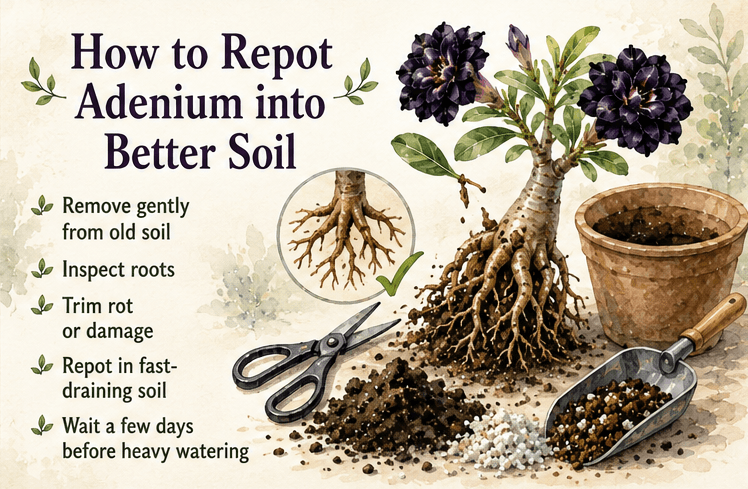
How to Repot Adenium into Better Soil
If your Adenium is in heavy or wet soil, repotting may be necessary.
Step 1: Remove the Plant Gently
Carefully remove the plant from its pot. Avoid pulling too hard on the trunk or branches.
Step 2: Inspect the Roots
Check for black, mushy, soft, or bad-smelling roots. Healthy roots should feel firm.
Step 3: Remove Old Wet Soil
Gently remove as much old soil as possible, especially if it is dense or soggy.
Step 4: Trim Rotten Roots
Use clean tools to remove any rotten roots. If roots were cut, allow the plant to dry briefly before repotting.
Step 5: Repot in Fast-Draining Soil
Place the plant in fresh Adenium soil mix and a pot with drainage holes.
Step 6: Wait Before Heavy Watering
If roots were disturbed or trimmed, wait a few days before watering heavily. This helps reduce the risk of rot.
Repotting into the right soil can dramatically improve Adenium health.
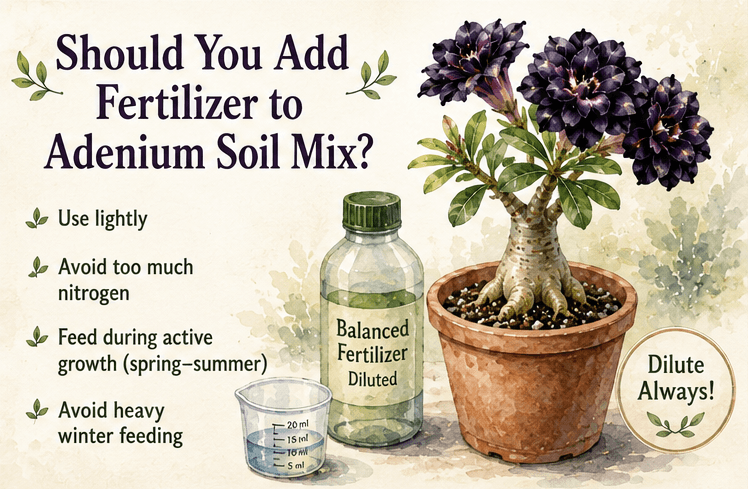
Should You Add Fertilizer to Adenium Soil Mix?
You can add fertilizer, but do not overdo it. Adenium does not need overly rich soil.
Too much fertilizer, especially too much nitrogen, can cause leafy growth with fewer flowers. It can also stress roots if the plant is young or recently repotted.
A safer approach is to use a light fertilizer routine during active growth rather than mixing too much fertilizer directly into the soil.
Good fertilizer options include:
- Diluted balanced fertilizer
- Cactus or succulent fertilizer
- Bloom-supporting fertilizer
- Slow-release fertilizer used carefully
Avoid fertilizing heavily during winter dormancy or when the plant is stressed.
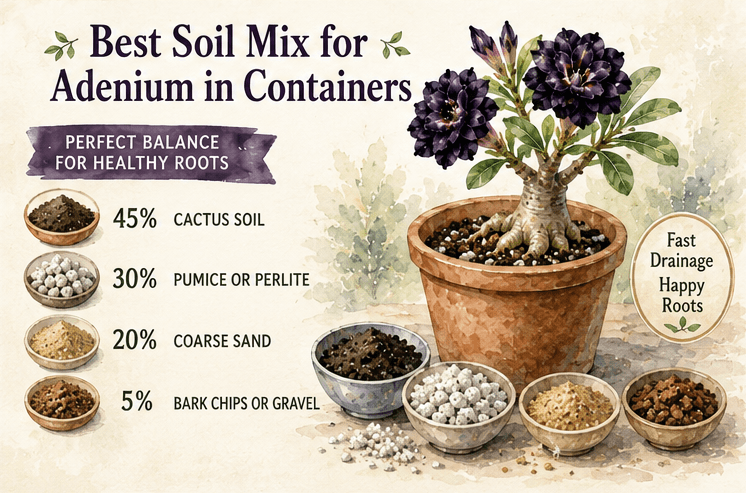
Best Soil Mix for Adenium in Containers
Most Adeniums are grown in containers, which makes soil drainage even more important.
Container-grown Adenium does not have unlimited ground space for roots to spread. If water stays trapped inside the pot, root problems can happen quickly.
For container Adenium, use:
- Fast-draining soil
- Pot with drainage holes
- Proper pot size
- Gritty soil texture
- Careful watering
A good container mix:
- 45% cactus/succulent soil
- 30% pumice or perlite
- 20% coarse sand
- 5% bark chips or gravel
This gives a stable mix suitable for long-term container growth.
Best Soil Mix for Adenium Bonsai Style
Adenium is often grown in a bonsai-like style because of its thick caudex and sculptural branches.
For bonsai-style Adenium, drainage and structure are especially important.
A good bonsai-style mix:
- 30% cactus or succulent soil
- 40% pumice
- 20% lava rock or grit
- 10% coarse sand
This mix is more mineral-based and helps prevent the root zone from staying wet.
Bonsai pots are often shallow, so the soil mix must allow water to move through quickly while still supporting the plant.
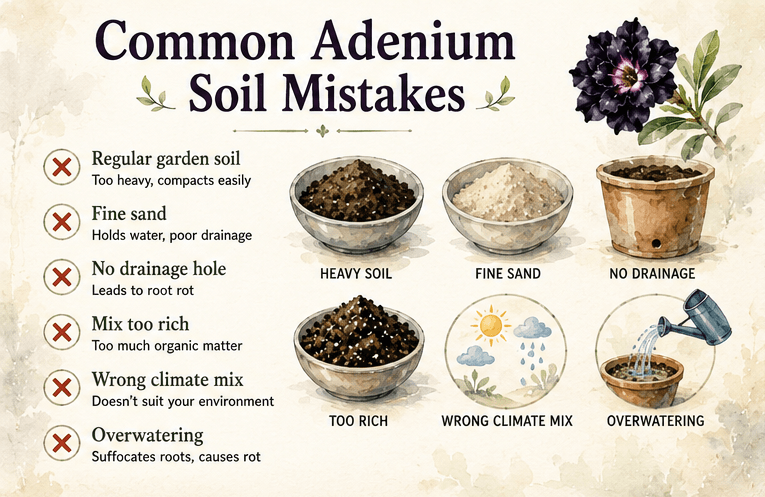
Common Adenium Soil Mistakes
Using Regular Garden Soil
Garden soil is usually too heavy and compact for potted Adenium.
Using Fine Sand
Fine sand can reduce airflow and make soil denser.
Using a Pot Without Drainage
Even the best soil mix will fail if water cannot escape.
Making the Mix Too Rich
Too much organic matter can hold too much moisture and increase rot risk.
Not Adjusting for Climate
A mix that works in a dry climate may stay too wet in a humid climate.
Overwatering Even with Good Soil
Fast-draining soil helps, but it does not mean you can water constantly.
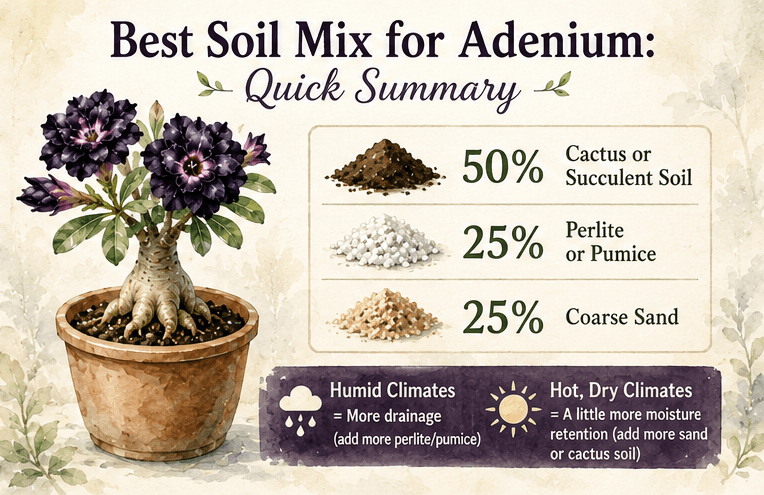
Best Soil Mix for Adenium: Quick Summary
For most beginners, the best Adenium soil mix is:
50% cactus or succulent soil
25% perlite or pumice
25% coarse sand
For humid climates, increase drainage materials.
For hot, dry climates, allow slightly more moisture retention.
For indoor plants, use a faster-draining mix because indoor soil dries more slowly.
For seedlings, keep the mix lightly moist but never soggy.
For mature plants, use a grittier, faster-draining mix.
The most important rule is simple:
Adenium soil should drain fast, stay airy, and dry between waterings.
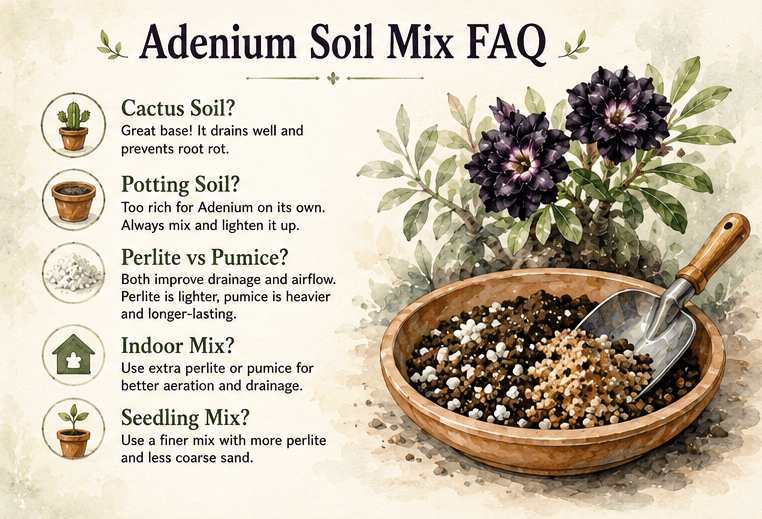
Adenium Soil Mix FAQ
What is the best soil mix for Adenium?
A good beginner mix is 50% cactus or succulent soil, 25% perlite or pumice, and 25% coarse sand. This provides drainage, airflow, and light moisture retention.
Can I use cactus soil for Adenium?
Yes, cactus soil can be used as a base, but it is often better to add perlite, pumice, or coarse sand to improve drainage.
Can Adenium grow in regular potting soil?
Regular potting soil is usually too moisture-retentive by itself. If you use it, amend it heavily with drainage materials such as pumice, perlite, coarse sand, or grit.
Does Adenium need sandy soil?
Adenium benefits from gritty, well-draining soil, but it should not be grown in fine sand. Use coarse sand as part of a balanced mix.
Is perlite or pumice better for Adenium?
Both work well. Pumice is heavier and more stable, while perlite is lighter and easier to find. Serious growers often prefer pumice, but perlite is fine for beginners.
How do I know if my Adenium soil is too wet?
If the soil stays wet for many days, smells sour, feels muddy, or causes yellow leaves and soft caudex, it may be too wet or poorly draining.
Should Adenium soil dry completely?
Mature Adenium plants prefer the soil to dry well between waterings. Seedlings should stay slightly more evenly moist, but never soggy.
What soil is best for indoor Adenium?
Indoor Adenium needs extra drainage. A mix with cactus soil, pumice or perlite, coarse sand, and a small amount of bark or grit works well.
Can I add compost to Adenium soil?
Use compost carefully and only in small amounts. Too much compost can hold moisture and make the soil too rich for Adenium.
What is the best soil for Adenium seedlings?
A light mix of 50% cactus or seed-starting mix, 25% perlite, and 25% coarse sand or fine pumice works well for seedlings.
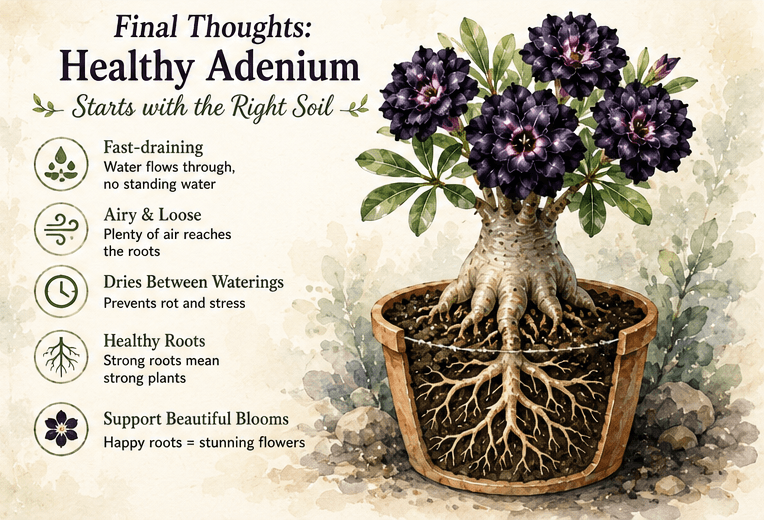
Healthy Adenium Starts with the Right Soil
The best soil mix for Adenium is not complicated, but it must match the plant’s natural needs. Desert Rose roots need moisture, but they also need oxygen. They cannot stay wet for too long.
If your Adenium is struggling, the soil should be one of the first things you check.
A healthy Adenium soil mix should be:
Fast-draining.
Airy.
Loose.
Lightweight.
Not compacted.
Suitable for drying between waterings.
For most growers, a simple mix of cactus soil, perlite or pumice, and coarse sand is an excellent starting point.
When you combine the right soil with a pot that has drainage holes, strong sunlight, warm temperatures, and careful watering, your Adenium will have the foundation it needs to grow a strong caudex, healthy roots, and beautiful blooms.

Start Your Desert Rose Journey from Seeds
Growing Desert Rose from seeds is one of the most rewarding ways to enjoy Adenium. Explore our selected Desert Rose seeds and start growing your own unique plants with beautiful shapes, vibrant blooms, and natural caudex development.
Recommended Desert Rose SeedsShop All


 1
1 Mixed
Mixed
 1Mixed
 1Mixed
 1Mixed
 1Mixed
 1Mixed
 1
1Adenium Obesum Desert Rose Seeds – Rare Flowering Succulent Seeds for Garden Planting, 20 Seeds Pack

 1Mixed
 1Mixed
 1Mixed
 1Mixed
 1Mixed
 1Mixed
 1Mixed
 1Mixed
 1Mixed
 1Mixed
 1Mixed
 1Mixed
 1Mixed
 1Mixed

 1
1
 1Mixed
 1Mixed
 1Mixed
 1Mixed
 1Mixed
 1Mixed
 1Mixed
 1Mixed
 1Mixed
 1Mixed
 1Mixed
 1Mixed
 1Mixed
 1Mixed
