

Desert Rose Guide
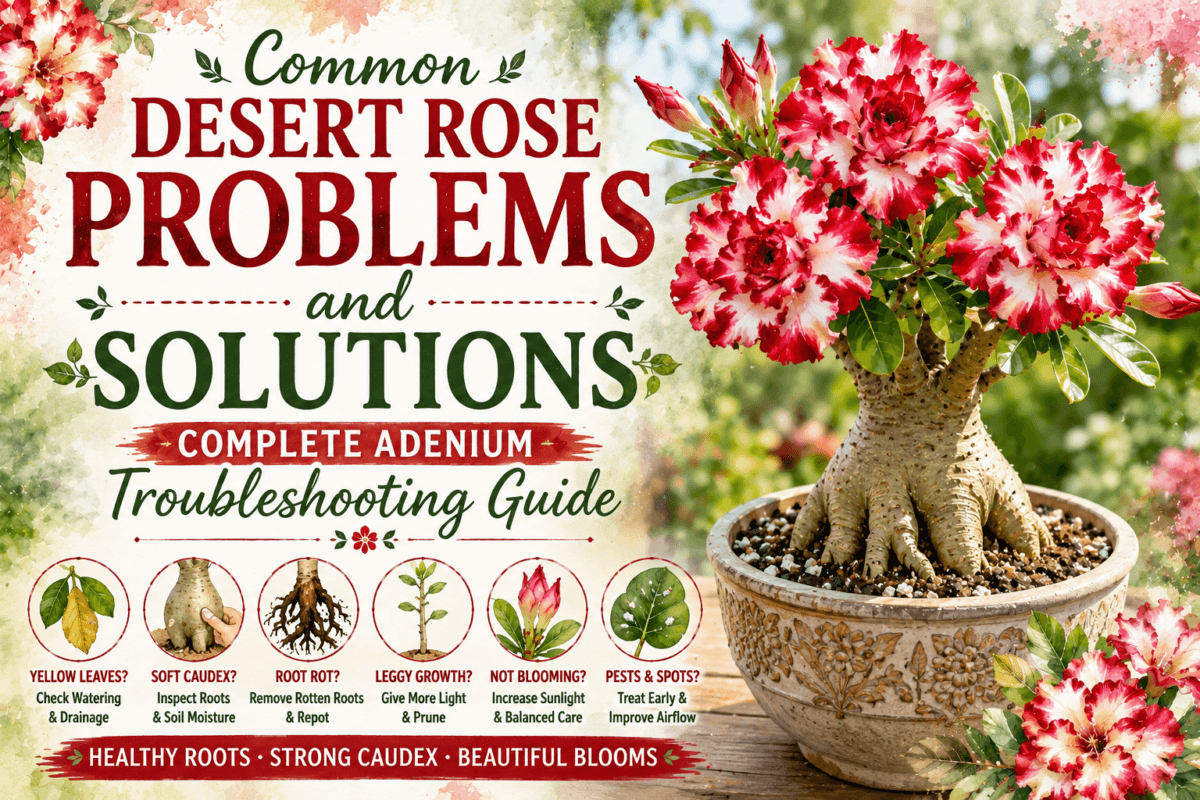
Common Desert Rose Problems and Solutions: Complete Adenium Troubleshooting Guide
May
Why Desert Rose Problems Usually Start with Care Conditions
Desert Rose, also known as Adenium, is a beautiful flowering succulent known for its thick caudex, sculptural trunk, glossy leaves, and colorful blooms. It is a strong and rewarding plant, but like all plants, it can develop problems when its growing conditions are not right.
Many Desert Rose problems look different on the surface, but they often come from the same few causes:
Too much water, poor drainage, not enough light, cold temperatures, weak airflow, or root stress.
The good news is that most Desert Rose problems are fixable if you identify the cause early. Yellow leaves, soft caudex, leaf drop, root rot, leggy growth, and failure to bloom are usually signals that the plant’s environment needs adjustment.
Desert Rose is not a typical houseplant. It behaves more like a succulent. It stores water in its caudex and roots, which means it can tolerate dry periods better than wet soil. Understanding this one point can prevent many common issues.
In this complete guide, you’ll learn the most common Desert Rose problems, what causes them, how to fix them, and how to prevent them from coming back.
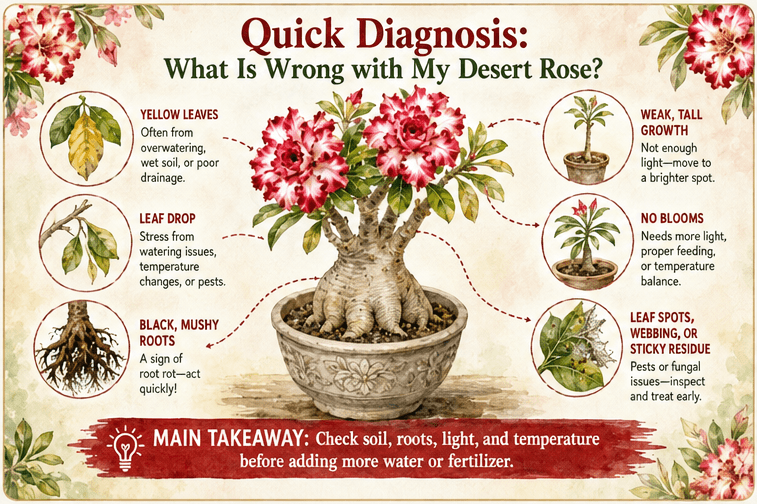
Quick Diagnosis: What Is Wrong with My Desert Rose?
Before looking at each problem in detail, here is a quick guide to help you identify the likely cause.
If your Desert Rose has yellow leaves, the cause may be overwatering, poor drainage, dormancy, stress, or nutrient imbalance.
If the caudex is soft, the issue may be underwatering or root rot. You must check the soil moisture to know the difference.
If the plant has leaf drop, it may be caused by cold, dormancy, sudden environmental change, watering stress, or root problems.
If your Desert Rose is not blooming, the most common reason is not enough sunlight.
If the plant is tall, thin, and weak, it usually needs more light.
If the roots are black, mushy, or foul-smelling, root rot is likely.
If the leaves have spots, sticky residue, webbing, or distorted growth, pests or fungal issues may be involved.
The most important first step is always the same:
Check the soil, roots, light, and temperature before adding more water or fertilizer.
Many beginners make problems worse by watering more when the plant is already stressed from too much moisture.
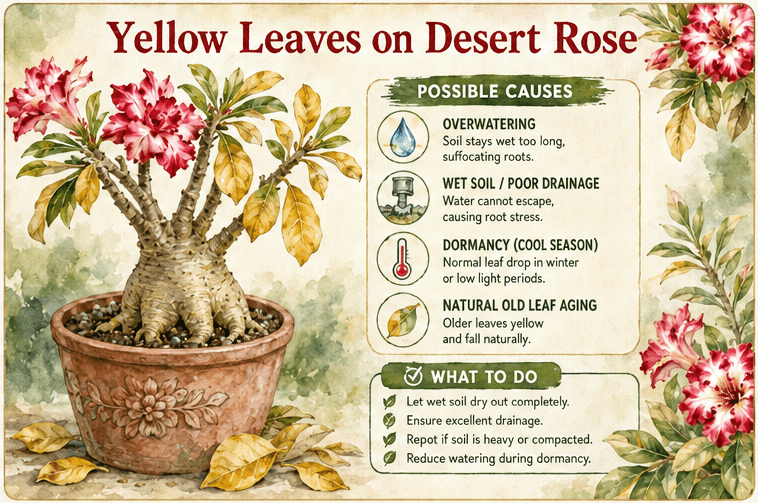
Yellow Leaves on Desert Rose
Yellow leaves are one of the most common Desert Rose problems. They can happen for several reasons, so it is important not to assume one cause immediately.
Common Causes of Yellow Leaves
Yellow leaves may be caused by:
- Overwatering
- Poor drainage
- Cold temperatures
- Seasonal dormancy
- Sudden change in environment
- Root stress
- Nutrient deficiency
- Old leaves naturally aging
The most common cause is overwatering or soil that stays wet too long.
How to Tell If Yellow Leaves Are from Overwatering
Check the soil first. If the soil feels wet or heavy and the leaves are turning yellow, overwatering may be the problem.
Other signs include:
- Soft caudex
- Drooping leaves
- Wet soil for many days
- Foul smell from soil
- Mushy roots
- Leaves yellowing quickly
How to Fix Yellow Leaves
If the soil is wet, stop watering and let it dry. Make sure the pot has drainage holes. If the soil is heavy or compacted, repot into a fast-draining mix.
If yellow leaves appear during cooler months and the plant is otherwise firm, it may simply be entering dormancy. In that case, reduce watering and keep the plant warm.
If only a few older leaves turn yellow while new growth looks healthy, this may be normal leaf aging.
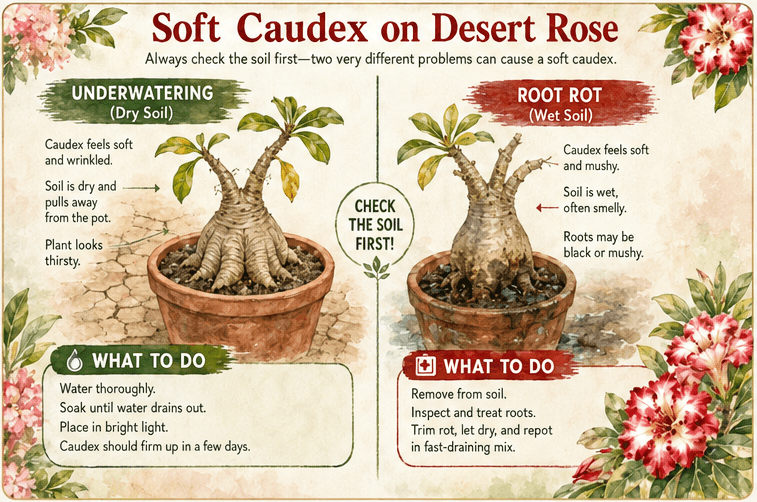
Soft Caudex on Desert Rose
A soft caudex can be worrying because it may mean either dehydration or rot. The key is to check the soil before deciding what to do.
Soft Caudex from Underwatering
If the soil is completely dry and the caudex looks wrinkled or slightly soft, the plant may be thirsty.
Signs of underwatering include:
- Dry soil
- Wrinkled caudex
- Drooping leaves
- Crispy leaf edges
- Pot feels very light
Solution for Underwatering
Water thoroughly until water drains from the bottom of the pot. If the soil is extremely dry and water runs straight through, water slowly in stages.
The caudex may firm up again after the plant rehydrates.
Soft Caudex from Root Rot
If the soil is wet and the caudex is soft, mushy, dark, or foul-smelling, root rot may be the cause.
Signs of rot include:
- Wet soil
- Mushy roots
- Bad smell
- Yellow leaves
- Collapsing plant
- Soft base near the soil line
Solution for Root Rot
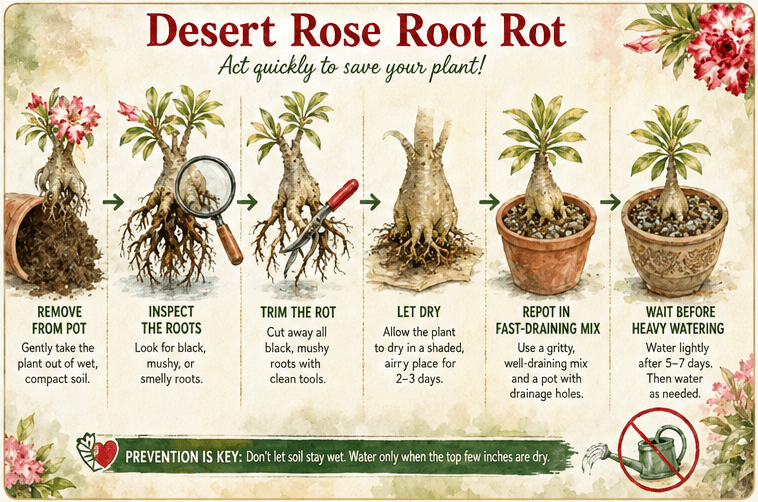
Remove the plant from the pot and inspect the roots. Cut away black, mushy, or rotten roots with clean tools. Let the plant dry in a shaded place, then repot into fresh fast-draining soil.
Do not water heavily immediately after trimming rotten roots.
Desert Rose Root Rot
Root rot is one of the most serious Desert Rose problems. It usually happens when roots stay wet for too long.
What Causes Root Rot?
Root rot is commonly caused by:
- Overwatering
- Heavy soil
- Poor drainage
- Pot without drainage holes
- Oversized pot
- Cold and wet conditions
- Long periods of rain
- Low airflow
Desert Rose roots need oxygen. When soil remains soggy, roots cannot breathe and begin to decay.
Signs of Root Rot
Common signs include:
- Soft caudex
- Yellow leaves
- Sudden leaf drop
- Mushy roots
- Black or brown roots
- Rotten smell
- Wet soil that does not dry
- Plant becoming loose in the pot
How to Fix Root Rot
Take action quickly.
- Remove the plant from the pot
- Remove wet or compacted soil
- Inspect the roots carefully
- Cut away all rotten roots
- Let the plant dry and callus
- Repot into fresh fast-draining soil
- Use a pot with drainage holes
- Wait before heavy watering
If rot has spread into the caudex, the plant may be harder to save. Early action gives the best chance of recovery.
How to Prevent Root Rot
Use fast-draining soil, avoid oversized pots, water only when soil dries, and protect outdoor plants from long periods of heavy rain.
Desert Rose Leaves Dropping
Leaf drop can be normal or a sign of stress. The timing and plant condition matter.
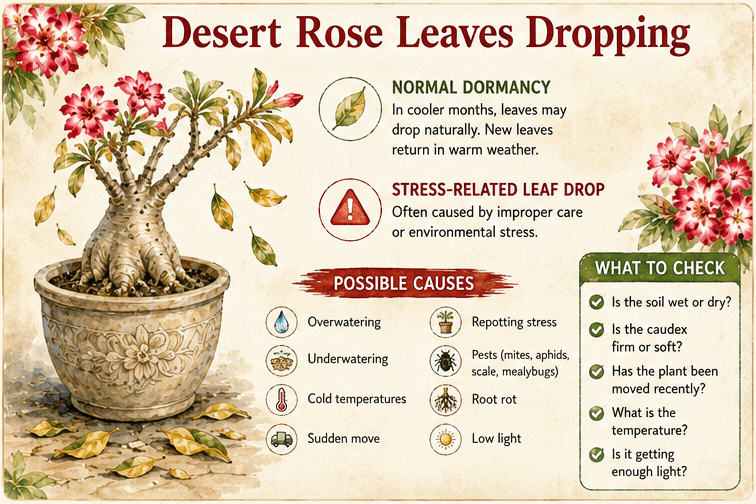
Normal Leaf Drop
Desert Rose may drop leaves during dormancy, especially in cooler weather or lower light. This is common and not always a problem.
If the caudex is firm and the plant is resting, reduce watering and wait for warmer conditions.
Stress-Related Leaf Drop
Leaf drop can also happen because of:
- Overwatering
- Underwatering
- Cold temperatures
- Sudden move indoors or outdoors
- Repotting stress
- Pest attack
- Root rot
- Low light
How to Fix Leaf Drop
Check the basics first:
- Is the soil wet or dry?
- Is the caudex firm or soft?
- Has the plant been moved recently?
- Is the temperature too cold?
- Is there enough light?
If the plant is dormant, water very little. If the soil is wet and the plant is declining, check for root rot. If the plant was recently moved, give it time to adjust in bright, warm conditions.
Desert Rose Not Blooming
A Desert Rose that grows leaves but does not flower is a common issue.
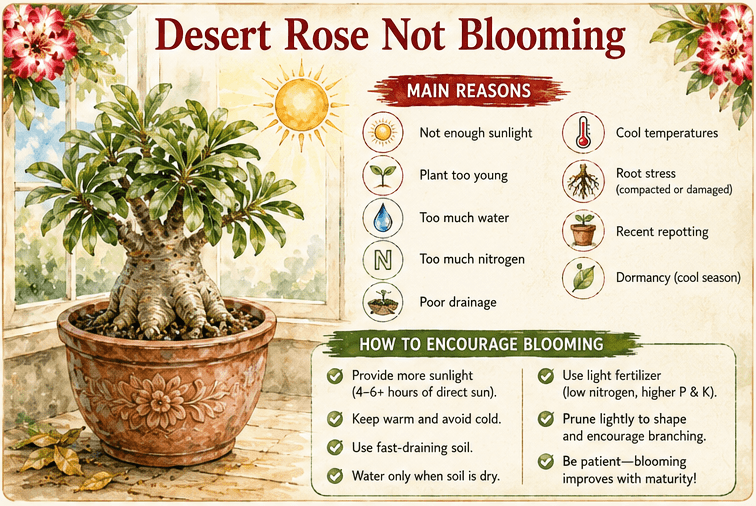
Main Reasons Desert Rose Is Not Blooming
The most common reason is not enough sunlight.
Other causes include:
- Plant is too young
- Too much water
- Too much nitrogen fertilizer
- Poor drainage
- Cool temperatures
- Root stress
- Recent repotting
- Dormancy
How Much Light Does Desert Rose Need to Bloom?
Desert Rose usually needs at least 6 hours of bright light per day for good flowering. Outdoor plants often bloom better than indoor plants because natural sunlight is stronger.
How to Encourage Blooming
To help Desert Rose bloom:
- Provide stronger sunlight
- Keep the plant warm
- Use fast-draining soil
- Water only when soil dries
- Avoid too much nitrogen
- Fertilize lightly during active growth
- Prune carefully to encourage branching
- Be patient with young plants
If your plant is indoors and not blooming, consider moving it to a brighter window or using a grow light.
Leggy or Weak Growth
Leggy growth means the plant is stretching. This usually happens when Desert Rose does not receive enough light.
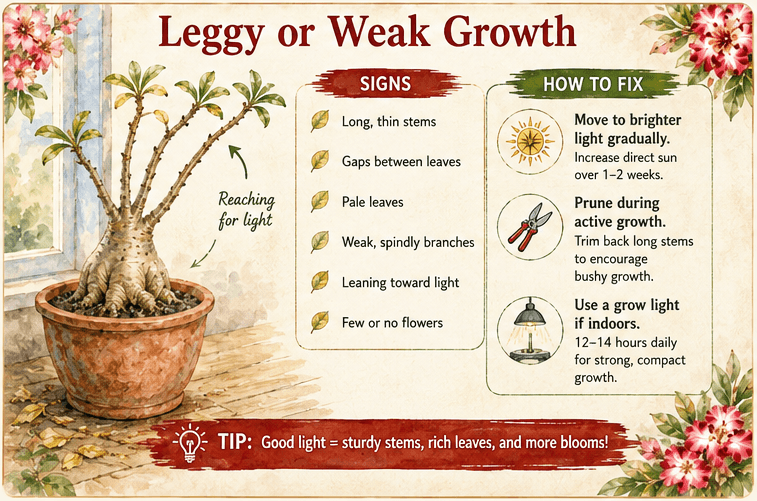
Signs of Leggy Growth
You may notice:
- Long thin stems
- Large gaps between leaves
- Pale leaves
- Weak branches
- Plant leaning toward light
- Few or no flowers
How to Fix Leggy Growth
Move the plant to a brighter location gradually. If it has been in shade, do not place it suddenly in harsh full sun. Increase light exposure over several days.
You can also prune leggy stems during active growth to encourage branching. After pruning, provide stronger light so the new growth stays compact.
If growing indoors, a grow light may help.
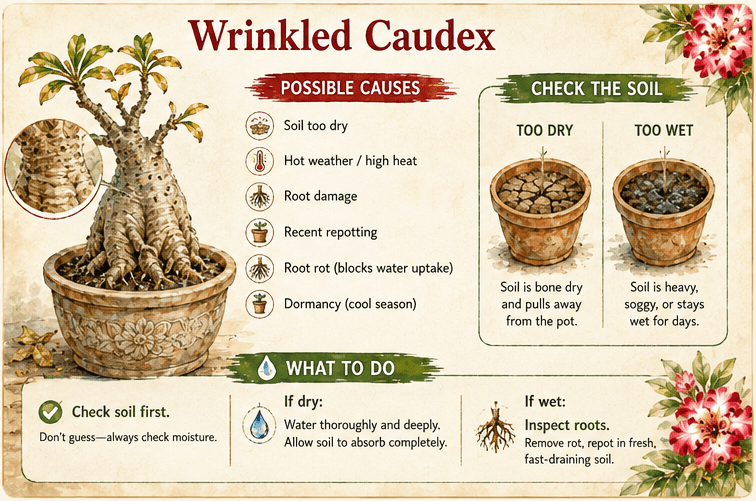
Wrinkled Caudex
A wrinkled caudex usually means the plant is using stored water. This may happen from underwatering, heat stress, root damage, or dormancy.
Causes of Wrinkled Caudex
Possible causes include:
- Soil too dry for too long
- Hot weather
- Root damage
- Plant recently repotted
- Root rot preventing water uptake
- Dormancy
How to Fix a Wrinkled Caudex
First, check the soil.
If the soil is dry, water thoroughly and monitor the plant. If the soil is wet but the caudex is wrinkled, the roots may be damaged and unable to absorb water.
In that case, remove the plant and inspect the roots.
A wrinkled caudex from dehydration can often recover. A soft, mushy caudex from rot is more serious.
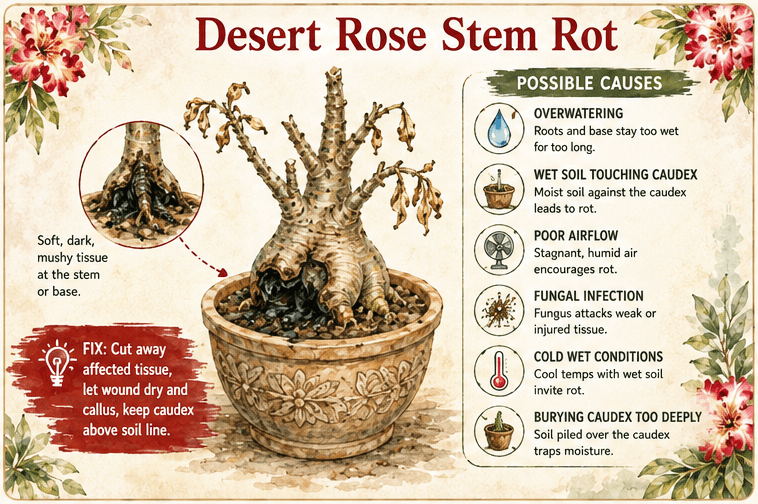
Desert Rose Stem Rot
Stem rot can occur when moisture collects around the base or when fungal infection spreads into the stem.
Signs of Stem Rot
Look for:
- Soft dark areas on stem
- Mushy tissue
- Blackened base
- Bad smell
- Collapsing branches
- Rot spreading upward
Causes of Stem Rot
Stem rot may be caused by:
- Overwatering
- Wet soil touching the caudex
- Poor airflow
- Fungal infection
- Cold wet conditions
- Burying the caudex too deeply
How to Fix Stem Rot
If rot is limited, cut away affected tissue with a clean, sharp tool. Let the wound dry and callus in a warm, shaded area.
If rot is severe and spreading into the caudex, saving the plant may be difficult.
Prevent stem rot by keeping the caudex slightly above the soil line, using fast-draining soil, and avoiding wet conditions around the base.
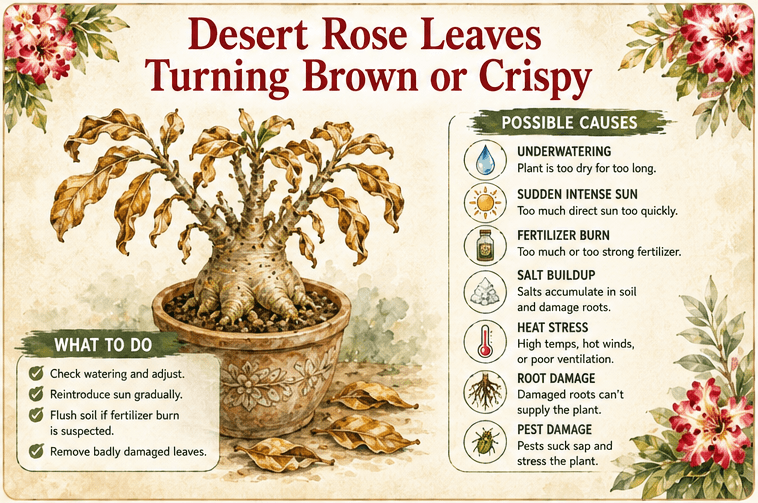
Desert Rose Leaves Turning Brown or Crispy
Brown or crispy leaves usually point to water stress, sunburn, heat stress, or fertilizer burn.
Possible Causes
Brown leaves may be caused by:
- Underwatering
- Sudden intense sun
- Fertilizer burn
- Salt buildup
- Low humidity combined with heat
- Root damage
- Pest damage
How to Fix Brown Leaves
Check watering first. If the soil is bone dry, water thoroughly. If the plant was recently moved into full sun, provide partial protection and reintroduce sunlight gradually.
If fertilizer was recently applied, flush the soil with water and avoid feeding until the plant recovers.
Remove badly damaged leaves if needed.
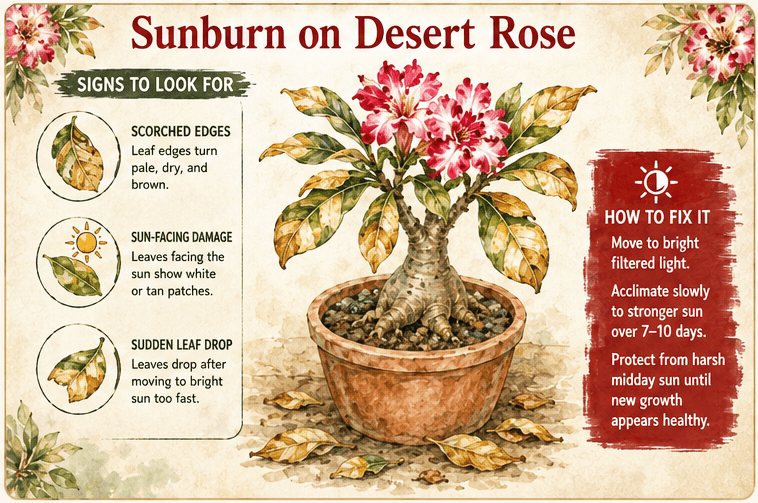
Sunburn on Desert Rose
Desert Rose loves sunlight, but sudden exposure to intense sun can burn the leaves, especially if the plant was previously indoors or shaded.
Signs of Sunburn
Sunburn may appear as:
- Pale white patches
- Brown dry spots
- Scorched leaf edges
- Damaged leaves on the sun-facing side
- Sudden leaf drop after moving outdoors
How to Fix Sunburn
Move the plant to bright filtered light temporarily. Damaged leaves will not fully recover, but new growth should be healthy if the plant is adjusted properly.
To prevent sunburn, gradually introduce stronger sunlight over 7–10 days.
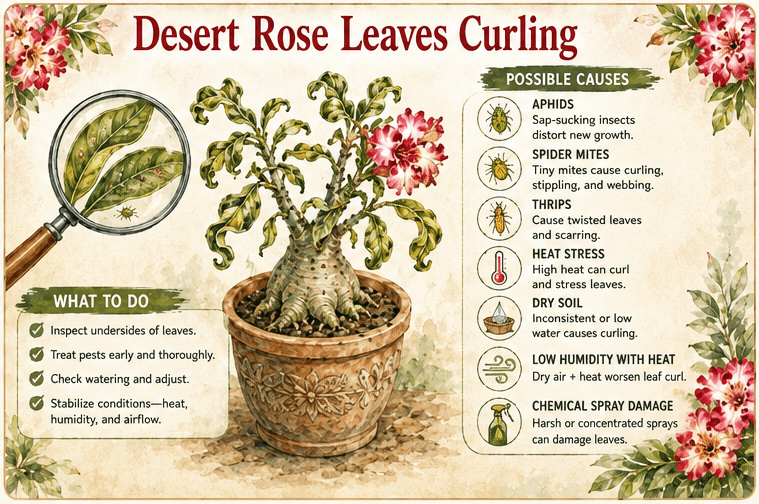
Desert Rose Leaves Curling
Leaf curling can happen due to pests, heat stress, underwatering, or environmental changes.
Common Causes
- Aphids
- Spider mites
- Thrips
- Heat stress
- Dry soil
- Low humidity with strong heat
- Chemical spray damage
How to Fix Leaf Curling
Inspect the underside of leaves and new growth for pests. If pests are present, treat early with insecticidal soap or neem oil, following product directions.
If no pests are found, check watering and heat exposure. Provide stable conditions and avoid sudden stress.
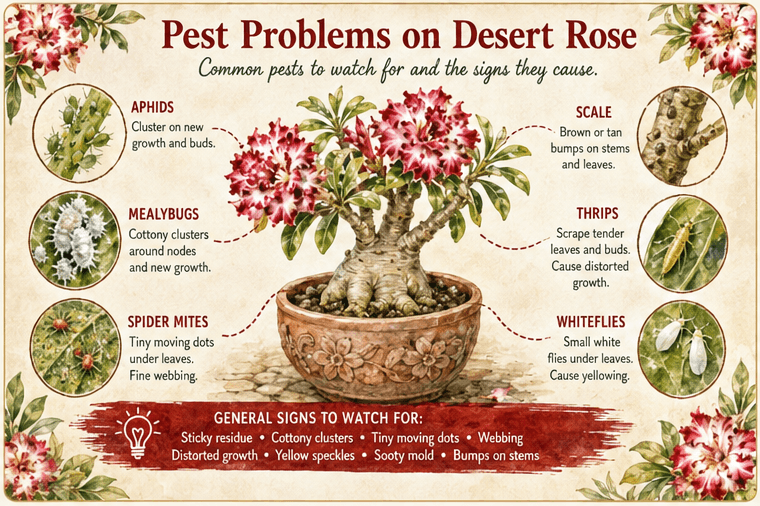
Pest Problems on Desert Rose
Desert Rose can be affected by common plant pests, especially when grown indoors or in warm climates.
Common Desert Rose Pests
Common pests include:
- Aphids
- Mealybugs
- Spider mites
- Scale insects
- Thrips
- Whiteflies
Signs of Pests
Look for:
- Sticky residue
- White cottony clusters
- Tiny moving dots
- Webbing
- Distorted new growth
- Yellow speckled leaves
- Black sooty mold
- Bumps on stems or leaves
How to Fix Pest Problems
Isolate the plant if possible. Remove visible pests with a cotton swab or gentle spray of water. Treat with insecticidal soap, horticultural oil, or neem oil if appropriate.
Repeat treatment as needed because pests often return from eggs or hidden areas.
Good airflow and regular inspection help prevent pest outbreaks.
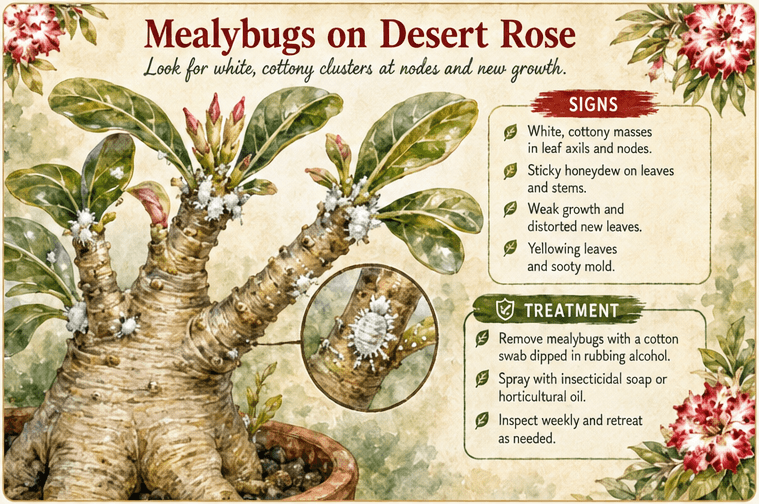
Mealybugs on Desert Rose
Mealybugs are common on Desert Rose, especially around leaf nodes, stem joints, and hidden areas.
Signs of Mealybugs
You may see:
- White cottony clusters
- Sticky honeydew
- Weak growth
- Yellowing leaves
- Pests hiding near new growth
How to Treat Mealybugs
Remove visible mealybugs with a cotton swab dipped in rubbing alcohol. For larger infestations, use insecticidal soap or horticultural oil.
Check the plant weekly until the problem is gone.
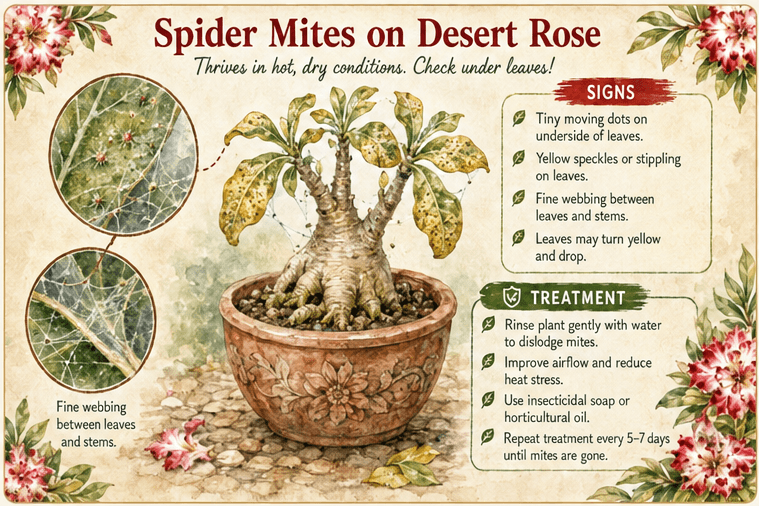
Spider Mites on Desert Rose
Spider mites are tiny pests that often appear in hot, dry conditions.
Signs of Spider Mites
Look for:
- Fine webbing
- Yellow speckling on leaves
- Dull leaf color
- Tiny moving dots under leaves
- Leaf drop
How to Treat Spider Mites
Rinse the leaves gently and improve airflow. Use insecticidal soap or horticultural oil if needed. Repeat treatment because spider mites reproduce quickly.
Avoid letting plants become dusty and stressed.
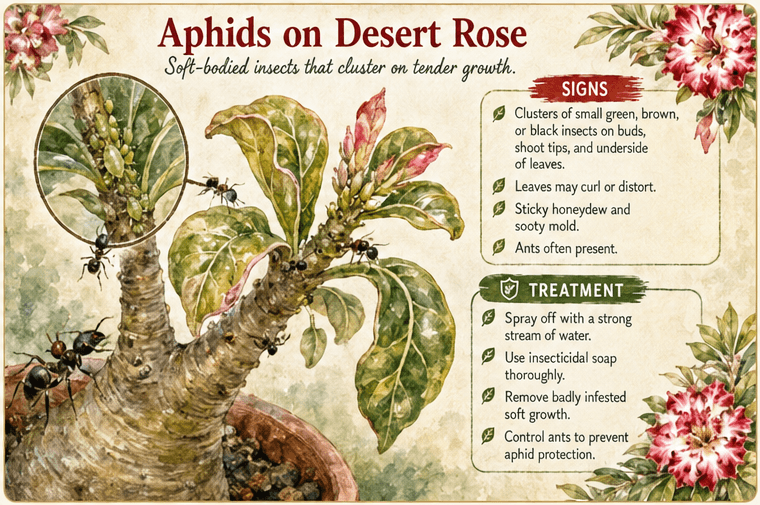
Aphids on Desert Rose
Aphids often attack tender new growth and flower buds.
Signs of Aphids
You may notice:
- Clusters of small insects
- Sticky residue
- Curled leaves
- Distorted buds
- Ants around the plant
How to Treat Aphids
Spray aphids off with water or treat with insecticidal soap. Remove heavily infested soft growth if necessary.
Control ants if they are protecting aphids.
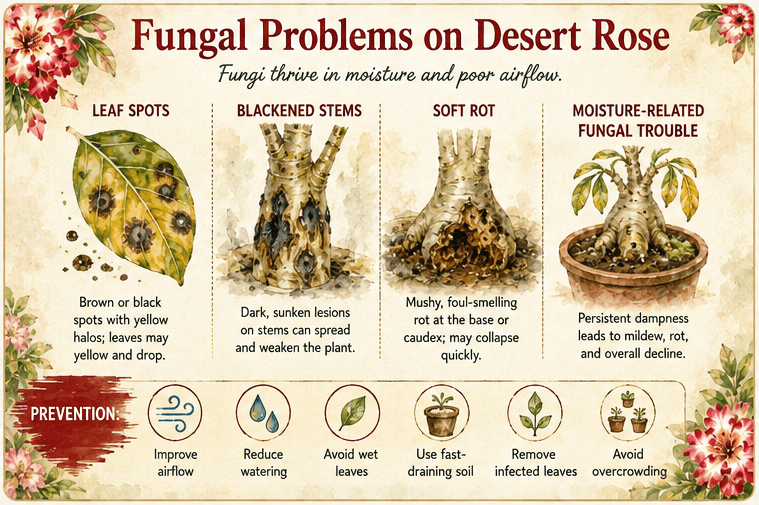
Fungal Problems on Desert Rose
Fungal issues usually appear when moisture, poor airflow, and weak light occur together.
Signs of Fungal Problems
- Leaf spots
- Mold on soil surface
- Seedling collapse
- Blackened stems
- Soft rot
- Musty smell
- Yellowing leaves
How to Prevent Fungal Issues
Improve airflow, reduce watering, avoid wet leaves, and use fast-draining soil. Remove infected leaves and avoid overcrowding plants.
For seedlings, avoid keeping humidity domes sealed too long.
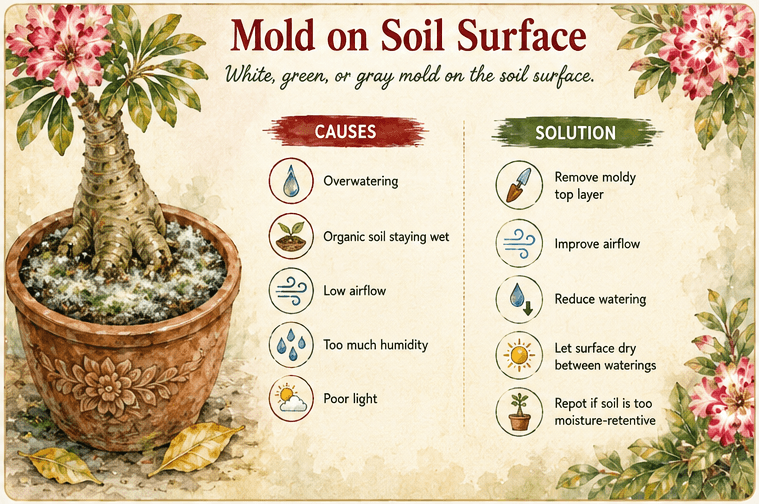
Mold on Soil Surface
Mold on soil surface usually means the top layer stays too moist and airflow is poor.
Causes
- Overwatering
- Organic soil staying wet
- Low airflow
- Too much humidity
- Poor light
Solution
Remove the moldy top layer, improve airflow, reduce watering, and allow the soil surface to dry. If the soil is too moisture-retentive, repot into a better mix.
Mold on soil does not always mean the plant is dying, but it is a warning sign that conditions are too damp.
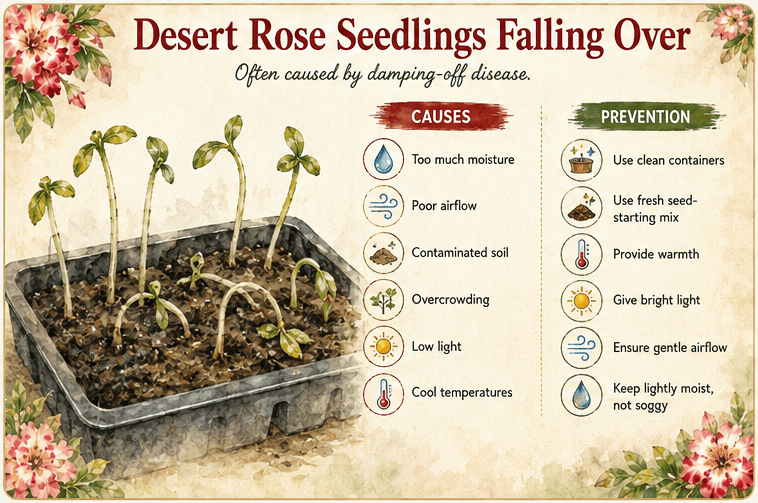
Desert Rose Seedlings Falling Over
Seedlings falling over is often caused by damping-off disease, a fungal problem that attacks young stems.
Causes of Damping-Off
- Too much moisture
- Poor airflow
- Contaminated soil
- Overcrowding
- Low light
- Cool temperatures
How to Prevent Seedling Collapse
Use clean containers, fresh seed-starting mix, warmth, bright light, and gentle airflow. Keep the medium lightly moist but never soggy.
Once seedlings sprout, avoid keeping them sealed in high humidity for too long.
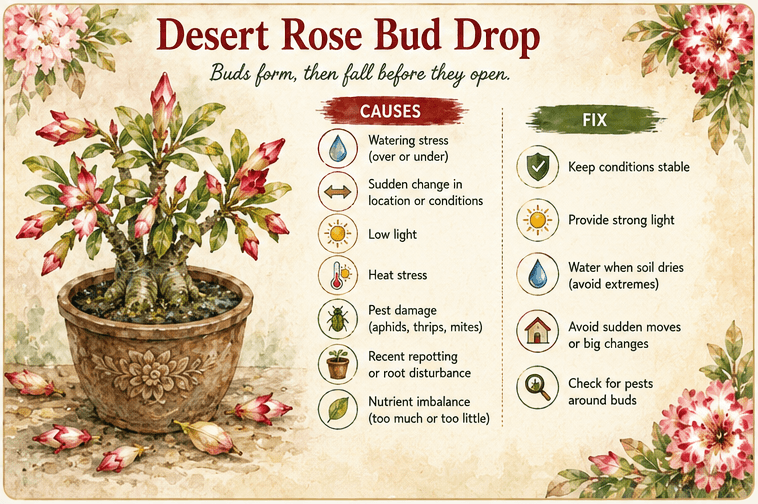
Desert Rose Bud Drop
Bud drop happens when flower buds form but fall before opening.
Causes of Bud Drop
- Watering stress
- Sudden environmental change
- Low light
- Heat stress
- Pest damage
- Recent repotting
- Nutrient imbalance
How to Fix Bud Drop
Keep care conditions stable. Provide strong light, water when soil dries, avoid sudden moves, and check for pests around buds.
A few dropped buds can happen from stress, but repeated bud drop means the growing conditions need adjustment.
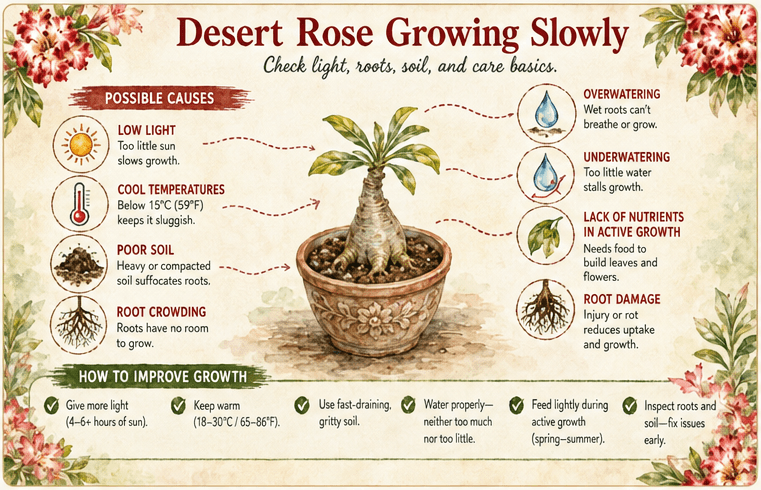
Desert Rose Growing Slowly
Slow growth can be normal during dormancy or cool weather, but it can also indicate poor conditions.
Common Causes
- Low light
- Cool temperatures
- Poor soil
- Root crowding
- Overwatering
- Underwatering
- Lack of nutrients during active growth
- Root damage
How to Improve Growth
Give more light, keep the plant warm, use fast-draining soil, water properly, and fertilize lightly during active growth.
If growth remains poor, inspect the roots and soil.
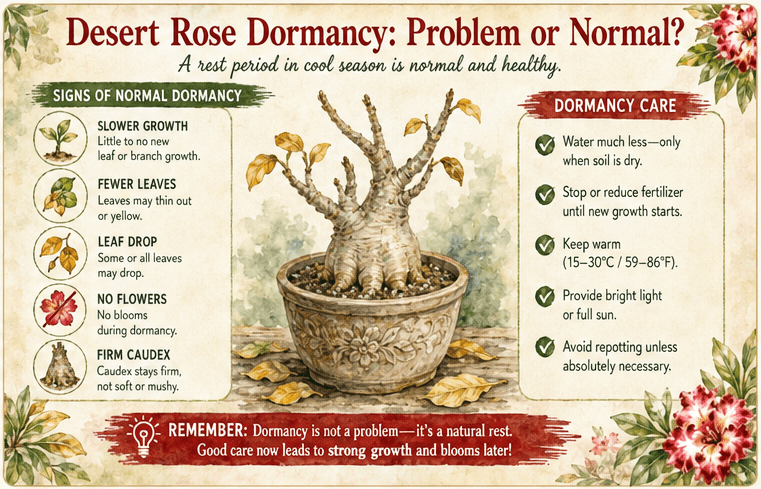
Desert Rose Dormancy: Problem or Normal?
Dormancy is a natural resting period. Desert Rose may slow down, stop blooming, or drop leaves during cooler months.
Signs of Normal Dormancy
- Slower growth
- Fewer leaves
- Leaf drop
- No flowers
- Firm caudex
- Plant looks resting but not rotting
Dormancy Care
During dormancy:
- Water much less
- Stop or reduce fertilizer
- Keep warm if possible
- Provide bright light
- Avoid repotting unless necessary
Dormancy is only a problem if the caudex becomes soft, rot appears, or soil stays wet.
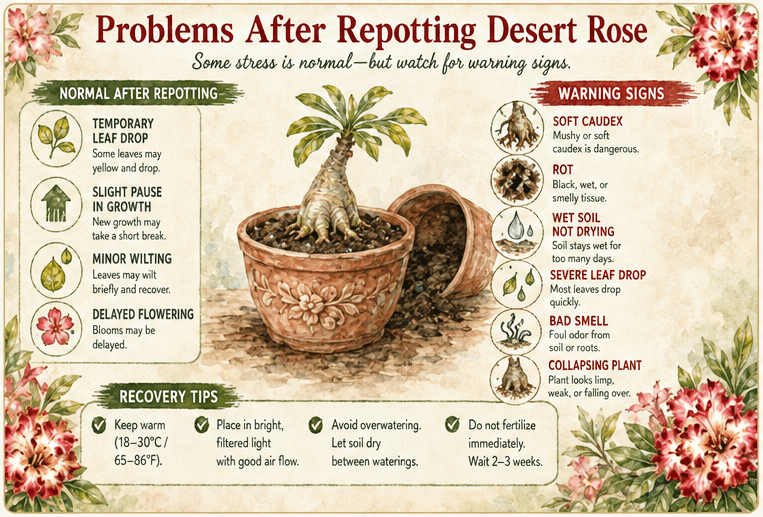
Problems After Repotting Desert Rose
After repotting, Desert Rose may pause growth or drop a few leaves. This can be normal.
Normal After Repotting
- Temporary leaf drop
- Slight pause in growth
- Minor wilting
- Delayed flowering
Warning Signs After Repotting
- Soft caudex
- Spreading rot
- Wet soil not drying
- Severe leaf drop
- Bad smell
- Plant collapsing
How to Help Recovery
Keep the plant warm, bright, and well-ventilated. Avoid overwatering and do not fertilize immediately after root disturbance.
If roots were trimmed, wait before heavy watering.
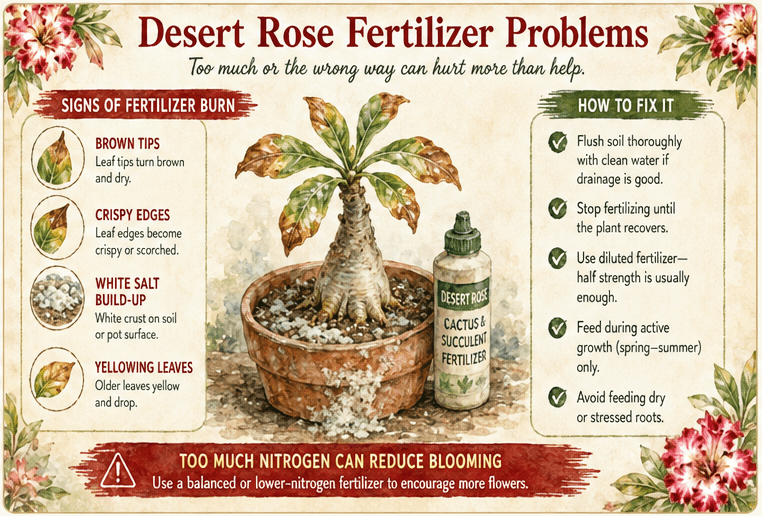
Desert Rose Fertilizer Problems
Fertilizer can help growth and blooming, but too much can create problems.
Signs of Fertilizer Burn
- Brown leaf tips
- Crispy leaf edges
- Sudden leaf drop
- White salt crust on soil
- Root stress
- Wilting after feeding
How to Fix Fertilizer Burn
Flush the soil with clean water if the pot drains well. Stop fertilizing until the plant recovers.
Use diluted fertilizer during active growth and avoid feeding dry or stressed roots.
Too much nitrogen may also reduce blooming by encouraging leaves instead of flowers.
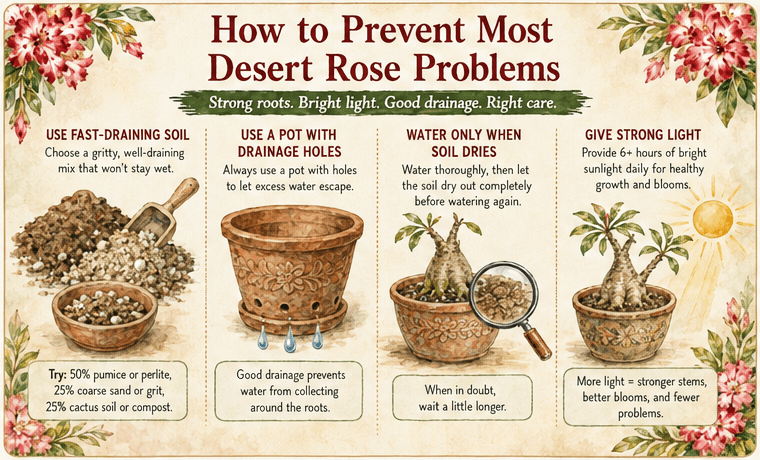
How to Prevent Most Desert Rose Problems
Most Desert Rose problems can be prevented with the right basic care.
Use Fast-Draining Soil
A mix with cactus soil, perlite or pumice, and coarse sand helps prevent soggy roots.
Choose a Pot with Drainage Holes
Drainage holes are essential. Without them, water collects at the bottom.
Water Only When Soil Dries
Do not water on a fixed schedule. Check the soil first.
Give Strong Light
Desert Rose needs bright light for compact growth and blooming.
Keep Warm
Avoid cold, wet conditions.
Provide Airflow
Good airflow reduces fungal issues and helps soil dry properly.
Inspect Regularly
Check leaves, stems, roots, and soil so you can catch problems early.
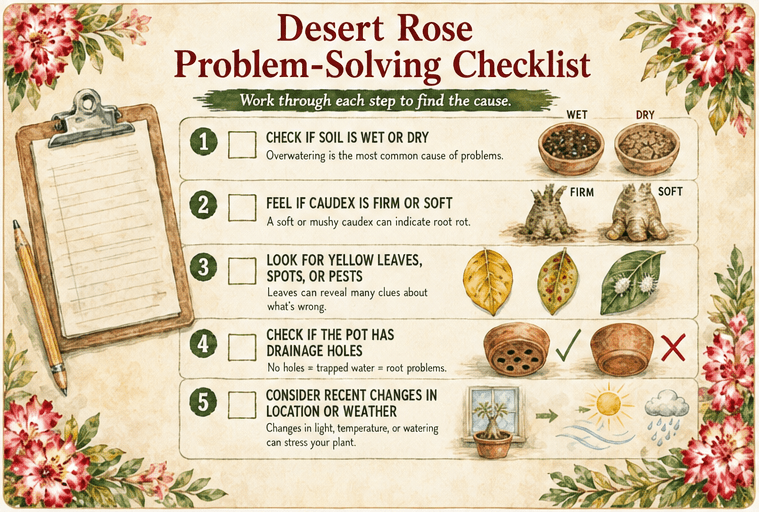
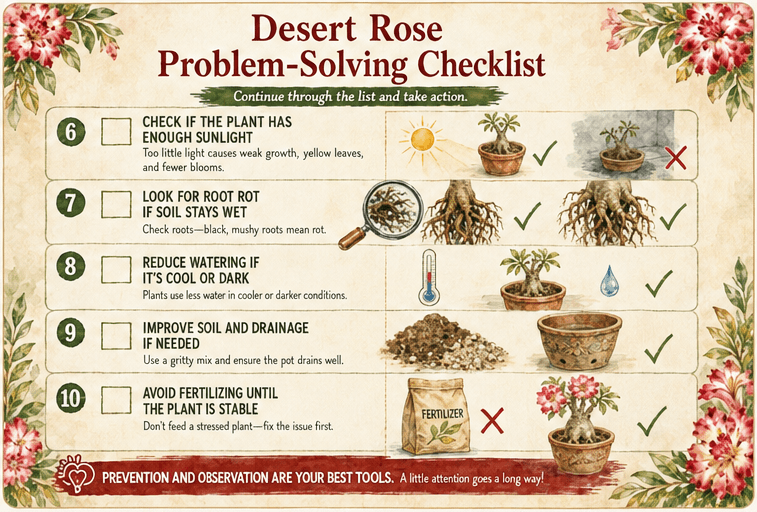
Desert Rose Problem-Solving Checklist
When your Desert Rose looks unhealthy, use this checklist:
- Check if the soil is wet or dry
- Feel whether the caudex is firm or soft
- Look for yellow leaves, spots, or pests
- Check if the pot has drainage holes
- Consider recent changes in location or weather
- Check if the plant has enough sunlight
- Look for signs of root rot if the soil stays wet
- Reduce watering if conditions are cool or dark
- Improve soil and pot drainage if needed
- Avoid fertilizing until the plant is stable
This approach helps you diagnose the real cause instead of guessing.
Common Desert Rose Problems FAQ
Why are my Desert Rose leaves turning yellow?
Yellow leaves are often caused by overwatering, poor drainage, dormancy, cold stress, or root problems. Check soil moisture first.
Why is my Desert Rose caudex soft?
A soft caudex may be caused by underwatering or root rot. If the soil is dry, the plant may need water. If the soil is wet, check for rot.
Why is my Desert Rose not blooming?
The most common reason is not enough sunlight. Desert Rose needs strong light, warmth, proper watering, and maturity to bloom well.
Why are my Desert Rose leaves falling off?
Leaf drop can be caused by dormancy, cold, watering stress, repotting shock, root rot, or sudden environmental changes.
How do I save an overwatered Desert Rose?
Stop watering, check drainage, remove the plant from wet soil if needed, cut away rotten roots, let it dry, and repot into fast-draining soil.
Why is my Desert Rose growing tall and thin?
Tall, thin growth usually means the plant needs more light. Move it gradually to a brighter location or use a grow light.
What pests attack Desert Rose?
Common pests include mealybugs, spider mites, aphids, scale insects, thrips, and whiteflies.
Is mold on Desert Rose soil bad?
Mold means the soil surface is staying too damp. Improve airflow, reduce watering, and use a faster-draining soil mix if needed.
Can Desert Rose recover from root rot?
It can recover if the rot is caught early. Remove rotten roots, dry the plant, repot into fresh fast-draining soil, and water carefully.
Should I fertilize a sick Desert Rose?
Usually no. Fix watering, soil, light, and root issues first. Fertilizing a stressed plant can make problems worse.
Most Desert Rose Problems Are Fixable
Desert Rose problems can feel stressful at first, but most issues come from a small number of causes. Once you understand the plant’s needs, troubleshooting becomes much easier.
The most important care rules are simple:
Use fast-draining soil.
Choose a pot with drainage holes.
Water only when the soil dries.
Give strong sunlight.
Keep the plant warm.
Avoid cold, wet conditions.
Check roots early if the plant declines.
Desert Rose is a resilient plant when given the right environment. Even if your plant has yellow leaves, leaf drop, slow growth, or watering stress, it can often recover with proper care.
A healthy Desert Rose starts with healthy roots. Protect the roots, manage moisture carefully, and give the plant enough light. With patience and the right adjustments, your Adenium can return to strong growth, a firm caudex, and beautiful blooms.

Start Your Desert Rose Journey from Seeds
Growing Desert Rose from seeds is one of the most rewarding ways to enjoy Adenium. Explore our selected Desert Rose seeds and start growing your own unique plants with beautiful shapes, vibrant blooms, and natural caudex development.
Recommended Desert Rose SeedsShop All


 1
1 Mixed
Mixed
 1Mixed
 1Mixed
 1
1Adenium Obesum Desert Rose Seeds – Yellow Siam Flower Bonsai Seeds for Garden Planting, 5 Seeds Pack

 1Mixed
 1Mixed
 1Mixed
 1Mixed

 1
1
 1Mixed
 1Mixed
 1Mixed
 1Mixed
 1Mixed
 1Mixed
 1Mixed
 1Mixed
 1Mixed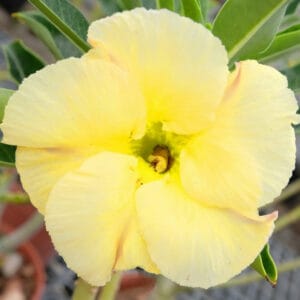
 1Mixed
 1Mixed
 1Mixed
 1Mixed
 1Mixed
 1Mixed
 1Mixed
 1Mixed
 1Mixed
 1Mixed
 1Mixed
 1Mixed
 1Mixed
 1Mixed
 1Mixed
 1Mixed
 1Mixed
 1Mixed
