

Desert Rose Guide
How to Repot Desert Rose Safely: Complete Adenium Repotting Guide

May
Why Repotting Desert Rose Needs Extra Care
Desert Rose, also known as Adenium, is a beautiful flowering succulent loved for its thick caudex, sculptural trunk, glossy leaves, and colorful blooms. It is a strong plant in many ways, but when it comes to repotting, Desert Rose needs to be handled carefully.
Repotting is not just about moving the plant into a bigger pot. For Desert Rose, repotting affects root health, drainage, caudex development, watering balance, and long-term growth. Done correctly, repotting can help your plant grow stronger, prevent root rot, refresh old soil, and improve its overall shape. Done incorrectly, it can stress the plant, damage roots, invite rot, or slow growth for weeks.
The good news is that repotting Desert Rose safely is not difficult once you understand the right process. The most important rules are simple: repot during warm active growth, use fast-draining soil, choose a pot with drainage holes, handle the roots gently, and avoid heavy watering immediately after repotting if the roots were disturbed.
In this complete guide, you’ll learn when to repot Desert Rose, how to choose the right pot and soil, how to remove the plant safely, how to inspect the roots, how to raise the caudex, and what to do after repotting to help your Adenium recover successfully.

When Should You Repot Desert Rose?
The best time to repot Desert Rose is during the warm active growing season, usually spring or early summer. During this time, the plant is actively producing roots, leaves, and new growth, which helps it recover faster after being moved.
Repotting during active growth gives the plant the best chance to heal from root disturbance and adapt to fresh soil.
You should consider repotting Desert Rose when:
- The plant has outgrown its pot
- Roots are circling tightly inside the container
- Roots are coming out of the drainage holes
- The soil stays wet too long
- The soil has become compacted or broken down
- The plant becomes unstable or top-heavy
- You suspect root rot
- You want to improve caudex display
- The plant has not been repotted for a long time
Repotting is especially useful if your Desert Rose is growing in poor soil. Heavy, wet, compacted soil is one of the most common causes of root problems in Adenium.
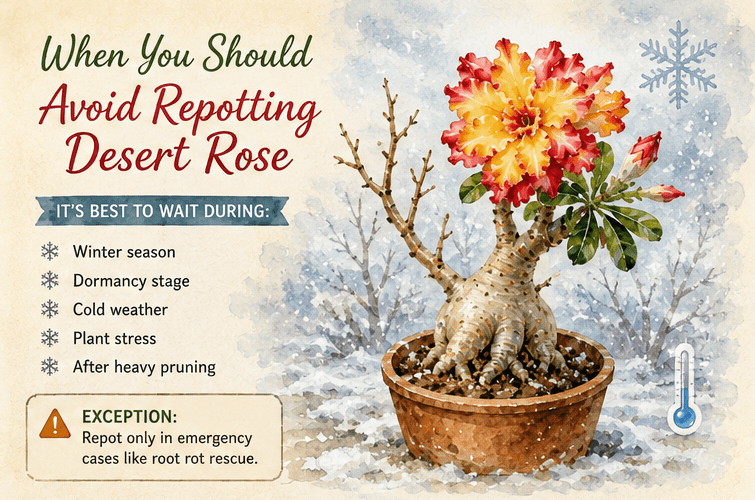
When You Should Avoid Repotting Desert Rose
Although repotting is helpful, timing matters. Desert Rose does not like being disturbed when it is weak, cold, or dormant.
Avoid repotting during:
- Cold winter weather
- Dormancy
- Right after severe stress
- Immediately after heavy pruning
- During very cold indoor conditions
- When the plant is actively rotting unless emergency action is needed
If your Desert Rose is dormant and healthy, it is usually better to wait until warmer weather returns.
However, there is one exception: root rot. If the plant is sitting in wet soil and the caudex or roots are becoming soft, emergency repotting may be necessary even if the timing is not ideal. In that case, saving the plant is more important than waiting for the perfect season.
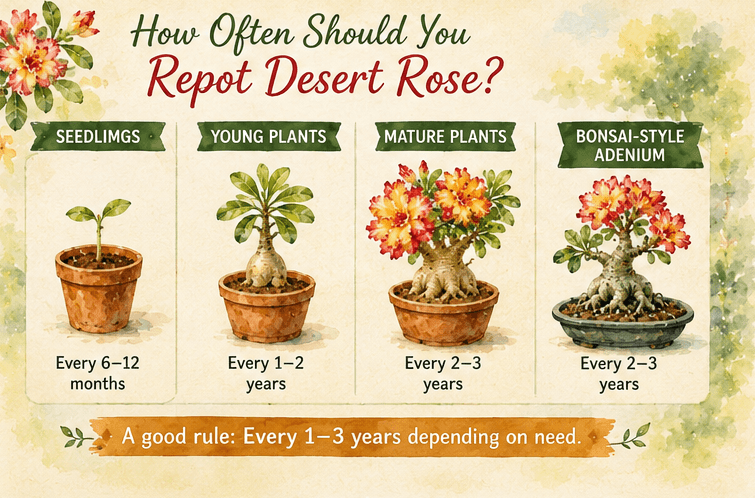
How Often Should You Repot Desert Rose?
How often you repot depends on the plant’s age, growth rate, pot size, and soil condition.
Young Desert Rose plants usually grow faster and may need repotting more often. Mature plants grow more slowly and can stay in the same pot longer, especially if the soil remains healthy and drains well.
A general guideline:
- Seedlings: repot when they are strong enough and roots fill the starter container
- Young plants: every 1 year or when rootbound
- Mature plants: every 2–3 years, or when soil breaks down
- Bonsai-style Adenium: repot as needed for root maintenance and soil refresh
Do not repot just because you feel you should. Repot when the plant has a real need.
Too much repotting can stress Desert Rose and slow growth.
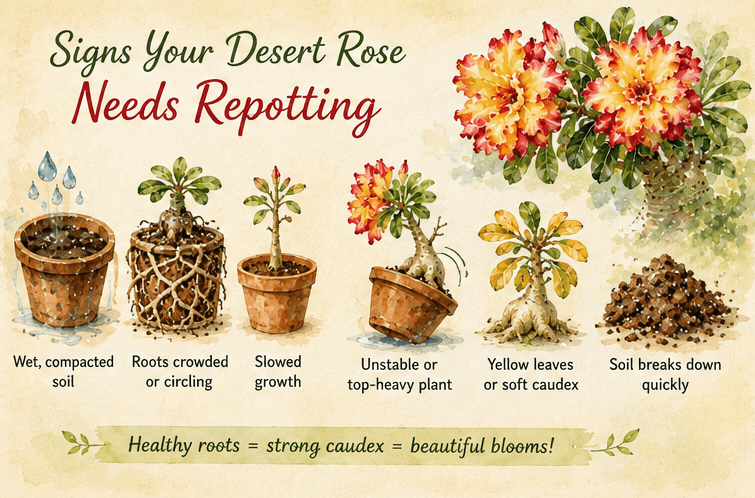
Signs Your Desert Rose Needs Repotting
Your Desert Rose may need repotting if you notice changes in growth, watering behavior, or root condition.
Soil Stays Wet Too Long
If the soil remains wet for many days after watering, it may be too dense or compacted. This increases the risk of root rot.
Roots Are Crowded
If roots circle around the inside of the pot or grow out of drainage holes, the plant may need more space.
Growth Has Slowed
Slow growth can happen for many reasons, but old soil, poor drainage, or root crowding may be part of the problem.
The Plant Is Unstable
A mature Desert Rose with a large caudex can become top-heavy. A wider, heavier pot may be needed.
Yellow Leaves or Soft Caudex
These symptoms can be caused by watering issues or root problems. If the soil is wet and the plant is declining, repotting may be necessary.
Soil Has Broken Down
Old potting mix can become compacted over time. When soil loses structure, roots receive less oxygen.
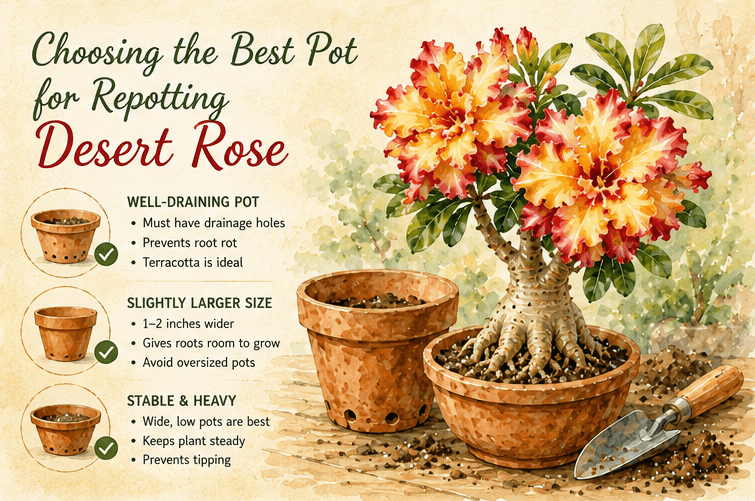
Choosing the Best Pot for Repotting Desert Rose
The right pot is very important. Desert Rose does not like pots that hold too much moisture.
A good pot for Desert Rose should be:
- Slightly larger than the root system
- Wide enough to support caudex development
- Not too deep
- Stable and heavy enough for mature plants
- Equipped with drainage holes
The most important feature is drainage. Never repot Desert Rose into a container without drainage holes.
Best Pot Materials
Good pot options include:
- Terracotta
- Clay
- Unglazed ceramic
- Bonsai pots with drainage
- Plastic pots with careful watering
Terracotta and clay pots are especially good for beginners because they help soil dry faster. Plastic pots can work, but they hold moisture longer, so watering must be more careful.
Avoid Oversized Pots
A pot that is too large can hold too much soil. More soil means more moisture, and too much moisture can lead to root rot.
Choose a pot only slightly larger than the root ball unless you are styling a mature plant in a wide bonsai-style container.
For Desert Rose, bigger is not always better.

Best Soil Mix for Repotting Desert Rose
Desert Rose needs fast-draining soil. This is one of the most important parts of successful repotting.
A good Desert Rose soil mix should be:
- Fast-draining
- Airy
- Lightweight
- Loose in texture
- Not compacted
- Suitable for succulent-style roots
- Able to dry between waterings
A beginner-friendly soil mix:
- 50% cactus or succulent soil
- 25% perlite or pumice
- 25% coarse sand
This mix gives the roots enough airflow while still holding a small amount of moisture.
For humid climates or indoor growing, you may want an even faster-draining mix:
- 40% cactus or succulent soil
- 30% pumice or perlite
- 20% coarse sand
- 10% lava rock, gravel, or bark chips
Avoid heavy garden soil, dense potting soil, clay-like soil, fine sand, or moisture-control mixes. These can stay wet too long and suffocate Adenium roots.
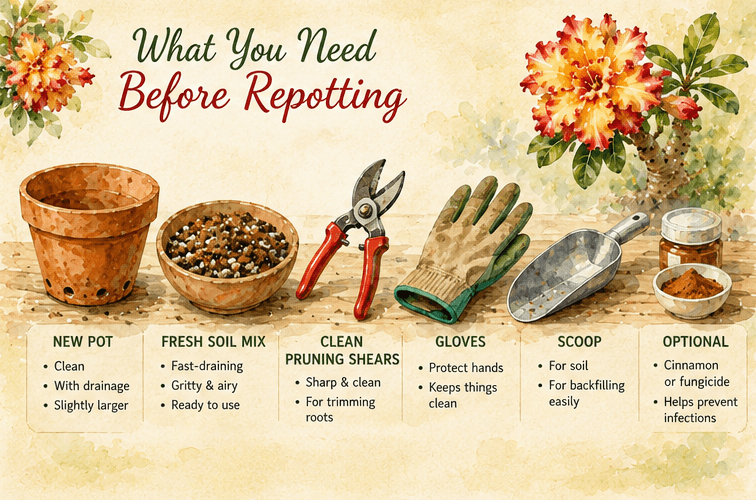
What You Need Before Repotting
Before starting, prepare everything so the repotting process is smooth and safe.
You will need:
- A new pot with drainage holes
- Fresh fast-draining Adenium soil mix
- Clean pruning shears or scissors
- Gloves
- A small shovel or scoop
- Optional: cinnamon or fungicide for cut roots
- Optional: chopstick or small tool for loosening soil
- Optional: newspaper or tray for easy cleanup
Wearing gloves is recommended because Desert Rose sap can irritate skin. The plant is also considered toxic if ingested, so keep it away from pets and children while working.
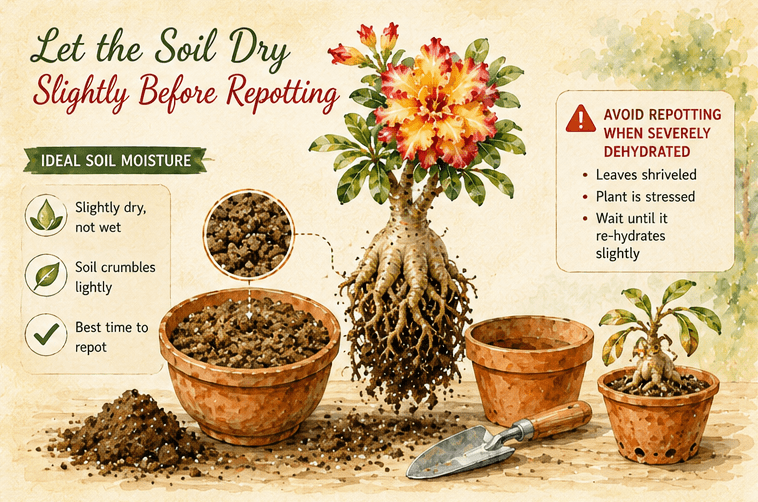
Step-by-Step Guide: How to Repot Desert Rose Safely
Step 1: Let the Soil Dry Slightly Before Repotting
It is usually easier and safer to repot Desert Rose when the soil is slightly dry. Wet soil can stick to the roots and make the plant heavier and harder to handle.
Dry soil also makes it easier to inspect the roots and remove old potting mix.
However, do not repot a severely dehydrated plant. If the caudex is very wrinkled and the plant is weak, give it time to recover before repotting unless there is root rot.
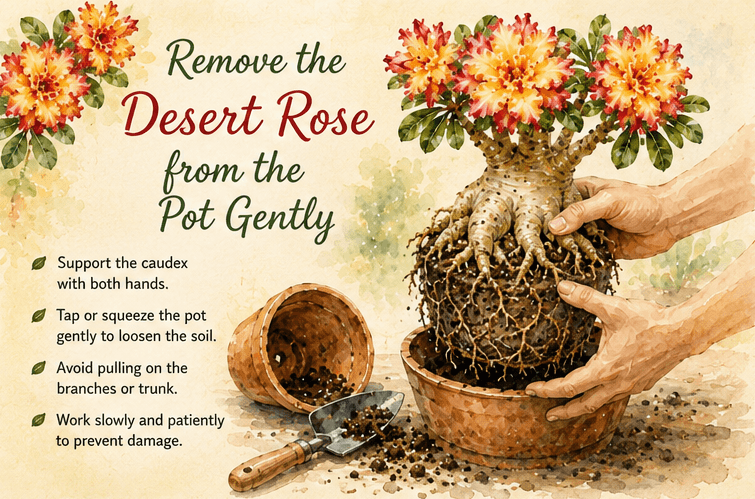
Step 2: Remove the Desert Rose from the Pot Gently
Hold the plant near the base of the caudex, not by the branches. Gently loosen the pot by squeezing the sides if it is plastic, or tapping the pot if it is clay or ceramic.
If the plant is stuck, avoid pulling forcefully. Instead, loosen the soil around the pot edges with a small tool.
Pulling too hard can damage roots or break branches.
If roots are growing through drainage holes, carefully cut or loosen them before removing the plant.

Step 3: Remove Old Soil Carefully
Once the plant is out of the pot, gently remove old soil from around the roots.
You do not always need to remove every bit of soil. But if the old soil is heavy, wet, sour-smelling, or compacted, remove as much as possible.
Be gentle with healthy roots. Desert Rose can recover from root trimming, but unnecessary root damage can slow recovery.
Use your fingers, a soft brush, or a small stick to loosen the soil carefully.

Step 4: Inspect the Roots
Root inspection is one of the biggest benefits of repotting.
Healthy Desert Rose roots should be firm and light-colored to tan. They should not smell bad or feel mushy.
Check for:
- Black roots
- Soft roots
- Mushy roots
- Hollow roots
- Bad smell
- Wet, slimy areas
- Rot near the base of the caudex
If the roots look healthy, you can continue repotting normally.
If you find root rot, you need to remove the affected parts before placing the plant into fresh soil.

Step 5: Trim Rotten or Damaged Roots
Use clean, sharp scissors or pruning shears to remove any rotten roots. Cut back to firm, healthy tissue.
Do not leave mushy roots attached, because rot can continue spreading.
After trimming roots, let the cuts dry before repotting if the damage was significant. Some growers allow the plant to sit in a shaded, dry place for several hours or even overnight so wounds can callus slightly.
You can also apply a light dusting of cinnamon or fungicide to cut areas if desired.
The goal is to prevent fresh wounds from sitting in wet soil immediately.

Step 6: Prepare the New Pot
Add a layer of fresh fast-draining soil mix to the bottom of the new pot.
Position the plant so the caudex sits at the height you want.
Make sure the plant is centered and stable before filling around the roots.
Do not bury the caudex too deeply. Desert Rose is often grown with part of the caudex visible above the soil line, especially for ornamental display.

Step 7: Place the Desert Rose into Fresh Soil
Spread the roots gently and fill around them with fresh soil mix.
Do not press the soil too tightly. The mix should stay airy and loose.
You can tap the pot lightly to help soil settle into gaps, but avoid compacting it heavily.
The plant should feel stable, but the root zone should still have airflow.

Step 8: Should You Raise the Caudex When Repotting?
Many growers raise the caudex during repotting to create a more dramatic bonsai-like appearance.
This is optional.
Raising the caudex can improve the plant’s visual appeal, but it should be done gradually. Do not expose too much root all at once, especially on young or weak plants.
Raise the caudex only if:
- The plant is healthy
- The roots are strong
- The plant is mature enough
- You can keep it stable in the pot
- You are not exposing delicate young roots too suddenly
A safe method is to raise the caudex slightly each time you repot instead of making a drastic change in one repotting session.
Plant health should always come before appearance.

Step 9: Do Not Water Too Heavily Immediately
After repotting, many growers make the mistake of soaking the plant right away.
With Desert Rose, this depends on root condition.
If the roots were healthy and barely disturbed, you may water lightly after repotting or wait a short time.
If roots were trimmed, damaged, or rotted, it is safer to wait a few days before watering. This allows cut areas to dry and reduces the risk of rot.
A good rule:
If roots were cut, wait before heavy watering.
When you do water, water gently and make sure excess water drains completely.

Aftercare: How to Care for Desert Rose After Repotting
Repotting aftercare is just as important as the repotting process itself.
After repotting, place your Desert Rose in a warm, bright location with good airflow. Avoid intense harsh sun for a few days if the plant was heavily disturbed.
Light After Repotting
Give bright indirect light at first, especially if roots were trimmed. After the plant stabilizes, gradually return it to stronger sunlight.
Watering After Repotting
Water carefully. Do not keep the soil wet. Let the soil dry between waterings.
Fertilizer After Repotting
Do not fertilize immediately after repotting, especially if roots were trimmed. Wait until the plant shows signs of active growth before feeding lightly.
Recovery Time
Some Desert Rose plants recover quickly, while others may pause growth for a few weeks. This is normal.
During recovery, avoid unnecessary stress.

How Long Does Desert Rose Take to Recover After Repotting?
Recovery time depends on root health, season, temperature, and how much the roots were disturbed.
A healthy plant repotted during warm active growth may recover within 1–3 weeks. A plant with root damage or rot may take longer.
Signs of recovery include:
- Firm caudex
- New leaf growth
- Stable stems
- No spreading softness
- Soil drying normally
- Roots beginning to establish
If your plant drops a few leaves after repotting, do not panic. Mild leaf drop can happen from stress.
However, if the caudex becomes soft or the soil stays wet too long, check for root problems.

Should You Prune Desert Rose When Repotting?
You can prune Desert Rose around the same time as repotting, but avoid doing too much at once if the plant is already stressed.
If the plant is healthy and actively growing, light pruning can help balance the top growth and encourage branching.
Prune if you need to:
- Remove dead branches
- Shape the plant
- Reduce top-heavy growth
- Encourage branching
- Remove damaged stems
Avoid heavy pruning and heavy root trimming at the same time unless necessary. Too much stress can slow recovery.

Can You Repot Desert Rose While It Is Blooming?
It is better to avoid repotting while Desert Rose is actively blooming unless necessary.
Blooming uses energy, and repotting can cause stress. If the plant is healthy and flowering, wait until the bloom cycle slows before repotting.
However, if the plant has root rot, soggy soil, or serious drainage problems, repotting may be necessary even during flowering.
Plant health should come first.

Can You Repot Desert Rose in Winter?
Repotting Desert Rose in winter is usually not recommended unless it is an emergency.
During winter or dormancy, the plant grows slowly and uses less water. Root recovery is slower, and wet soil becomes more dangerous.
Avoid winter repotting if the plant is healthy.
Only repot in winter if:
- Root rot is suspected
- Soil is staying dangerously wet
- The pot has no drainage
- The plant is declining quickly
If winter repotting is necessary, keep the plant warm, use very fast-draining soil, and water carefully.
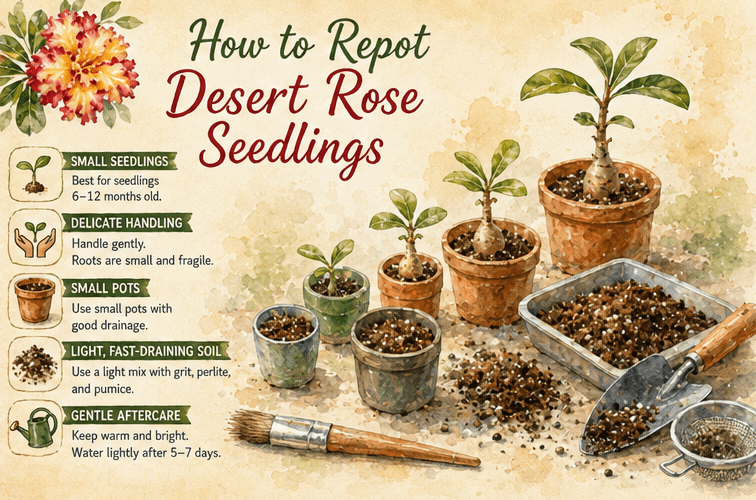
How to Repot Desert Rose Seedlings
Desert Rose seedlings should be repotted gently because their roots are small and delicate.
Repot seedlings when they have several true leaves and are strong enough to handle. Avoid moving them too early unless they are overcrowded or the soil is causing problems.
Seedling repotting tips:
- Use small pots
- Use light, fast-draining soil
- Handle seedlings by the leaves or soil plug, not the stem
- Keep the soil lightly moist after repotting
- Avoid strong direct sun immediately
- Do not overpot seedlings into large containers
Seedlings need slightly more moisture than mature plants, but they should never sit in soggy soil.

How to Repot a Mature Desert Rose
Mature Desert Rose plants often have larger caudexes and heavier root systems. They need more support during repotting.
For mature plants:
- Use a stable work surface
- Support the caudex carefully
- Choose a wider, heavier pot
- Inspect large roots thoroughly
- Remove old compacted soil
- Raise the caudex gradually if desired
- Avoid oversized deep pots
Mature plants often look best in wide pots that show off the caudex and root structure.
A wider pot also helps prevent top-heavy plants from tipping over.

How to Repot Desert Rose with Root Rot
If your Desert Rose has root rot, repotting becomes a rescue process.
Signs of root rot include:
- Soft caudex
- Mushy roots
- Black roots
- Bad smell
- Yellowing leaves
- Wet soil that does not dry
- Plant collapsing
To repot a Desert Rose with root rot:
- Remove the plant from wet soil
- Wash or gently clear soil from the roots
- Cut away all rotten roots
- Remove any soft infected tissue
- Let the plant dry in a shaded area
- Repot into fresh dry fast-draining soil
- Wait before watering
- Keep warm with good airflow
Do not reuse the old wet soil. It may contain fungal pathogens and will likely continue causing problems.

Should You Wash Desert Rose Roots When Repotting?
You do not always need to wash the roots. If the old soil is loose and healthy, gently removing excess soil is enough.
However, washing may be helpful if:
- The old soil is muddy
- Root rot is suspected
- Soil is stuck tightly around roots
- You need to inspect the root system clearly
- The plant was in poor-quality soil
If you wash the roots, allow them to dry before repotting, especially if any roots were cut.
Do not place wet, freshly damaged roots directly into wet soil.

Should You Remove All Old Soil?
Not always.
If the old soil is healthy, fast-draining, and not compacted, you can leave some soil around the roots to reduce stress.
But remove as much old soil as possible if it is:
- Heavy
- Wet
- Sour-smelling
- Compacted
- Clay-like
- Holding too much moisture
- Associated with root rot
The worse the old soil is, the more important it is to replace it.
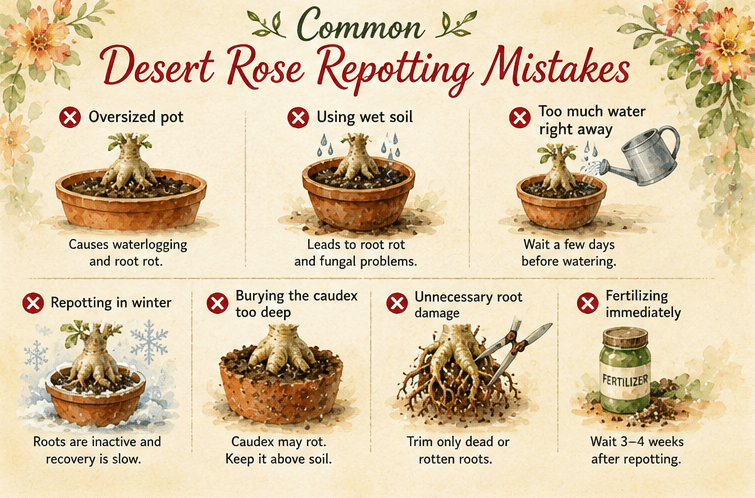
Common Desert Rose Repotting Mistakes
Using a Pot That Is Too Large
Oversized pots hold too much moisture and increase rot risk.
Using Soil That Stays Wet
Heavy soil is one of the biggest dangers after repotting.
Watering Too Much Right Away
Freshly disturbed roots are more vulnerable to rot.
Repotting During Cold Dormancy
Cold weather slows recovery and makes wet soil more dangerous.
Burying the Caudex Too Deep
A deeply buried caudex can hold moisture around the base and reduce ornamental appeal.
Damaging Roots Unnecessarily
Handle roots gently. Trim only what is damaged, rotten, or excessive.
Fertilizing Immediately
Freshly repotted plants need recovery time before feeding.
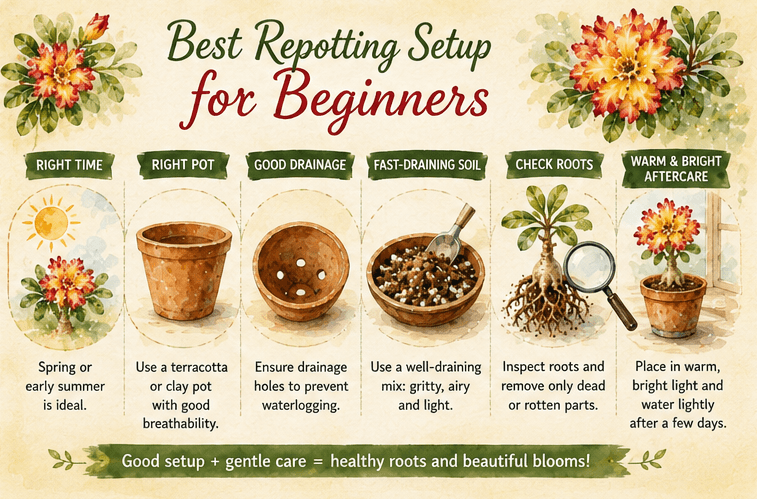
Best Repotting Setup for Beginners
If you are new to repotting Desert Rose, use a simple and safe setup.
Beginner-friendly repotting setup:
- Repot in spring or early summer
- Use a terracotta or clay pot
- Choose a pot with drainage holes
- Use fast-draining Adenium soil mix
- Let old soil dry slightly before repotting
- Inspect roots carefully
- Remove rotten roots only if needed
- Wait before heavy watering if roots were cut
- Keep warm and bright after repotting
This setup reduces the risk of overwatering and helps your Desert Rose recover well.
Desert Rose Repotting FAQ
When is the best time to repot Desert Rose?
The best time to repot Desert Rose is during spring or early summer when the plant is actively growing and temperatures are warm.
Should I water Desert Rose right after repotting?
If roots were healthy and not disturbed much, light watering may be okay. If roots were trimmed or damaged, wait a few days before watering to reduce rot risk.
What soil should I use when repotting Desert Rose?
Use a fast-draining mix such as 50% cactus or succulent soil, 25% perlite or pumice, and 25% coarse sand.
What kind of pot is best for Desert Rose?
A wide terracotta or clay pot with drainage holes is a good choice. The pot should be only slightly larger than the root system.
Can I repot Desert Rose in winter?
It is better to avoid winter repotting unless there is an emergency such as root rot or dangerously wet soil.
Should I raise the caudex when repotting?
You can raise the caudex gradually if the plant is healthy and mature enough. Avoid exposing too much root at once.
Why is my Desert Rose dropping leaves after repotting?
Mild leaf drop can happen from repotting stress. Keep the plant warm, bright, and avoid overwatering while it recovers.
Can I prune roots when repotting Desert Rose?
Yes, but only trim damaged, rotten, or excessive roots. Always use clean tools and allow cut areas to dry if needed.
How long does Desert Rose take to recover after repotting?
A healthy plant may recover in 1–3 weeks during warm active growth. Plants with root damage may take longer.
Can I fertilize Desert Rose after repotting?
Wait until the plant shows signs of active growth before fertilizing. Avoid feeding immediately after root disturbance.
Repotting Desert Rose Safely Protects Long-Term Health
Repotting Desert Rose safely is one of the best ways to support healthy roots, strong caudex development, and long-term growth. The process does not need to be complicated, but it does need to be done with care.
The most important rules are:
Repot during warm active growth.
Use fast-draining soil.
Choose a pot with drainage holes.
Handle roots gently.
Remove rotten roots if needed.
Do not overwater after repotting.
Give the plant warmth, light, and time to recover.
When done correctly, repotting gives your Desert Rose a fresh start. It improves drainage, refreshes the root environment, supports better growth, and allows the caudex to become even more attractive over time.
A healthy Desert Rose begins below the soil. Take care of the roots, and the plant will reward you with stronger growth, a beautiful caudex, and stunning flowers.

Start Your Desert Rose Journey from Seeds
Growing Desert Rose from seeds is one of the most rewarding ways to enjoy Adenium. Explore our selected Desert Rose seeds and start growing your own unique plants with beautiful shapes, vibrant blooms, and natural caudex development.
Recommended Desert Rose SeedsShop All


 1
1 Mixed
Mixed
 1Mixed
 1Mixed
 1Mixed
 1Mixed
 1Mixed
 1Mixed
 1Mixed
 1Mixed
 1Mixed
 1Mixed
 1Mixed
 1Mixed
 1Mixed
 1Mixed
 1Mixed
 1Mixed
 1Mixed
 1Mixed
 1Mixed
 1Mixed
 1Mixed
 1Mixed
 1Mixed
 1Mixed
 1Mixed
 1Mixed
 1Mixed
 1Mixed
 1Mixed
 1Mixed
 1Mixed
 1Mixed

 1
1
 1Mixed
 1Mixed
