

Desert Rose Guide
Best Pots for Desert Rose Plants

May
A Complete Guide to Choosing the Right Pot for Healthy Adenium Growth
Why the Right Pot Matters for Desert Rose
Desert Rose, also known as Adenium, is famous for its thick caudex, sculptural trunk, and beautiful trumpet-shaped flowers. Many growers focus on sunlight, watering, and soil, but one important detail is often overlooked:
The pot matters more than most people think.
Choosing the wrong pot can cause serious problems for Desert Rose plants. A pot that is too large may hold too much moisture. A pot without drainage holes can lead to root rot. A pot that is too deep may keep the lower soil wet for too long. On the other hand, the right pot can help your Desert Rose grow stronger roots, develop a healthier caudex, dry out properly between waterings, and stay stable as it matures.
Because Desert Rose behaves more like a succulent than a typical flowering plant, it needs a pot that supports excellent drainage, airflow, root health, and caudex development. Whether you are growing a young seedling, a mature Adenium, or a bonsai-style Desert Rose, this guide will help you choose the best pot for long-term success.
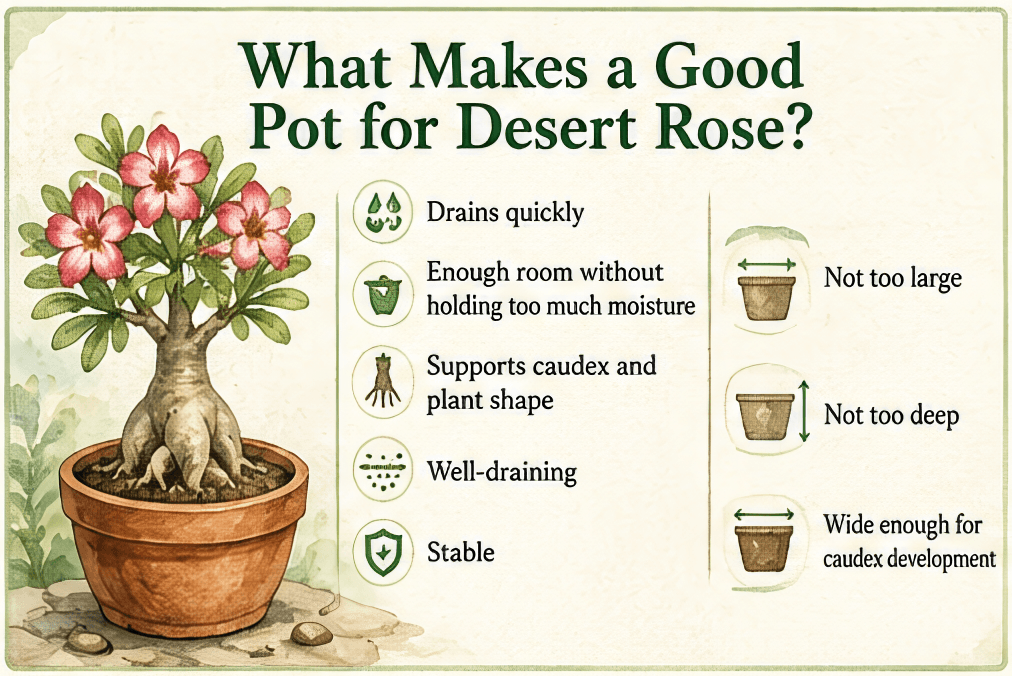
What Makes a Good Pot for Desert Rose?
A good Desert Rose pot should do three main things:
- Allow excess water to drain quickly
- Give the roots enough room without holding too much moisture
- Support the plant’s caudex and overall shape
Desert Rose stores water in its caudex and roots, so it does not like constantly wet conditions. This means the best pot is not just about looks. It must also help the growing medium dry at the right speed.
The ideal pot for Desert Rose should be:
- Well-draining
- Stable
- Not too large
- Not too deep
- Wide enough for caudex development
- Suitable for a fast-draining soil mix
- Strong enough to support the plant as it grows
A beautiful pot can improve presentation, but the health of the plant should always come first.
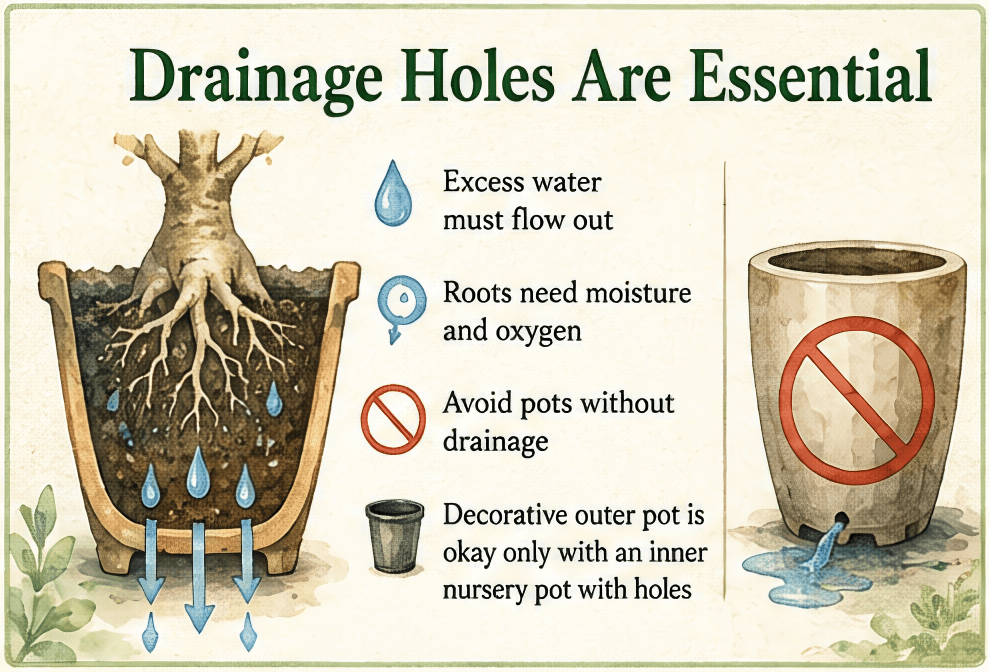
Drainage Holes Are Essential
The most important feature of any Desert Rose pot is drainage.
Desert Rose roots are very sensitive to excess moisture. If water collects at the bottom of the pot, the roots may stay wet for too long. This increases the risk of root rot, yellow leaves, soft caudex, and plant decline.
A pot for Desert Rose should always have at least one drainage hole at the bottom. Multiple drainage holes are even better, especially for larger pots.
Why Drainage Matters
When you water a Desert Rose, the soil should become evenly moist, then excess water should flow out of the bottom. After that, the soil should gradually dry.
This wet-dry cycle is important because roots need both moisture and oxygen. If the soil stays wet all the time, roots cannot breathe properly.
Avoid Pots Without Drainage
Decorative pots without drainage holes may look attractive, but they are risky for Adenium. If you want to use a decorative outer pot, place your Desert Rose in a nursery pot with drainage holes first, then put that inside the decorative pot. After watering, always make sure excess water is removed and not sitting at the bottom.
For Desert Rose care, drainage is not optional. It is a basic requirement.
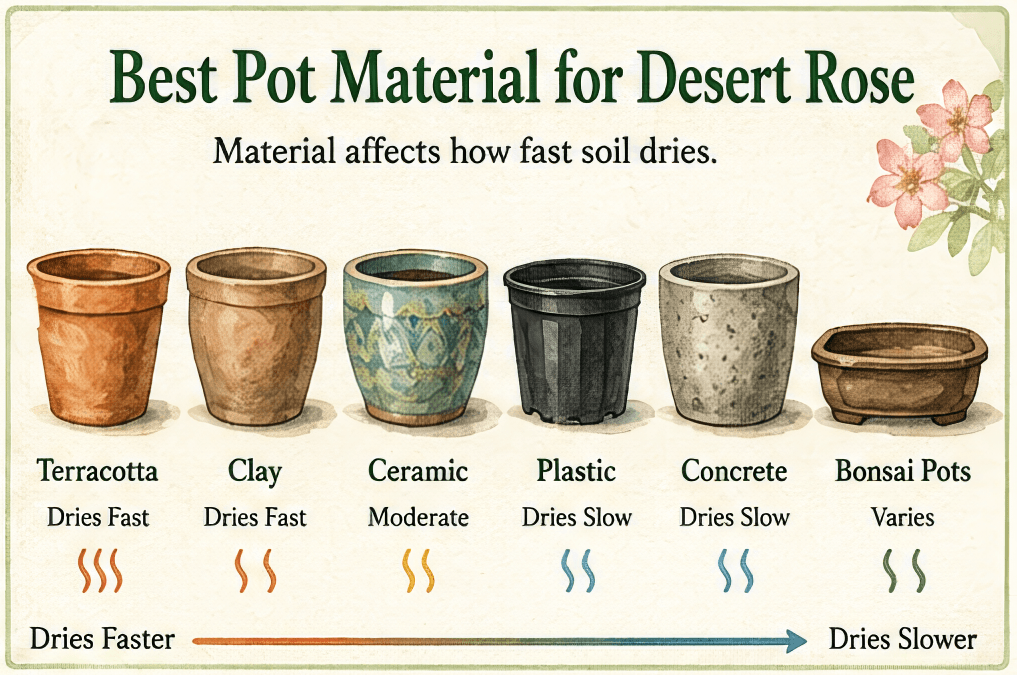
Best Pot Material for Desert Rose
Different pot materials affect how quickly soil dries. This is important because Desert Rose prefers fast-draining conditions.
The most common pot materials include:
- Terracotta
- Clay
- Ceramic
- Plastic
- Concrete
- Bonsai pots
Each has advantages and disadvantages.
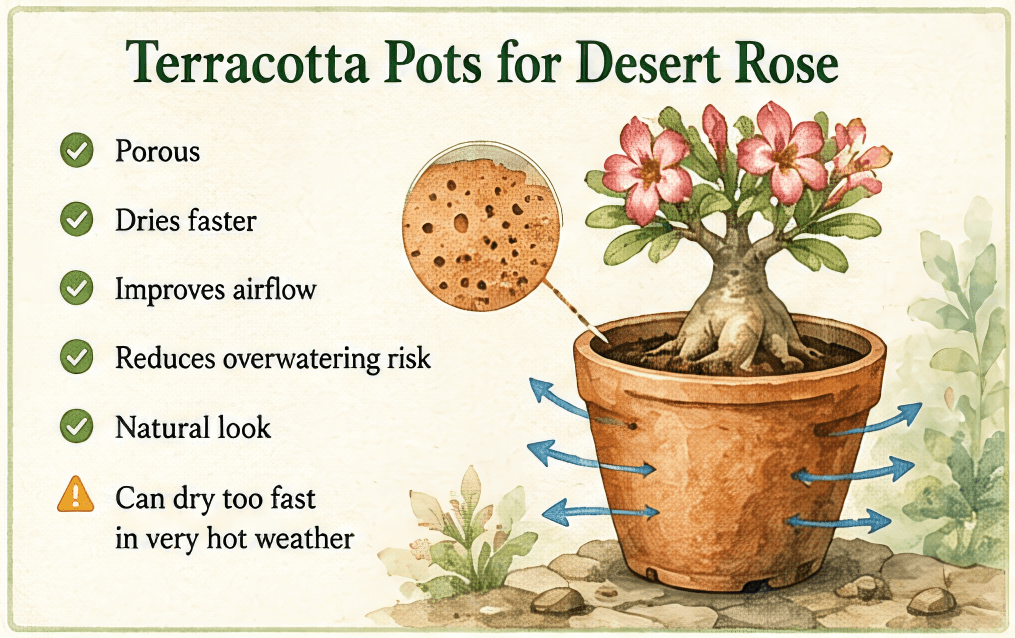
Terracotta Pots for Desert Rose
Terracotta is one of the best pot materials for Desert Rose, especially for beginners.
Terracotta is porous, meaning air and moisture can pass through the pot walls. This allows the soil to dry faster, reducing the risk of overwatering.
Benefits of Terracotta Pots
Terracotta pots are excellent because they:
- Help soil dry faster
- Improve airflow around roots
- Reduce overwatering risk
- Provide a natural look
- Match the desert-style appearance of Adenium
For growers who tend to water too often, terracotta can be very helpful.
Possible Downsides
Terracotta can dry out quickly in hot weather. If your climate is very hot and dry, you may need to water more often. Terracotta pots can also break if dropped and may crack in freezing temperatures.
Still, for most Desert Rose growers, terracotta is one of the safest and most reliable choices.
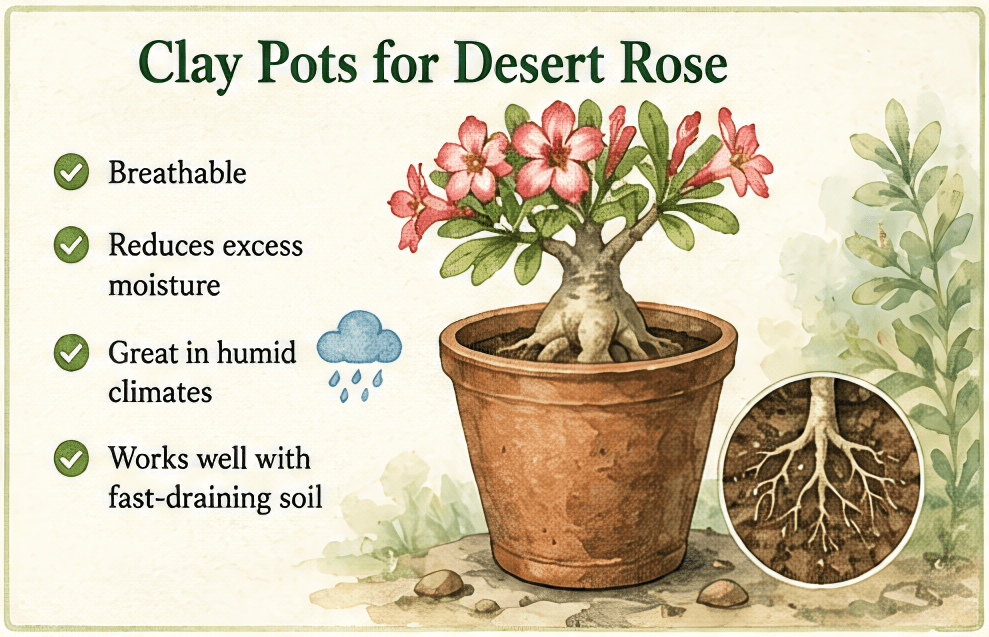
Clay Pots for Desert Rose
Clay pots are similar to terracotta and are also very suitable for Desert Rose. They offer good breathability and help reduce excess moisture.
Clay pots are especially useful for growers in humid climates because they help the soil dry more efficiently.
Adenium plants grown in clay pots often perform well when paired with a fast-draining soil mix.

Ceramic Pots for Desert Rose
Ceramic pots can be beautiful and decorative, but they vary a lot depending on whether they are glazed or unglazed.
Glazed Ceramic Pots
Glazed ceramic pots hold moisture longer because the glaze prevents water from evaporating through the pot walls. This means the soil may stay wet longer than it would in terracotta.
Glazed pots can still work for Desert Rose if they have drainage holes and are used with a very fast-draining soil mix. However, beginners should be careful not to overwater.
Unglazed Ceramic Pots
Unglazed ceramic pots are usually better because they breathe more like clay or terracotta.
If you choose ceramic, make sure the pot has drainage holes. A beautiful ceramic pot without drainage is not a good choice for Desert Rose.
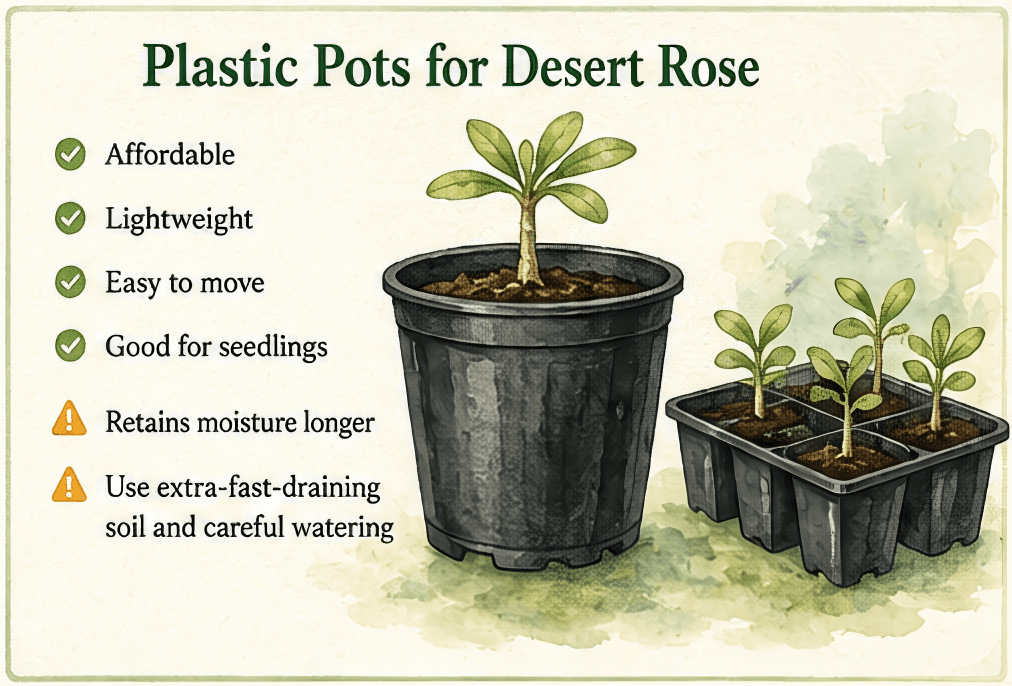
Plastic Pots for Desert Rose
Plastic pots are lightweight, inexpensive, and easy to find. They are commonly used for young plants and seedlings.
Plastic pots can work well, but they hold moisture longer than terracotta or clay. This means you must be more careful with watering.
Benefits of Plastic Pots
Plastic pots are useful because they:
- Are affordable
- Are lightweight
- Are easy to move
- Retain moisture longer in hot climates
- Are good for seedlings and nursery growing
Downsides of Plastic Pots
The main problem is moisture retention. If you use plastic pots with heavy soil, root rot risk increases.
Plastic pots are best when paired with a very fast-draining soil mix and careful watering.
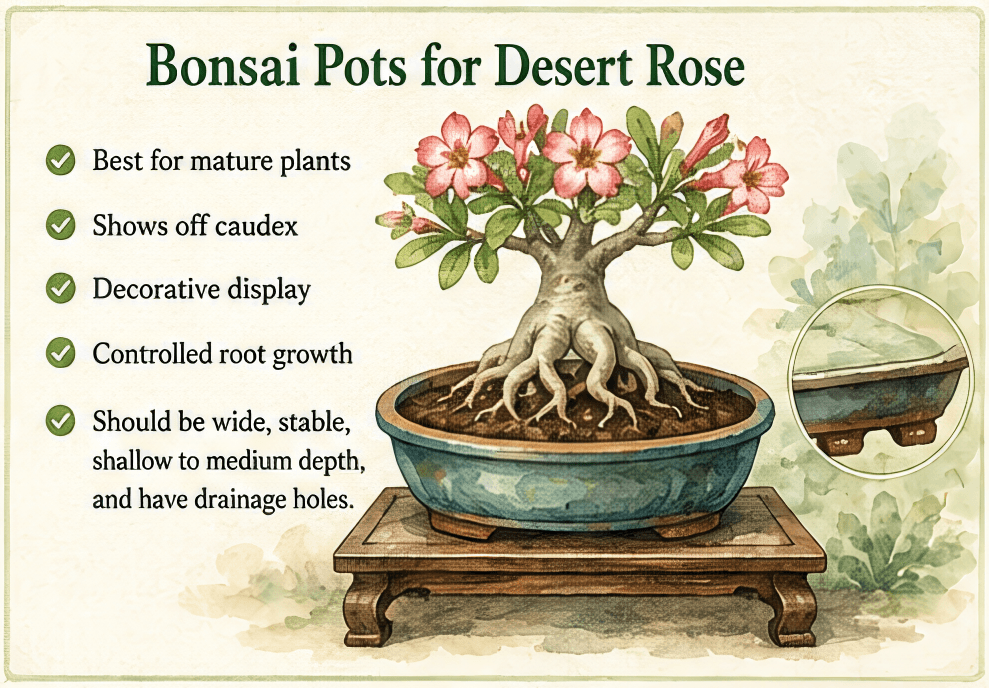
Bonsai Pots for Desert Rose
Desert Rose is often grown in a bonsai-like style because of its thick caudex and sculptural branches. For this reason, shallow bonsai pots can be very attractive.
Bonsai pots can help display the caudex beautifully and create a more artistic presentation.
When to Use a Bonsai Pot
Bonsai pots are best for:
- Mature Desert Rose plants
- Plants with developed caudex
- Decorative display
- Controlled root growth
- Bonsai-style shaping
They are not always ideal for very young seedlings because seedlings may need more room to establish roots first.
What to Look For
A good bonsai pot for Desert Rose should be:
- Wide
- Shallow to medium depth
- Stable
- Equipped with drainage holes
- Suitable for fast-draining soil
If the pot is too shallow, watering may need to be more frequent, especially in warm weather.

Wide vs Deep Pots: Which Is Better for Desert Rose?
For Desert Rose, wide pots are often better than very deep pots.
Adenium plants develop a thick caudex and spreading roots. A wider pot gives the caudex room to expand and makes the plant look more balanced.
Very deep pots can hold moisture in the lower part of the soil, especially if the root system does not fill the pot. This can increase the risk of root rot.
Best Shape for Desert Rose Pots
The best pot shape is usually:
- Wider than it is deep
- Stable at the base
- Not extremely tall
- Large enough for roots but not oversized
A wide, shallow-to-medium-depth pot is often ideal for mature Desert Rose plants.

What Size Pot Does Desert Rose Need?
Pot size is very important. Many beginners make the mistake of putting a small Desert Rose into a large pot, thinking it will help the plant grow faster.
In reality, an oversized pot can hold too much wet soil around the roots. This can slow growth and increase root rot risk.
General Pot Size Rule
Choose a pot that is only slightly larger than the current root system.
A good guideline:
- Young seedlings: small nursery pots
- Young plants: 1–2 inches wider than the root ball
- Mature plants: wide enough for caudex and root spread
- Bonsai-style plants: shallow wide pots with excellent drainage
Why Not Use a Huge Pot?
A pot that is too large contains more soil. More soil holds more water. If the roots cannot absorb that moisture quickly, the soil stays wet too long.
For Desert Rose, bigger is not always better.

Best Pot Size for Desert Rose Seedlings
Desert Rose seedlings should begin in small containers. A small pot helps control moisture and prevents the soil from staying wet too long.
Seedlings can be grown in seed trays or small nursery pots until they develop several true leaves and a stronger root system.
When transplanting seedlings, move them into small individual pots rather than large containers.
This helps young plants grow steadily without being overwhelmed by too much wet soil.
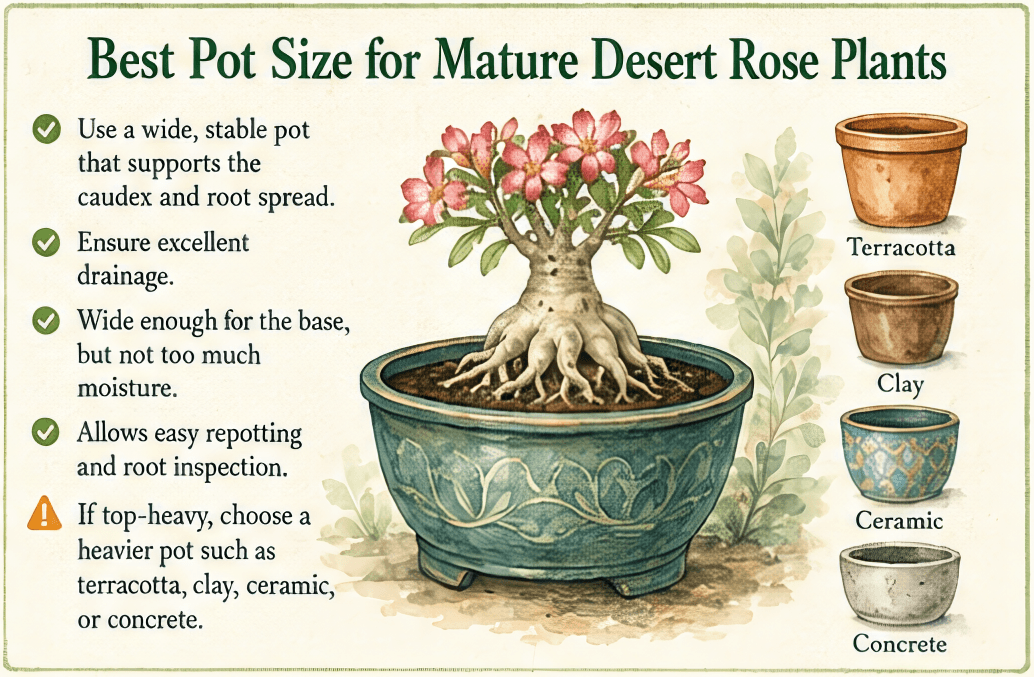
Best Pot Size for Mature Desert Rose Plants
Mature Desert Rose plants need more stability and room for their caudex. A wide pot is usually better than a narrow deep one.
The pot should give enough space for root growth but still allow the soil to dry between waterings.
For mature plants, choose a pot that:
- Supports the weight of the caudex
- Has good drainage
- Is wide enough for the plant’s base
- Does not hold excessive moisture
- Allows easy repotting when needed
If the plant becomes top-heavy, choose a heavier pot such as terracotta, clay, ceramic, or concrete.

Should Desert Rose Be Root Bound?
Desert Rose can tolerate being slightly root bound, and some growers believe a snug pot can help encourage blooming. However, the plant should not be severely root bound for too long.
A severely root-bound plant may struggle to absorb water and nutrients properly.
Signs Your Desert Rose Needs a Bigger Pot
Your plant may need repotting if:
- Roots are circling tightly around the pot
- Roots are coming out of drainage holes
- Water runs through too quickly
- Growth has slowed significantly
- The plant becomes unstable
- Soil breaks down and drains poorly
A slightly snug pot is fine. A badly crowded root system should be refreshed.

When Should You Repot Desert Rose?
The best time to repot Desert Rose is during active growth, usually in spring or early summer. This gives the plant time to recover quickly.
Avoid repotting during cold weather or dormancy unless there is an emergency, such as root rot.
Best Times to Repot
- Spring
- Early summer
- Warm active growing season
Avoid Repotting During
- Winter dormancy
- Cold weather
- Right before expected cold conditions
- Immediately before flowering if not necessary
After repotting, the plant may pause growth temporarily as it adjusts.

How Often Should You Repot Desert Rose?
Young Desert Rose plants may need repotting more often because they grow faster. Mature plants usually need repotting less frequently.
A general guideline:
- Seedlings: as needed when roots fill the container
- Young plants: every 1 year or when crowded
- Mature plants: every 2–3 years
- Bonsai-style plants: as needed for soil refresh and root maintenance
The goal is not to repot too often. Repot when the plant actually needs it.

How to Repot Desert Rose Safely
Repotting Desert Rose should be done carefully because the roots and caudex can be damaged if handled roughly.
Step 1: Let the Soil Dry Slightly
It is often easier and safer to repot when the soil is slightly dry rather than wet. Dry soil falls away more easily from the roots.
Step 2: Remove the Plant Gently
Hold the plant near the base and slide it out carefully. Avoid pulling hard on the trunk or branches.
Step 3: Inspect the Roots
Check for:
- Mushy roots
- Black roots
- Bad smell
- Root rot
- Overcrowding
Healthy roots should be firm, not soft or slimy.
Step 4: Trim Damaged Roots
If you find rotted roots, remove them with clean tools. Allow cut areas to dry before replanting if needed.
Step 5: Place in Fresh Fast-Draining Soil
Use a pot with drainage holes and a suitable Desert Rose soil mix.
Step 6: Wait Before Heavy Watering
After repotting, avoid soaking the plant immediately. Give it time to adjust, especially if roots were trimmed.

Should You Raise the Caudex When Repotting?
Many Desert Rose growers gradually raise the caudex during repotting to create a more dramatic bonsai-like look.
This is optional and should be done carefully.
When to Raise the Caudex
Raise the caudex only when the plant is healthy and mature enough. Do not expose too much root too quickly, especially on young plants.
A gradual approach is best. Each time you repot, you can position the plant slightly higher if desired.
Why Raise the Caudex?
Raising the caudex can:
- Improve the plant’s sculptural appearance
- Show off root structure
- Create a bonsai-style look
- Increase ornamental value
However, plant health should always come before appearance.

Best Pots for Desert Rose in Humid Climates
In humid climates, Desert Rose is at higher risk of root rot because soil dries more slowly.
Best pot choices for humid areas:
- Terracotta pots
- Unglazed clay pots
- Shallow wide pots
- Pots with multiple drainage holes
- Pots paired with extra-fast-draining soil
Avoid large plastic pots in humid climates unless you are very careful with watering.

Best Pots for Desert Rose in Hot, Dry Climates
In hot, dry climates, soil can dry very quickly. In this case, plastic or glazed ceramic pots may sometimes be useful because they retain moisture longer.
However, drainage holes are still essential.
Best pot choices for hot, dry areas:
- Terracotta if you can water more often
- Plastic pots with excellent drainage
- Glazed ceramic pots with drainage holes
- Slightly deeper pots if drying is too fast
The best pot depends on your watering habits and local climate.

Best Decorative Pots for Desert Rose
Desert Rose is highly ornamental, so many growers want a pot that enhances its appearance.
Good decorative pot styles include:
- Earth-tone terracotta
- Rustic clay pots
- Low bonsai bowls
- Neutral ceramic planters
- Stone-look containers
- Wide shallow pots
Choose colors and textures that highlight the caudex and flowers without overwhelming the plant.
For a natural look, earthy tones usually work beautifully with Desert Rose.

Common Pot Mistakes to Avoid
1. Using a Pot Without Drainage
This is one of the biggest mistakes. Desert Rose should never sit in trapped water.
2. Choosing a Pot That Is Too Large
Oversized pots hold too much moisture and can cause root problems.
3. Using Heavy Soil in a Moisture-Retaining Pot
Plastic or glazed pots combined with dense soil can be dangerous for Adenium.
4. Repotting Too Often
Frequent repotting can stress the plant. Repot only when needed.
5. Using a Pot That Is Too Tall and Narrow
Tall narrow pots can be unstable and may not display the caudex well.
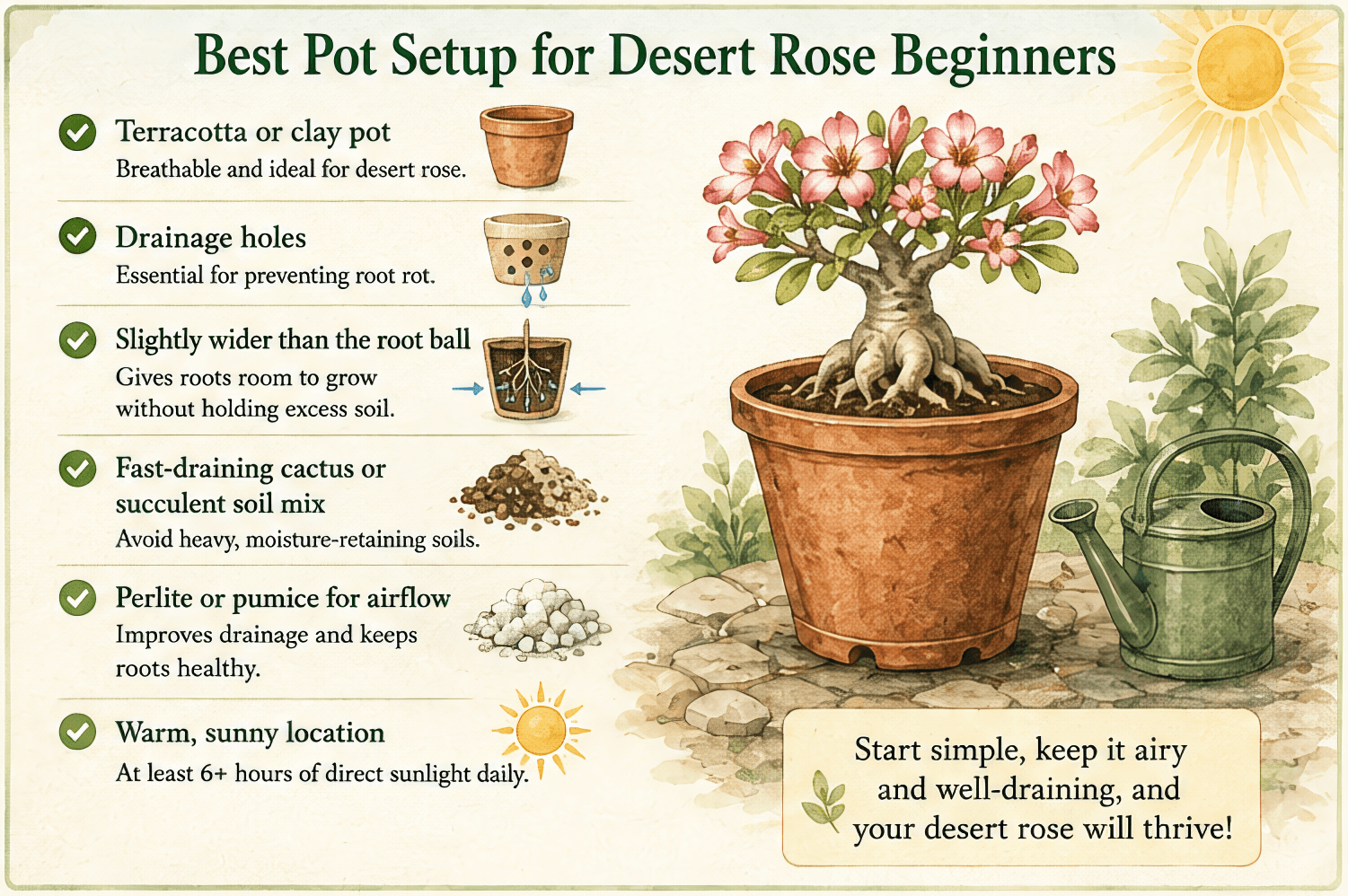
Best Pot Setup for Desert Rose Beginners
If you are new to Desert Rose, the safest setup is simple:
- Terracotta or clay pot
- Drainage holes
- Slightly wider than the root ball
- Fast-draining cactus/succulent soil mix
- Perlite or pumice added for airflow
- Warm, sunny location
This setup reduces the risk of overwatering and gives the plant a strong foundation.
Desert Rose Pot FAQ
What kind of pot is best for Desert Rose?
A terracotta or clay pot with drainage holes is one of the best choices, especially for beginners. These pots help soil dry faster and reduce overwatering risk.
Does Desert Rose like deep or shallow pots?
Desert Rose usually does better in wide, shallow-to-medium-depth pots rather than very deep pots. Wide pots support caudex development and help prevent excess moisture from staying at the bottom.
Can Desert Rose grow in plastic pots?
Yes, Desert Rose can grow in plastic pots, but you must be careful with watering because plastic holds moisture longer than terracotta or clay.
Should Desert Rose pots have drainage holes?
Yes. Drainage holes are essential. Without drainage, water can collect at the bottom and cause root rot.
When should I repot Desert Rose?
Repot during spring or early summer when the plant is actively growing. Repot when roots are crowded, soil drains poorly, or the plant becomes unstable.
Can I use a bonsai pot for Desert Rose?
Yes. Bonsai pots are excellent for mature Desert Rose plants, especially if you want to show off the caudex. Make sure the bonsai pot has drainage holes.
Is a large pot good for Desert Rose?
Not usually. A pot that is too large can hold too much wet soil and increase the risk of root rot. Choose a pot only slightly larger than the root system.
Should I raise the caudex when repotting?
You can gradually raise the caudex during repotting for a bonsai-style look, but do it slowly and only with healthy plants.
The Best Pot Helps Desert Rose Grow Stronger
Choosing the best pot for Desert Rose is not just about decoration. It directly affects watering, root health, caudex development, and long-term growth.
For most beginners, the best choice is a wide terracotta or clay pot with drainage holes. This type of pot allows the soil to dry properly, reduces the risk of overwatering, and supports healthy root development.
If you remember only one thing, remember this:
Desert Rose needs a pot that drains well, dries properly, and supports the caudex.
When you combine the right pot with fast-draining soil, strong sunlight, warm temperatures, and careful watering, your Desert Rose will have the foundation it needs to grow beautifully for years.

Start Your Desert Rose Journey from Seeds
Growing Desert Rose from seeds is one of the most rewarding ways to enjoy Adenium. Explore our selected Desert Rose seeds and start growing your own unique plants with beautiful shapes, vibrant blooms, and natural caudex development.
Recommended Desert Rose SeedsShop All

 1
1 Mixed
Mixed
 1Mixed
 1Mixed
 1Mixed
 1Mixed
 1Mixed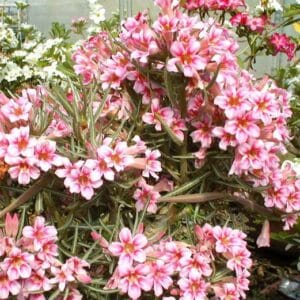
 1Mixed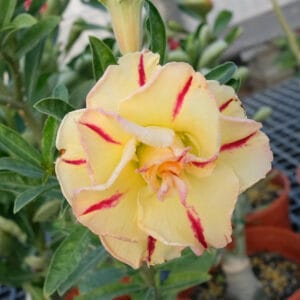
 1Mixed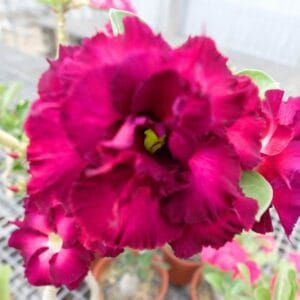
 1Mixed
 1Mixed
 1Mixed
 1Mixed
 1Mixed
 1Mixed
 1Mixed
 1Mixed
 1Mixed
 1Mixed
 1Mixed
 1Mixed
 1Mixed
 1Mixed
 1Mixed
 1Mixed
 1Mixed
 1Mixed
 1Mixed
 1Mixed
 1Mixed
 1Mixed
 1Mixed
 1Mixed
 1Mixed
 1Mixed
 1Mixed
 1Mixed
