

Plant Care & Troubleshooting
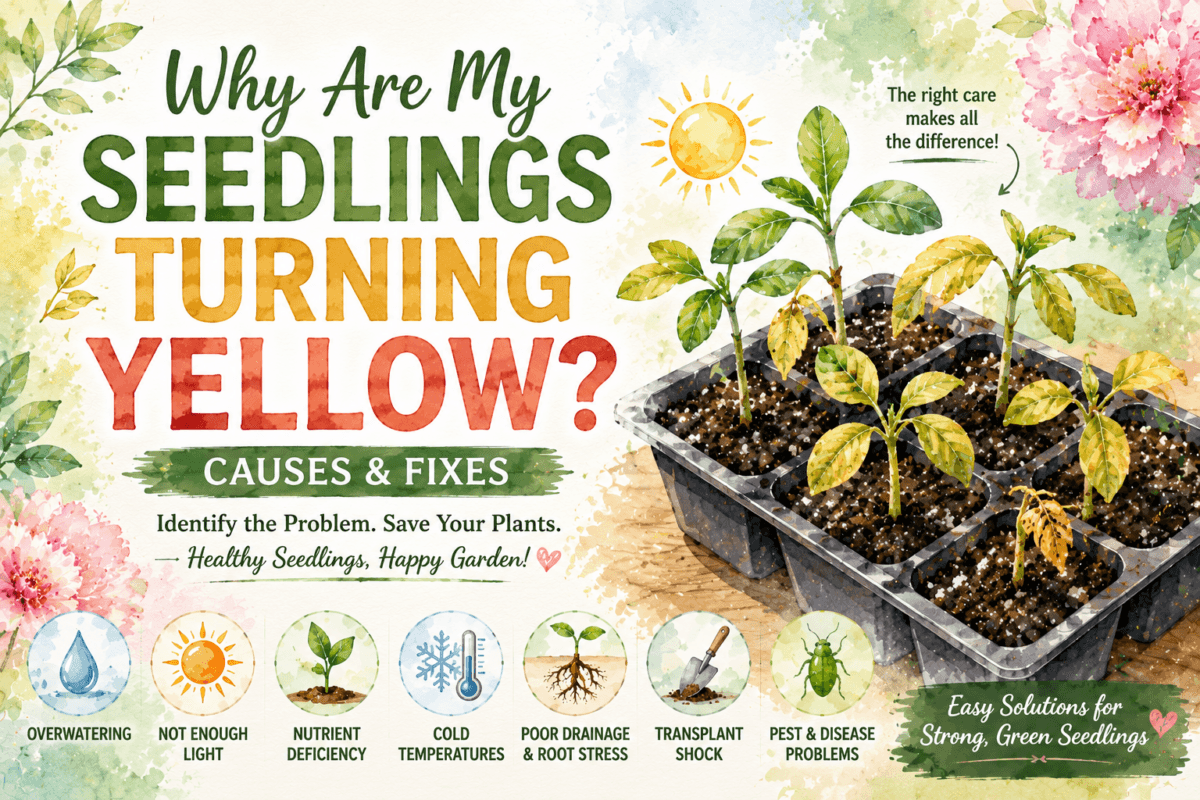
Why Are My Seedlings Turning Yellow? Causes and Fixes
May
Yellow Seedlings Are a Warning Sign, Not a Failure
Seeing your seedlings turn yellow can be frustrating, especially when they looked healthy just a few days ago. Many beginner gardeners immediately worry that their seedlings are dying, but yellow leaves do not always mean the plant is beyond saving.
In most cases, yellow seedlings are a sign that something in the growing environment needs adjustment. The cause may be too much water, poor drainage, lack of nutrients, weak light, cold temperatures, transplant stress, or natural seed leaf aging.
The important thing is to identify which leaves are turning yellow, how quickly the yellowing is spreading, and what the growing conditions are like. A seedling with one or two yellow seed leaves may be completely normal. But if the true leaves are yellowing, the stems are weak, the soil is wet, or growth has stopped, the seedling may need immediate care.
In this complete guide, you’ll learn the most common reasons seedlings turn yellow, how to tell what is causing the problem, and how to fix yellow seedlings before they decline further.
Why Are My Seedlings Turning Yellow?
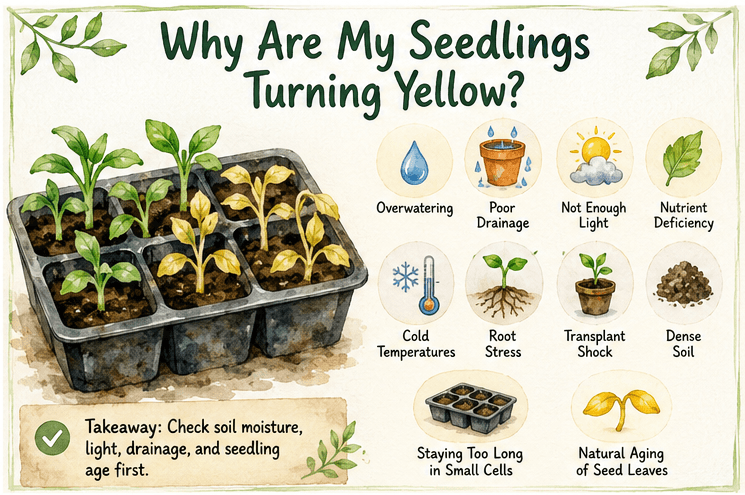
Seedlings usually turn yellow because they are stressed. The most common causes are:
- Overwatering
- Poor drainage
- Not enough light
- Nutrient deficiency
- Cold temperatures
- Root stress
- Transplant shock
- Soil that is too dense
- Seedlings staying too long in small cells
- Natural aging of seed leaves
The most common beginner mistake is watering too often. Seedlings need consistent moisture, but they should not sit in soggy soil. When the soil stays wet for too long, roots cannot breathe properly, and the leaves may begin turning yellow.
Another common cause is weak light. Seedlings need enough light to produce energy. Without enough light, they may become pale, stretched, thin, and weak.
The best first step is simple:
Check the soil moisture, light level, drainage, and seedling age before adding fertilizer.
Seed Leaves vs True Leaves: Which Leaves Are Turning Yellow?
Before diagnosing the problem, look carefully at which leaves are yellowing.
This matters because not all yellow leaves mean something is wrong.
Yellow Seed Leaves Can Be Normal
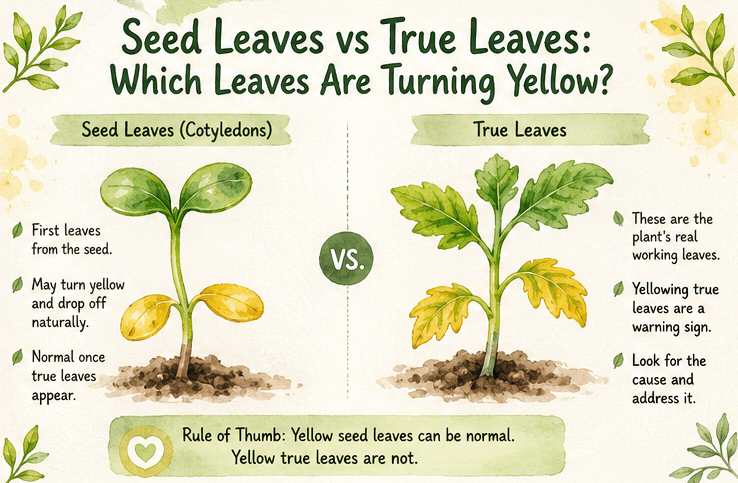
The first leaves that appear after germination are called seed leaves, or cotyledons. These are not the plant’s permanent leaves. Their job is to help the young seedling get started.
Once the seedling grows true leaves, the seed leaves may naturally turn yellow, dry up, and fall off.
This is normal if:
- Only the bottom seed leaves are yellow
- New true leaves look green and healthy
- The seedling is still growing
- The stem is firm
- The soil is not soggy
- The plant does not look weak overall
In this case, you usually do not need to do anything.
Yellow True Leaves Are a Bigger Warning Sign
True leaves are the leaves that appear after the seed leaves. They usually look more like the mature plant’s leaves.
If the true leaves are turning yellow, it may indicate a care problem.
Possible causes include:
- Too much water
- Not enough nutrients
- Not enough light
- Poor soil
- Root damage
- Temperature stress
- Disease
If the yellowing spreads from the lower leaves to the newer growth, you should check the growing conditions quickly.
Overwatering: The Most Common Cause of Yellow Seedlings
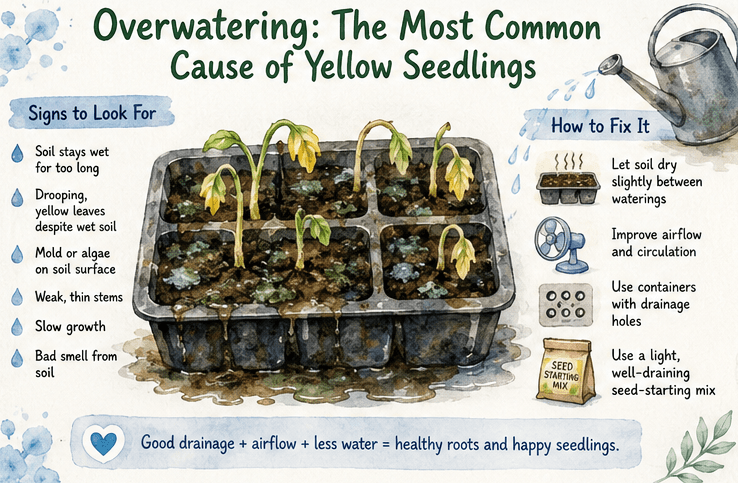
Overwatering is one of the biggest reasons seedlings turn yellow. Many beginners water seedlings every day because they are afraid the young plants will dry out. But too much water can be just as harmful as too little.
Seedling roots need oxygen. When the soil stays constantly wet, air spaces in the soil fill with water. The roots cannot breathe properly, and the plant becomes stressed.
Signs Your Seedlings Are Overwatered
Your seedlings may be overwatered if you notice:
- Yellow leaves
- Drooping even though the soil is wet
- Soil that stays dark and soggy
- Mold or algae on the soil surface
- Weak stems
- Slow growth
- Seedlings falling over
- Bad smell from the soil
Overwatered seedlings often look soft and weak rather than dry and crispy.
How to Fix Overwatered Seedlings
First, stop watering until the soil begins to dry. Move the seedlings to a brighter, warmer area with better airflow.
Make sure the container has drainage holes. If water cannot escape, the roots will stay too wet.
If the soil is very heavy or compacted, gently transplant the seedlings into a lighter seed-starting mix.
To prevent overwatering:
- Water only when the top layer begins to dry
- Use containers with drainage holes
- Avoid letting trays sit in standing water
- Use a light seed-starting mix
- Improve airflow
- Do not water on a fixed schedule
A good seedling mix should feel moist like a wrung-out sponge, not muddy.
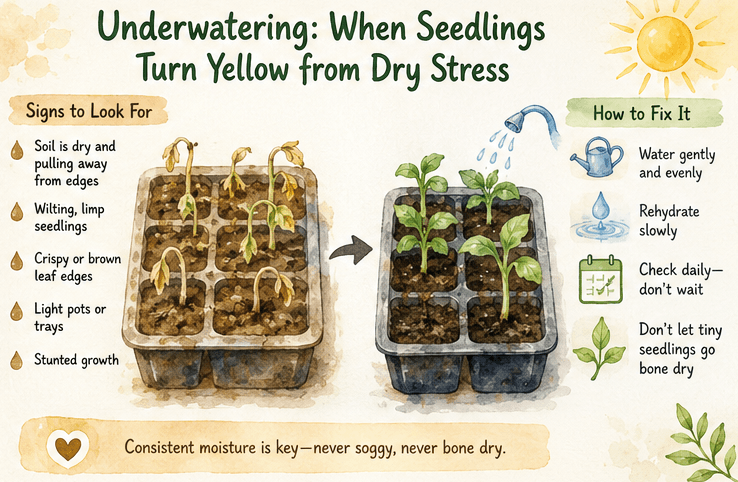
Underwatering: When Seedlings Turn Yellow from Dry Stress
Although overwatering is more common, underwatering can also cause yellowing. Seedlings have small root systems, so they dry out faster than mature plants.
If seedlings dry out too much, they may not be able to absorb enough water and nutrients. This can lead to yellowing, wilting, crispy leaves, and slow growth.
Signs Seedlings Are Underwatered
Underwatered seedlings may show:
- Dry, light-colored soil
- Wilting or drooping
- Crispy leaf edges
- Yellowing leaves
- Soil pulling away from the container edges
- Very lightweight pots or trays
- Stunted growth
Unlike overwatered seedlings, underwatered seedlings often look dry and fragile.
How to Fix Underwatered Seedlings
Water gently and evenly until the soil is moist. Avoid flooding the seedlings suddenly, especially if the soil has become very dry.
If water runs off the surface without soaking in, water slowly in several rounds.
To prevent underwatering:
- Check seedlings daily
- Water when the top layer begins to dry
- Avoid placing trays in hot direct sun too early
- Use a seed-starting mix that holds light moisture
- Do not let tiny seedlings dry out completely
Seedlings need balance: not soggy, but not bone dry for long periods.
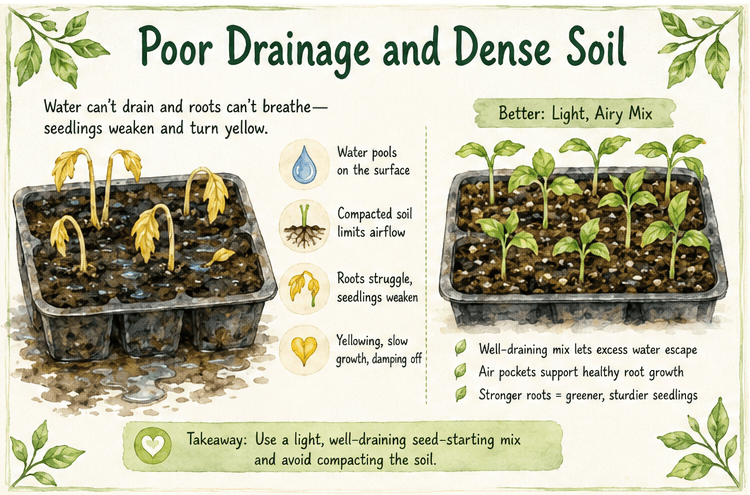
Poor Drainage and Dense Soil
Even if you water correctly, seedlings can still turn yellow if the soil does not drain well.
Dense soil holds too much water and blocks oxygen from reaching the roots. This often happens when gardeners use regular garden soil or heavy potting soil for seed starting.
Seedlings grow best in a light, fine-textured, airy mix.
Signs the Soil Is Too Heavy
Your seedling soil may be too dense if:
- Water sits on the surface
- Soil becomes muddy after watering
- Soil stays wet for many days
- Roots grow slowly
- Seedlings turn yellow and weak
- Mold appears on the surface
- The soil becomes hard or compacted
How to Fix Soil Drainage Problems
If the seedlings are still small and struggling, carefully transplant them into a better seed-starting mix.
A good seedling mix should be:
- Light
- Airy
- Fine-textured
- Well-draining
- Moisture-retentive without becoming soggy
Avoid heavy garden soil, clay soil, or dense compost-heavy mixes for young seedlings.
For many seeds, a quality seed-starting mix is better than regular potting soil because it is lighter and easier for young roots to grow through.
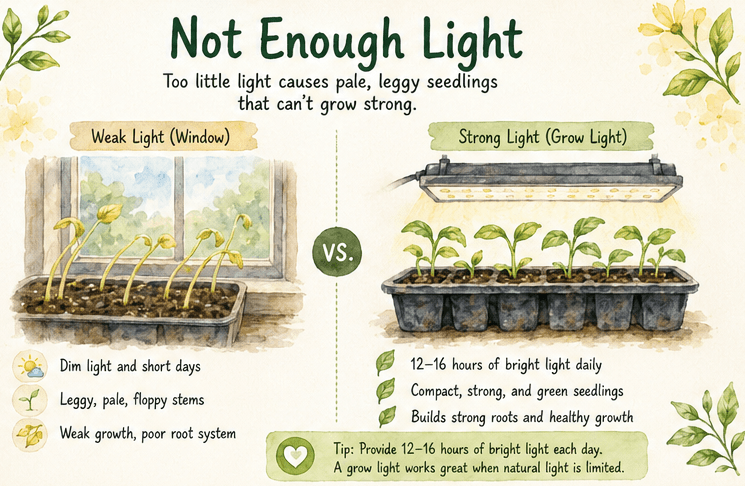
Not Enough Light
Light is another major reason seedlings turn yellow. Seedlings need light to make energy. Without enough light, they cannot grow strong green leaves.
Low light often causes seedlings to become pale, yellowish, tall, thin, and weak.
Signs Seedlings Need More Light
Your seedlings may not be getting enough light if you notice:
- Pale green or yellow leaves
- Long, thin stems
- Seedlings leaning toward the window
- Large gaps between leaves
- Slow growth
- Weak stems
- Seedlings falling over
This problem is especially common indoors, where window light may not be strong enough.
How Much Light Do Seedlings Need?
Most seedlings need bright light for healthy growth. If grown indoors, they often need 12–16 hours of light per dayunder a grow light.
A sunny windowsill may work for some seedlings, but many homes do not provide enough light, especially if the window is shaded or not south-facing.
How to Fix Low-Light Seedlings
Move seedlings to a brighter location or use a grow light.
If using a grow light:
- Keep it close enough to be effective
- Leave it on for 12–16 hours daily
- Raise the light as seedlings grow
- Avoid overheating the plants
If seedlings are already leggy and yellow, stronger light can help new growth become healthier, but stretched stems may not fully correct.
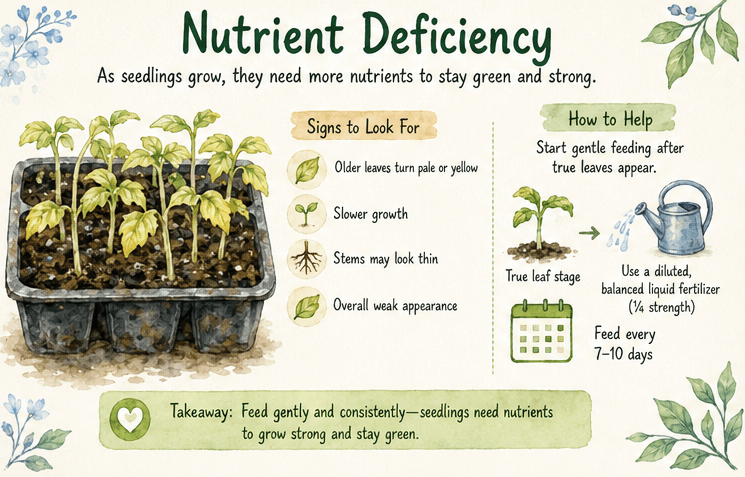
Nutrient Deficiency
Seedlings can turn yellow when they do not have enough nutrients, especially after they have used up the energy stored in the seed.
This often happens when seedlings stay in seed-starting mix for too long. Many seed-starting mixes are light and clean, but they may not contain much fertilizer.
When Nutrient Deficiency Happens
Nutrient deficiency is more likely when:
- Seedlings have several true leaves
- They have been growing in the same tray for weeks
- The seed-starting mix has little nutrition
- Growth has slowed
- Older leaves are turning pale or yellow
- Seedlings look generally weak but not soggy
How to Fix Nutrient Deficiency
Once seedlings have developed true leaves, you can begin feeding lightly with a diluted fertilizer.
Use a gentle fertilizer at half-strength or weaker. Seedlings are delicate, and strong fertilizer can burn their roots.
A safe approach:
- Wait until true leaves appear
- Use diluted balanced fertilizer
- Feed lightly
- Do not fertilize dry or stressed seedlings
- Avoid overfeeding
If seedlings are yellow because of overwatering or poor drainage, fertilizer will not solve the problem. Fix the root environment first.
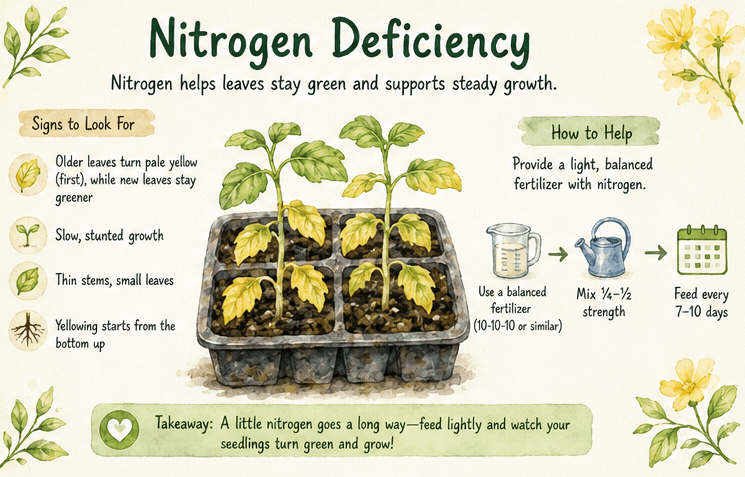
Nitrogen Deficiency
Nitrogen deficiency is a common reason older seedling leaves turn pale green or yellow. Nitrogen supports leafy growth, so seedlings without enough nitrogen may look weak or faded.
Signs of Nitrogen Deficiency
Possible signs include:
- Older leaves turning pale or yellow first
- Overall slow growth
- Smaller leaves
- Thin stems
- General lack of vigor
How to Fix Nitrogen Deficiency
Feed lightly with a balanced liquid fertilizer. Do not overdo it. Too much nitrogen can cause soft, weak growth.
For seedlings, gentle and consistent feeding is safer than strong fertilizer all at once.
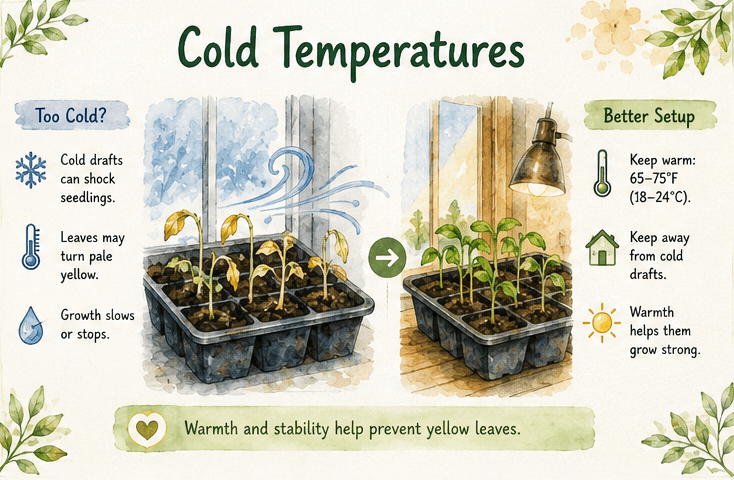
Cold Temperatures
Cold temperatures can slow seedling growth and cause yellowing. Many seeds germinate in warmth, but after sprouting, seedlings may still struggle if temperatures are too low.
Cold soil reduces root activity. When roots are cold, they absorb water and nutrients less efficiently.
Signs Seedlings Are Too Cold
Seedlings may be cold-stressed if:
- Growth is very slow
- Leaves turn pale or yellow
- Soil stays wet longer than normal
- Stems look weak
- Germination was slow or uneven
- Seedlings are near a cold window or draft
How to Fix Cold-Stressed Seedlings
Move seedlings to a warmer location. Keep them away from cold windows, air-conditioning vents, and drafty areas.
If seed trays are sitting on a cold surface, place them somewhere warmer. For some seeds, a heat mat may help during germination, but seedlings usually need warmth plus good light after sprouting.
Avoid combining cold conditions with wet soil. Cold and wet conditions greatly increase the risk of root problems.
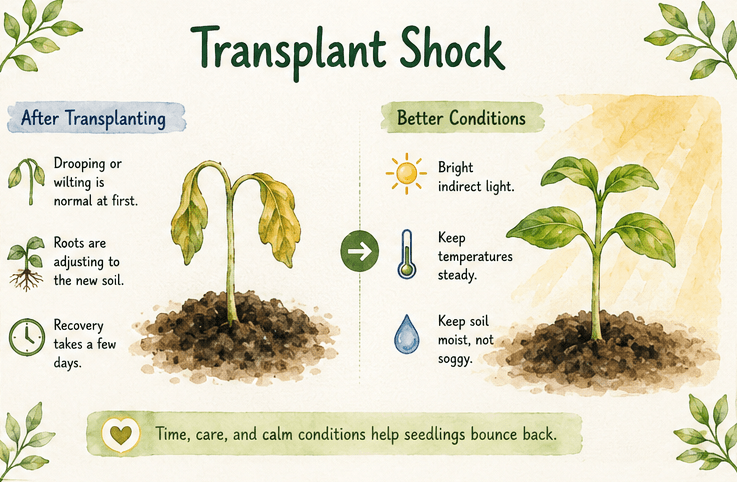
Transplant Shock
Seedlings may turn yellow after being transplanted. This is called transplant shock. It happens when roots are disturbed or when the plant needs time to adjust to a new container, soil, or environment.
Signs of Transplant Shock
Transplant shock may cause:
- Yellowing leaves
- Temporary wilting
- Slow growth
- Leaf drop
- Drooping after transplanting
A little stress after transplanting is normal, especially if roots were disturbed.
How to Fix Transplant Shock
Keep seedlings in a stable environment while they recover.
After transplanting:
- Keep soil lightly moist but not soggy
- Provide bright indirect light at first
- Avoid harsh sun immediately
- Avoid strong fertilizer right away
- Protect from wind and extreme temperatures
- Give seedlings time to adjust
Most healthy seedlings recover within several days to a couple of weeks.
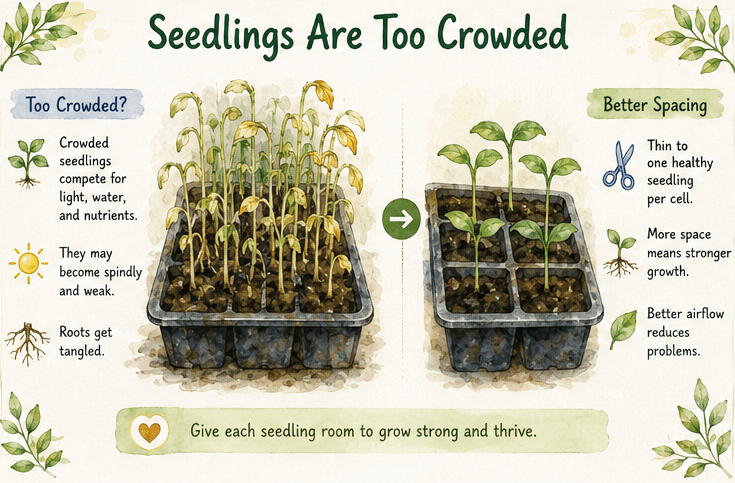
Seedlings Are Too Crowded
Crowded seedlings compete for light, water, nutrients, and airflow. This can cause yellowing, weak growth, and disease problems.
When many seedlings grow too close together, their roots compete underground while their leaves compete above the soil.
Signs Seedlings Are Overcrowded
You may notice:
- Thin stems
- Yellowing leaves
- Slow growth
- Seedlings leaning or stretching
- Poor airflow
- Mold or damping-off issues
- Roots tangled together
How to Fix Crowded Seedlings
Thin seedlings early so each plant has enough space. Remove the weakest seedlings and keep the strongest ones.
If the seedlings are large enough, transplant them into individual pots.
Proper spacing helps seedlings grow stronger, greener, and healthier.
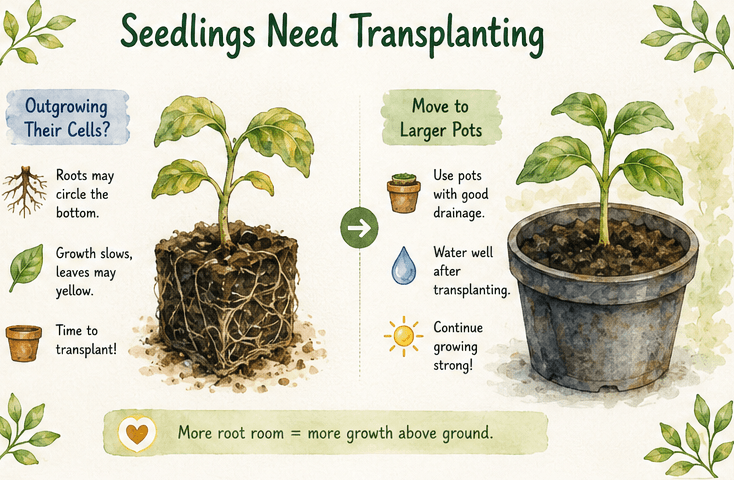
Seedlings Need Transplanting
Sometimes seedlings turn yellow because they have outgrown their starter cells. Small seed trays are useful at first, but seedlings cannot stay in them forever.
When roots fill the container, the plant may struggle to absorb enough water and nutrients.
Signs Seedlings Need a Bigger Pot
Seedlings may need transplanting if:
- Roots are circling inside the cell
- Roots come out of drainage holes
- Growth has slowed
- Leaves are yellowing
- Soil dries out very quickly
- Plants look crowded
- Seedlings have several true leaves
How to Fix Root-Bound Seedlings
Move seedlings into slightly larger pots with fresh potting mix. Be gentle with the roots and water lightly after transplanting.
Do not move tiny seedlings into huge pots. A pot that is too large may hold too much moisture and cause root problems.
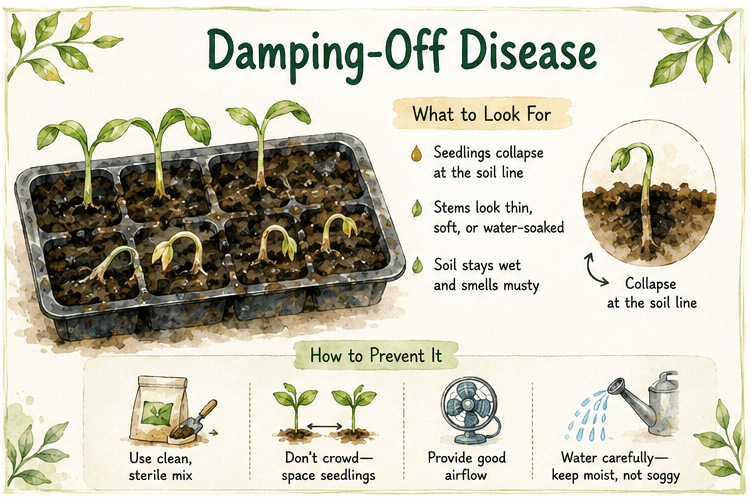
Damping-Off Disease
Damping-off is a fungal disease that affects young seedlings. It often causes seedlings to collapse at the soil line. Yellowing can appear before or during decline.
This is one of the most serious seedling problems.
Signs of Damping-Off
Damping-off may show as:
- Seedlings falling over suddenly
- Thin, pinched stems at soil level
- Yellowing or wilting
- Mold on soil surface
- Seedlings collapsing even though soil is moist
- Patches of seedlings dying together
Causes of Damping-Off
Damping-off is encouraged by:
- Too much moisture
- Poor airflow
- Overcrowding
- Contaminated soil or containers
- Cool temperatures
- Low light
How to Prevent Damping-Off
Prevention is much easier than treatment.
Use clean containers, fresh seed-starting mix, good airflow, proper spacing, and careful watering.
Once seedlings collapse from damping-off, they usually do not recover. Remove affected seedlings and improve conditions for the remaining plants.
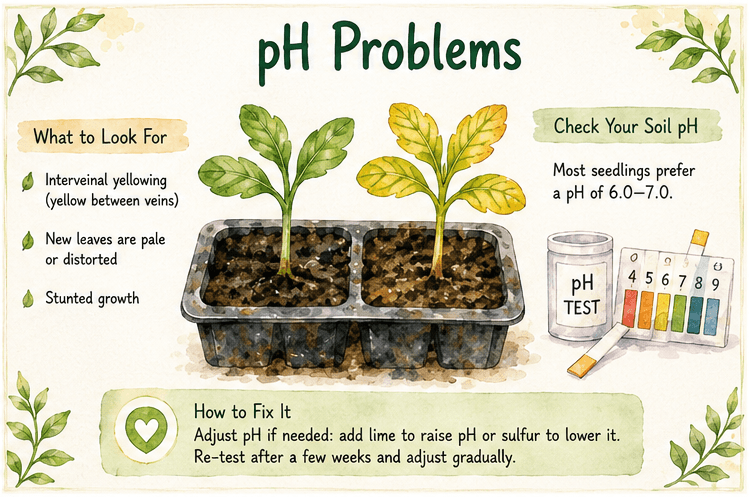
pH Problems
Soil pH can affect nutrient availability. If the pH is too high or too low, seedlings may not absorb nutrients properly even if nutrients are present.
This can lead to yellowing and slow growth.
Signs of pH-Related Problems
Possible signs include:
- Yellowing between leaf veins
- Slow growth
- Nutrient deficiency symptoms despite feeding
- Poor root development
- Multiple seedlings struggling in the same soil mix
For most beginner seed starting, pH is not the first thing to check. Watering, light, soil texture, and temperature are more common causes.
But if everything else seems correct and yellowing continues, pH may be worth testing.
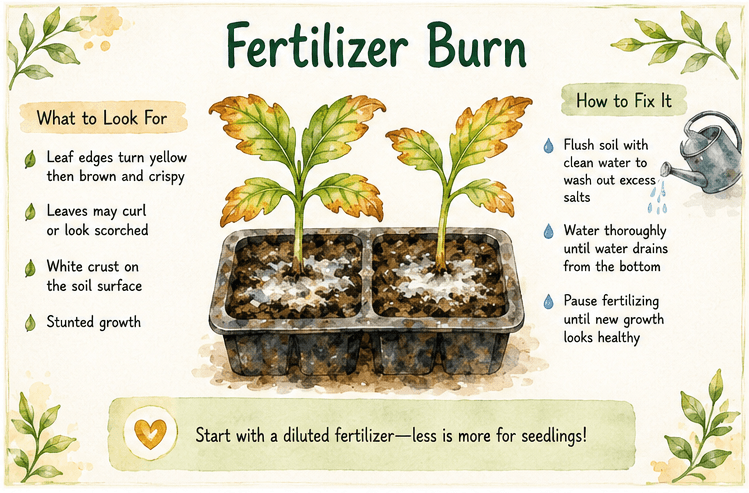
Fertilizer Burn
Too much fertilizer can damage seedling roots and cause yellowing, browning, or crispy leaf edges.
Seedlings are sensitive. A fertilizer strength that works for mature plants may be too strong for young seedlings.
Signs of Fertilizer Burn
Fertilizer burn may cause:
- Yellow leaves
- Brown leaf tips
- Crispy edges
- Wilting after feeding
- White crust on soil surface
- Stunted growth
How to Fix Fertilizer Burn
Flush the soil gently with clean water if the container drains well. Stop fertilizing until the seedlings recover.
In the future, use diluted fertilizer and feed only after true leaves appear.
Less is usually safer with young seedlings.
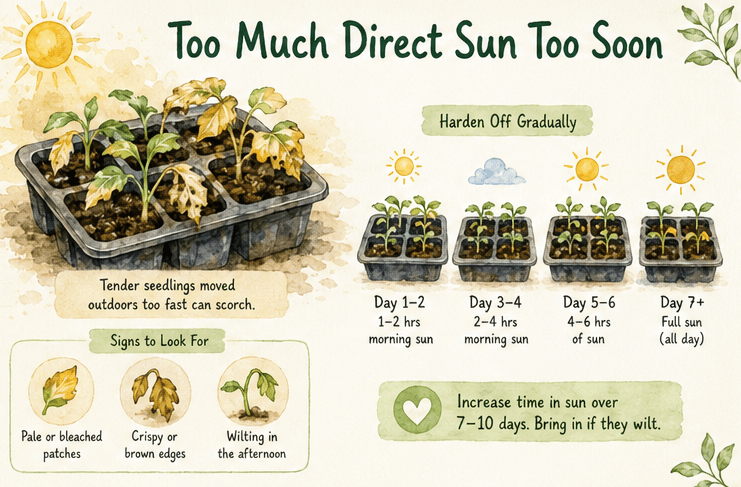
Too Much Direct Sun Too Soon
Seedlings need light, but young seedlings can be damaged by harsh direct sun if they are not used to it.
This is especially common when indoor-grown seedlings are suddenly moved outdoors.
Signs of Sun Stress
Seedlings may show:
- Pale or yellow patches
- Brown dry spots
- Wilting in direct sun
- Crispy leaves
- Sudden decline after moving outside
How to Fix Sun-Stressed Seedlings
Move seedlings to bright indirect light or gentle morning sun. Gradually expose them to stronger sun over several days.
This process is called hardening off. It helps seedlings adjust to outdoor conditions without shock.
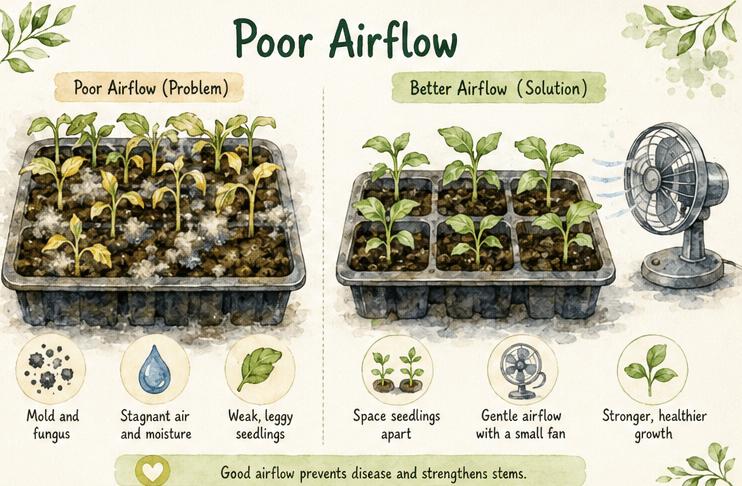
Poor Airflow
Airflow is often overlooked, but it is important for healthy seedlings. Stagnant air can increase fungal problems and slow soil drying.
Poor airflow often works together with overwatering to cause yellowing and seedling collapse.
Signs of Poor Airflow
You may notice:
- Mold on soil
- Weak stems
- Seedlings staying wet too long
- Damping-off problems
- Fungal spots
- Crowded trays
How to Improve Airflow
Space seedlings properly, avoid covering trays too long, and consider using a small fan on a gentle setting indoors.
Good airflow helps seedlings grow stronger stems and reduces disease risk.
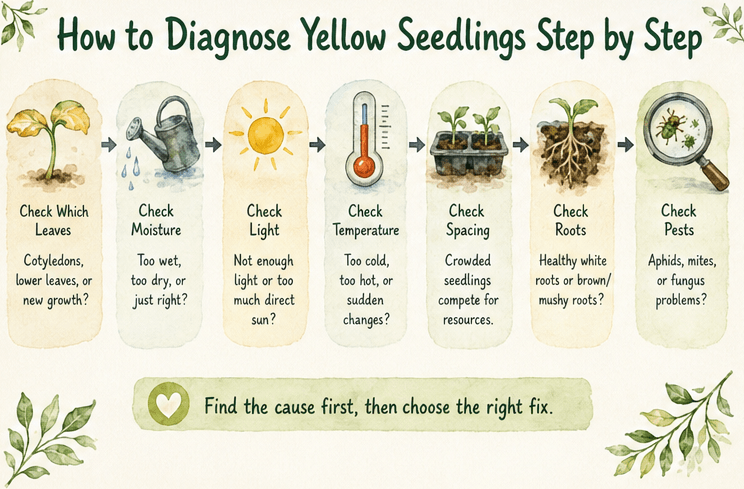
How to Diagnose Yellow Seedlings Step by Step
When your seedlings turn yellow, do not guess. Use a simple process.
Step 1: Check Which Leaves Are Yellow
If only seed leaves are yellow and true leaves are healthy, it may be normal.
If true leaves are yellow, continue checking.
Step 2: Check Soil Moisture
Is the soil wet, dry, muddy, or compacted?
Wet soil suggests overwatering or poor drainage. Dry soil suggests underwatering.
Step 3: Check Light
Are seedlings pale, tall, and leaning? They likely need more light.
Step 4: Check Temperature
Are seedlings near cold windows, air-conditioning, or drafty areas? Cold stress may be slowing growth.
Step 5: Check Spacing
Are seedlings crowded? Thin or transplant them.
Step 6: Check Roots
If seedlings are large enough and still declining, gently check whether roots are healthy, crowded, or rotting.
Step 7: Check for Pests or Disease
Look under leaves, near stems, and on the soil surface.
This step-by-step approach helps you fix the real problem instead of making it worse.
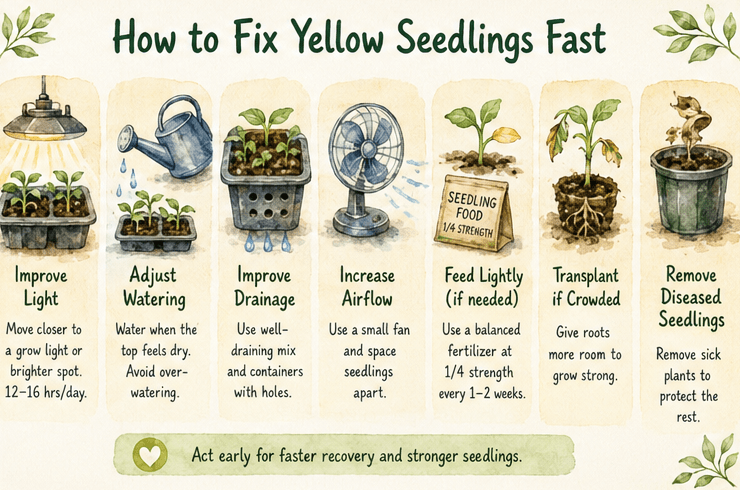
How to Fix Yellow Seedlings Fast
If your seedlings are turning yellow, start with the safest fixes first.
Improve Light
Move seedlings to brighter light or use a grow light.
Adjust Watering
Let soggy soil dry slightly. Water dry seedlings gently and evenly.
Improve Drainage
Make sure trays or pots have drainage holes. Avoid standing water.
Increase Airflow
Use gentle airflow and avoid overcrowding.
Feed Lightly If Needed
If seedlings have true leaves and look nutrient-deficient, use diluted fertilizer.
Transplant If Crowded
Move seedlings into larger containers if they are rootbound or overcrowded.
Remove Diseased Seedlings
If damping-off or rot appears, remove affected seedlings quickly to protect the others.
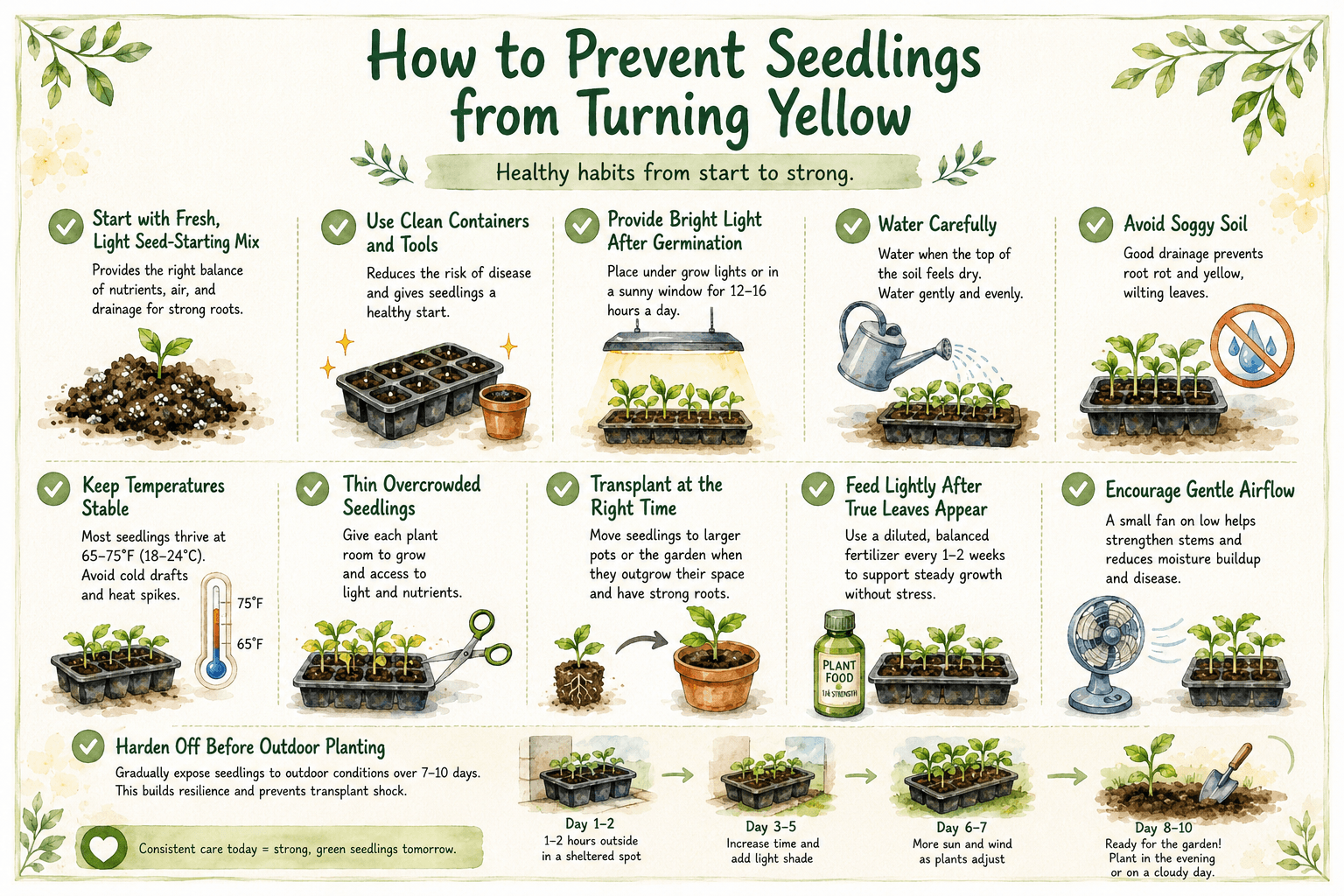
How to Prevent Seedlings from Turning Yellow
Prevention is easier than rescue.
To keep seedlings green and healthy:
- Use fresh, light seed-starting mix
- Use clean containers
- Provide bright light after germination
- Water carefully
- Avoid soggy soil
- Keep temperatures stable
- Thin overcrowded seedlings
- Transplant when needed
- Feed lightly after true leaves appear
- Provide gentle airflow
- Harden off seedlings before outdoor planting
The key is balance. Seedlings need moisture, but not soggy soil. They need light, but not sudden harsh sun. They need nutrients, but not strong fertilizer too early.
Yellow Seedlings FAQ
Why are my seedlings turning yellow after sprouting?
They may be overwatered, lacking light, too cold, or growing in poor soil. If only the seed leaves are yellow, it may be normal aging.
Should I remove yellow seed leaves?
You can remove them once they are dry and easy to detach, but it is not necessary if they are not diseased.
Can yellow seedlings turn green again?
Sometimes yes. If the problem is corrected early, new growth can become green and healthy. Older yellow leaves may not fully recover.
Why are my seedlings yellow and leggy?
This usually means they need more light. Move them closer to a grow light or brighter window.
Why are my seedlings yellow even though I water them?
They may be getting too much water. Wet soil can damage roots and prevent nutrient uptake.
Do yellow seedlings need fertilizer?
Only if they have true leaves and the issue is nutrient deficiency. Do not fertilize seedlings that are yellow from overwatering or root stress.
Why are my seedlings yellow after transplanting?
They may be experiencing transplant shock. Keep them stable, lightly moist, and protected from harsh sun while they recover.
Why are my seedlings yellow and falling over?
This may be damping-off disease, often caused by too much moisture, poor airflow, and overcrowding.
How often should I water seedlings?
Water when the top layer begins to dry. Do not water on a fixed schedule. Soil should stay lightly moist, not soggy.
What is the fastest way to save yellow seedlings?
Check soil moisture first, improve light, ensure drainage, increase airflow, and avoid adding fertilizer until you know the cause.
Yellow Seedlings Can Often Be Saved
Yellow seedlings are common, especially for beginner gardeners. The good news is that many seedlings can recover once the real cause is corrected.
The most important step is to avoid guessing. Look at the leaves, soil, light, temperature, spacing, and roots.
In many cases, the solution is simple:
Water less often.
Give more light.
Improve drainage.
Use better seed-starting mix.
Feed lightly after true leaves appear.
Keep seedlings warm and well-spaced.
Seedlings are small, but they respond quickly when conditions improve. With the right care, yellow seedlings can often return to healthy growth and become strong plants ready for transplanting.

Start Your Desert Rose Journey from Seeds
Growing Desert Rose from seeds is one of the most rewarding ways to enjoy Adenium. Explore our selected Desert Rose seeds and start growing your own unique plants with beautiful shapes, vibrant blooms, and natural caudex development.
Recommended Desert Rose SeedsShop All


 1
1 Mixed
Mixed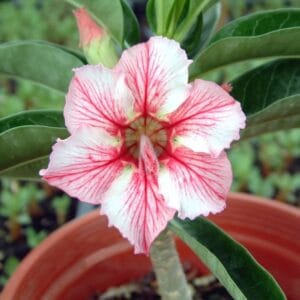
 1Mixed
 1Mixed
 1
1Adenium Obesum Desert Rose Seeds – Rare Flowering Succulent Seeds for Garden Planting, 20 Seeds Pack
 1Mixed
 1Mixed
 1Mixed
 1Mixed
 1Mixed
 1Mixed
 1Mixed
 1Mixed
 1Mixed
 1Mixed
 1Mixed
 1Mixed
 1Mixed
 1Mixed
 1Mixed
 1Mixed
 1Mixed
 1Mixed
 1Mixed
 1Mixed
 1Mixed
 1Mixed
 1Mixed
 1Mixed
 1Mixed
 1Mixed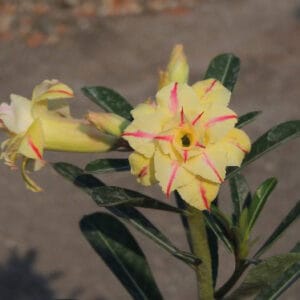
 1Mixed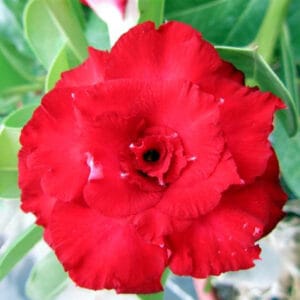
 1Mixed
 1Mixed
 1Mixed

 1
1
 1Mixed
