

Plant Care & Troubleshooting
Common Seedling Problems and How to Fix Them: Complete Beginner Guide

May
Seedling Problems Are Common, but Most Are Fixable
Starting plants from seeds is one of the most rewarding parts of gardening. Watching a tiny seed sprout into a young plant feels exciting, especially when you are growing flowers, herbs, vegetables, or rare plants from scratch.
But the seedling stage is also one of the most delicate parts of plant growth.
Seedlings are young, fragile, and highly sensitive to their growing environment. Small mistakes with water, light, temperature, airflow, soil, or spacing can quickly lead to problems such as yellow leaves, weak stems, leggy growth, mold, damping-off, slow growth, or seedlings falling over.
The good news is that most seedling problems are not random. They usually happen for clear reasons, and once you understand those reasons, you can fix them before the seedlings decline further.
In this complete guide, you’ll learn the most common seedling problems, what causes them, how to fix them, and how to prevent them from happening again. Whether you are starting vegetable seeds, flower seeds, herbs, or indoor plants, these troubleshooting tips will help you grow stronger, healthier seedlings from the beginning.
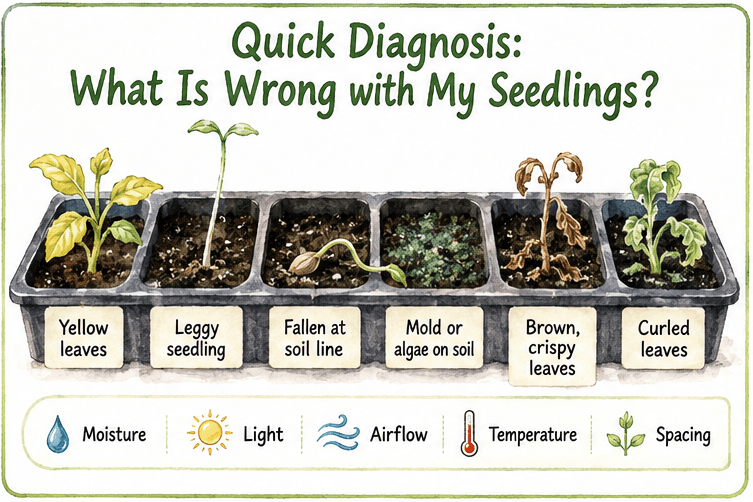
What Is Wrong with My Seedlings?
Before solving a seedling problem, look carefully at the symptoms. Seedlings often show clear warning signs when something is wrong.
If your seedlings are turning yellow, the cause may be overwatering, poor drainage, low light, nutrient deficiency, cold stress, or natural aging of seed leaves.
If your seedlings are tall, thin, and weak, they are most likely not getting enough strong light.
If seedlings are falling over at the soil line, damping-off disease may be the problem.
If seedlings are not growing, they may be too cold, too wet, lacking light, overcrowded, or running out of nutrients.
If the soil surface has mold or algae, the growing medium is staying too wet and airflow may be poor.
If seedlings have brown crispy leaves, they may be underwatered, sunburned, fertilized too strongly, or exposed to harsh conditions too soon.
If seedlings are curling or distorted, check for pests, heat stress, nutrient issues, or watering stress.
The best first step is always:
Check moisture, light, airflow, temperature, and spacing before adding fertilizer or more water.
Many seedling problems become worse when gardeners react too quickly without diagnosing the cause.

Seedlings Not Germinating
One of the first problems gardeners face is seeds not sprouting at all. This can be disappointing, but it is usually caused by one of several common issues.
Common Causes
Seeds may fail to germinate because of:
- Old or poor-quality seeds
- Soil temperature too low
- Soil too wet or too dry
- Seeds planted too deeply
- Not enough moisture during germination
- Too much direct sun drying the surface
- Poor seed-starting mix
- Seeds that need light to germinate
- Seeds that need darkness to germinate
- Incorrect planting season
Different seeds have different germination requirements, so it is important to read the seed packet whenever possible.
How to Fix It
Start with fresh seeds from a reliable source. Use a light seed-starting mix and keep it evenly moist, not soggy. Make sure the seeds are planted at the correct depth.
A general rule is:
Plant seeds about 2–3 times as deep as their size.
Very tiny seeds often need to be surface-sown or barely covered.
Temperature is also important. Many seeds germinate best in warm conditions. If the growing area is too cool, germination may be slow or uneven. A seedling heat mat can help for warmth-loving seeds.

Seedlings Germinate but Stop Growing
Sometimes seeds sprout successfully but then seem to stop. The seedlings remain tiny, pale, or weak for days or weeks.
Common Causes
Seedlings may stop growing because of:
- Not enough light
- Cold temperatures
- Overwatering
- Poor drainage
- Dense soil
- Lack of nutrients after true leaves appear
- Crowded seedlings
- Root damage
- Small containers
After germination, seedlings need more than just moisture. They need light, oxygen, warmth, space, and eventually nutrients.
How to Fix It
Move seedlings to brighter light immediately after germination. If growing indoors, use a grow light for about 12–16 hours per day.
Check the soil moisture. If the soil is soggy, let it dry slightly and improve airflow. If the soil is very dry, water gently.
Once seedlings develop true leaves, they may benefit from a diluted fertilizer. Use a gentle, balanced fertilizer at weak strength to avoid burning young roots.

Leggy Seedlings
Leggy seedlings are tall, thin, and weak. They may lean toward a window, fall over, or have large gaps between leaves.
This is one of the most common seedling problems.
Main Cause
The most common cause of leggy seedlings is not enough strong light.
Seedlings stretch because they are trying to reach a better light source. This often happens indoors when window light is too weak or grow lights are too far away.
Signs of Leggy Seedlings
Leggy seedlings may have:
- Long thin stems
- Pale leaves
- Large gaps between leaves
- Seedlings leaning toward light
- Weak stems
- Seedlings falling over
- Fast upward growth but poor strength
How to Fix Leggy Seedlings
Move seedlings to stronger light as soon as possible. If using grow lights, place them close enough to the seedlings and keep them on for 12–16 hours daily.
Improve airflow with a small fan on a gentle setting. This helps strengthen stems.
Thin overcrowded seedlings so each plant has enough room.
Some seedlings, such as tomatoes, can be transplanted deeper to support the stem. However, not all plants tolerate deep planting, so this depends on the plant type.

Yellow Seedlings
Yellow seedlings are another common issue. Yellowing can be minor and normal, or it can be a warning sign.
Seed Leaves vs True Leaves
The first leaves that appear are called seed leaves, or cotyledons. These may naturally turn yellow and fall off after true leaves develop.
This is normal if the true leaves are green and healthy.
However, if true leaves are turning yellow, the seedling may be stressed.
Common Causes
Yellow seedlings may be caused by:
- Overwatering
- Poor drainage
- Low light
- Nutrient deficiency
- Cold temperatures
- Root stress
- Transplant shock
- Dense soil
- Natural aging of seed leaves
How to Fix Yellow Seedlings
Check the soil first. If it is wet and heavy, reduce watering and improve drainage. If the soil is dry, water gently and evenly.
Move seedlings to brighter light if they look pale or stretched.
If seedlings have true leaves and have been growing for a while, feed lightly with diluted fertilizer.
Do not fertilize heavily. Yellow seedlings with damaged roots may become worse if fertilized too strongly.

Seedlings Falling Over
Seedlings falling over can happen for several reasons, but one of the most serious causes is damping-off disease.
Common Causes
Seedlings may fall over because of:
- Damping-off disease
- Weak stems from low light
- Overwatering
- Poor airflow
- Crowding
- Stems damaged during watering
- Seedlings becoming too tall and weak
How to Fix It
First, look at where the seedling is falling. If the stem is pinched, thin, dark, or water-soaked at the soil line, damping-off is likely.
Affected seedlings usually cannot be saved. Remove them quickly to protect nearby seedlings.
Improve airflow, reduce watering, increase light, and avoid overcrowding.
If the seedlings are falling because they are leggy, move them to stronger light and provide gentle airflow.

Damping-Off Disease
Damping-off is one of the most frustrating seedling problems. It is a fungal disease that attacks young seedlings, often causing them to collapse suddenly.
Signs of Damping-Off
You may notice:
- Seedlings falling over at the soil line
- Thin, pinched stems
- Water-soaked stem bases
- Seedlings collapsing even though soil is moist
- Mold on soil surface
- Several seedlings dying in one area
Causes
Damping-off is encouraged by:
- Too much moisture
- Poor airflow
- Cool temperatures
- Overcrowded seedlings
- Contaminated soil
- Dirty containers
- Low light
How to Prevent Damping-Off
Prevention is the best solution.
Use clean containers, fresh seed-starting mix, proper spacing, good airflow, and careful watering. Avoid keeping humidity domes sealed after seeds have sprouted.
Once seedlings emerge, remove or vent humidity covers to allow fresh air exchange.
Water from the bottom if possible, but do not let trays sit in water for too long.

Mold on Seedling Soil
Mold on the soil surface usually means the growing environment is too damp and airflow is too low.
A small amount of white mold may not immediately kill seedlings, but it is a warning sign that conditions need to improve.
Common Causes
Mold may appear because of:
- Overwatering
- Poor airflow
- Humidity dome left on too long
- Organic soil staying wet
- Low light
- Crowded trays
- Cool conditions
How to Fix Mold on Soil
Remove the moldy surface layer gently if possible. Increase airflow with a small fan. Let the top of the soil dry slightly between waterings.
Remove humidity covers once seeds have germinated.
If the soil is staying wet for many days, the mix may be too heavy. Consider transplanting seedlings into a lighter seed-starting mix if they are strong enough.

Algae on Seedling Soil
Green algae on the soil surface is common when soil stays wet and receives light. It usually appears as a green film.
Is Algae Dangerous?
Algae is not always directly harmful, but it indicates that the soil is too wet. It can also create a crusty surface that affects airflow and water movement.
How to Fix It
Reduce watering, improve airflow, and avoid keeping the soil surface constantly wet.
Water seedlings only when needed and avoid letting trays sit in standing water.
If algae forms a thick crust, gently break it up or remove the top layer without damaging the seedlings.

Seedlings Wilting
Wilting seedlings can be confusing because both too much water and too little water can cause wilting.
Common Causes
Seedlings may wilt because of:
- Underwatering
- Overwatering
- Transplant shock
- Heat stress
- Root damage
- Damping-off
- Sudden direct sun
- Poor drainage
How to Diagnose Wilting
Check the soil.
If the soil is dry, water gently and evenly.
If the soil is wet, do not water more. Improve airflow and drainage. Wet soil plus wilting often means roots are stressed and cannot function properly.
If seedlings wilt after transplanting, give them bright indirect light, stable moisture, and time to recover.
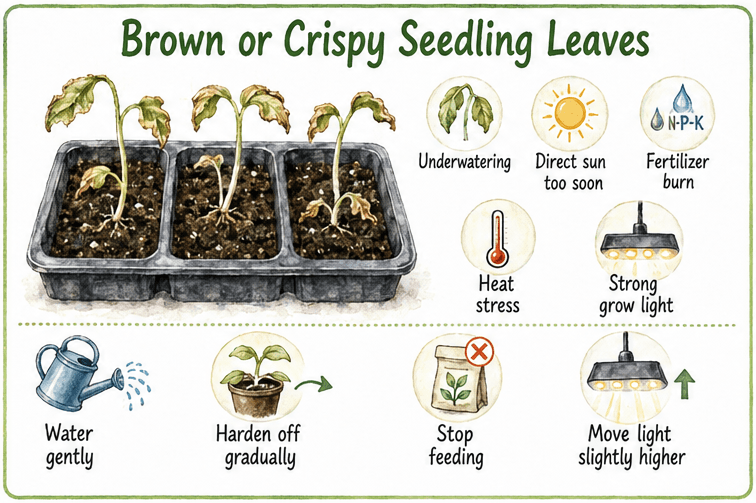
Brown or Crispy Seedling Leaves
Brown or crispy leaves usually indicate stress from dryness, sunburn, fertilizer burn, or harsh environmental changes.
Common Causes
Brown leaves may be caused by:
- Underwatering
- Direct sun too soon
- Fertilizer burn
- Salt buildup
- Heat stress
- Low humidity
- Root damage
- Overly strong grow light
How to Fix It
If the soil is dry, water gently. If seedlings were recently moved outdoors, move them back to bright indirect light and harden them off gradually.
If fertilizer was recently applied, stop feeding and flush the soil gently if the container drains well.
If grow lights are too close and leaves look scorched, raise the light slightly.

Seedlings Turning Purple
Purple seedling leaves or stems can happen for several reasons. Sometimes it is normal for certain varieties, but it can also indicate stress.
Common Causes
Purple seedlings may be caused by:
- Cold temperatures
- Phosphorus deficiency
- Slow root activity
- Genetic color
- Bright light stress in some plants
Cold soil often reduces phosphorus uptake, even if phosphorus is present in the soil.
How to Fix It
Keep seedlings warmer, especially at night. Move them away from cold windows or drafts.
If the seedlings have true leaves and are growing slowly, feed lightly with a balanced fertilizer.
Do not overcorrect if the plant variety naturally has purple stems or leaves.

Seedlings Curling Leaves
Curling leaves can be caused by pests, heat stress, watering stress, light stress, or fertilizer issues.
Common Causes
Seedling leaves may curl because of:
- Underwatering
- Overwatering
- Heat stress
- Too much light or light too close
- Aphids or other pests
- Fertilizer burn
- Transplant shock
- Low humidity
How to Fix It
Check soil moisture first. Then inspect leaves closely, especially undersides, for pests.
If lights are very close, raise them slightly. If seedlings are near a hot window, move them to a more stable location.
Avoid fertilizing again until you know the cause.

Seedlings Growing Slowly
Slow seedling growth can be caused by environmental stress or natural plant differences. Some plants simply grow slower than others.
Common Causes
Slow growth may happen because of:
- Low light
- Cold temperatures
- Poor soil
- Overwatering
- Nutrient deficiency
- Rootbound seedlings
- Crowding
- Seedling variety grows slowly
- Transplant shock
How to Fix Slow Seedling Growth
Improve light and warmth first. Make sure seedlings are not sitting in wet, cold soil.
If seedlings have true leaves and have been growing in the same tray for several weeks, feed lightly.
If roots are crowded, transplant into slightly larger containers.

Weak Seedling Stems
Weak stems usually happen because seedlings do not have enough light or airflow.
Common Causes
Weak stems may be caused by:
- Low light
- Grow lights too far away
- Poor airflow
- Overcrowding
- Too much nitrogen
- Overwatering
- Fast growth in warm conditions
How to Strengthen Seedling Stems
Provide stronger light and gentle airflow. A small fan on low speed can help seedlings develop stronger stems.
Do not overfeed with nitrogen. Thin crowded seedlings and avoid overwatering.
Healthy stems develop when seedlings receive strong light, space, air movement, and balanced care.

Seedlings Too Crowded
Crowding causes many problems. Seedlings compete for light, space, water, nutrients, and airflow.
Signs of Crowding
You may notice:
- Seedlings leaning
- Thin stems
- Yellow leaves
- Slower growth
- Mold or fungal issues
- Roots tangled together
- Seedlings stretching upward
How to Fix Crowded Seedlings
Thin seedlings early. Keep the strongest seedling in each cell or space.
If seedlings are large enough, transplant them into individual pots.
Proper spacing helps prevent disease and supports stronger growth.

Seedlings Need Transplanting
Seedlings cannot stay in starter trays forever. Once their roots fill the cell, they need more space.
Signs Seedlings Need Transplanting
Your seedlings may need transplanting if:
- Roots are coming out of drainage holes
- Soil dries very quickly
- Growth has slowed
- Leaves are yellowing
- Seedlings have several true leaves
- Roots circle inside the cell
- Plants look crowded
How to Transplant Seedlings
Move seedlings into slightly larger pots with fresh potting mix. Handle them gently by the leaves or root ball, not by the delicate stem.
Water lightly after transplanting and keep them in bright indirect light for a short adjustment period.
Avoid using an oversized pot, because too much soil can hold too much moisture.

Transplant Shock
Transplant shock can happen after seedlings are moved into new pots or planted outdoors.
Signs of Transplant Shock
Seedlings may show:
- Wilting
- Yellow leaves
- Drooping
- Slowed growth
- Leaf drop
- Temporary stress
How to Fix Transplant Shock
Keep conditions stable. Provide bright indirect light, gentle watering, and protection from harsh sun or wind.
Avoid fertilizing immediately after transplanting if roots were disturbed.
Most healthy seedlings recover with time.

Sunburn After Moving Seedlings Outdoors
Seedlings grown indoors are not ready for full outdoor sun immediately. Sudden direct sun can scorch leaves.
Signs of Sunburn
Sunburn may cause:
- White or pale patches
- Brown crispy spots
- Wilting in sun
- Leaf edges drying
- Sudden decline after moving outside
How to Prevent Sunburn
Harden off seedlings gradually over 7–10 days.
Start with shade or gentle morning sun, then slowly increase outdoor exposure. Bring seedlings back inside or into shade if they wilt.
Hardening off helps seedlings adjust to sunlight, wind, and outdoor temperature changes.

Pest Problems on Seedlings
Seedlings can attract pests, especially indoors, in greenhouses, or in warm humid environments.
Common Seedling Pests
Common pests include:
- Fungus gnats
- Aphids
- Spider mites
- Thrips
- Whiteflies
- Mealybugs
Signs of Pest Problems
Look for:
- Tiny insects
- Sticky residue
- Speckled leaves
- Webbing
- Distorted new growth
- Small flying insects near soil
- Yellowing or curling leaves
How to Fix Pest Problems
Inspect seedlings regularly. Remove visible pests when possible.
For fungus gnats, allow the soil surface to dry more between waterings and avoid soggy conditions.
For leaf pests, use gentle treatment suitable for seedlings and follow product instructions carefully. Avoid harsh sprays on very young plants.

Fungus Gnats Around Seedlings
Fungus gnats are small flying insects often seen around moist seedling trays. Adults are annoying, but larvae can damage young roots if populations become high.
Causes
Fungus gnats are attracted to:
- Constantly wet soil
- Organic-rich growing medium
- Poor airflow
- Overwatering
How to Fix Fungus Gnats
Let the top layer of soil dry slightly between waterings. Use sticky traps to catch adults. Improve airflow and avoid overwatering.
For serious infestations, use a seedling-safe treatment designed for fungus gnat larvae.
Prevention starts with moisture control.

Nutrient Deficiency in Seedlings
Seedlings do not need much fertilizer at first, but once true leaves appear, they may need light feeding.
Signs of Nutrient Deficiency
Nutrient deficiency may cause:
- Pale leaves
- Yellowing older leaves
- Slow growth
- Thin stems
- Smaller leaves
- General weakness
How to Fix It
Use a diluted balanced fertilizer after true leaves appear.
Start weak, often half-strength or less. Seedlings are sensitive, and too much fertilizer can burn them.
Do not fertilize seedlings that are already stressed from overwatering or root damage. Fix the growing conditions first.

Fertilizer Burn
Too much fertilizer can damage seedling roots and leaves.
Signs of Fertilizer Burn
Fertilizer burn may cause:
- Brown leaf tips
- Crispy leaf edges
- Yellowing
- Wilting after feeding
- White crust on soil surface
- Stunted growth
How to Fix It
Stop fertilizing immediately. If the container drains well, flush the soil gently with clean water.
Resume feeding only after the seedlings recover, and use a weaker solution next time.
For seedlings, less fertilizer is usually safer.

Soil Problems
The wrong soil mix can cause many seedling problems. Heavy soil holds too much water, blocks oxygen, and makes it difficult for young roots to grow.
Bad Soil Signs
Your seedling mix may be poor if:
- Soil stays wet for many days
- Water pools on the surface
- Soil becomes hard or compacted
- Mold appears often
- Roots grow poorly
- Seedlings yellow or collapse
Best Soil for Seedlings
A good seed-starting mix should be:
- Light
- Fine-textured
- Airy
- Well-draining
- Moisture-retentive without being soggy
Avoid heavy garden soil for seed starting. It often compacts and may contain pests or disease organisms.

Watering Problems
Watering is one of the biggest challenges in seedling care. Both overwatering and underwatering can cause problems.
Overwatering Signs
- Yellow leaves
- Wet soil
- Mold
- Weak stems
- Drooping despite wet soil
- Damping-off
Underwatering Signs
- Dry soil
- Wilting
- Crispy leaves
- Soil pulling from edges
- Slow growth
Best Watering Practice
Keep seedling soil lightly moist, not soggy. Water when the top layer begins to dry.
Use gentle watering so seeds and roots are not disturbed.
Bottom watering can help, but do not leave trays sitting in water for too long.

Light Problems
Seedlings need strong light soon after germination. Weak light causes leggy growth, pale leaves, and weak stems.
Signs of Light Problems
- Tall thin stems
- Pale leaves
- Seedlings leaning toward light
- Slow growth
- Weak stems
- Poor leaf development
How to Fix Light Problems
Use a grow light if natural light is not strong enough. Keep it close enough to seedlings and run it for 12–16 hours daily.
A bright window may not be enough for many seedlings.

Temperature Problems
Temperature affects germination, root growth, and seedling strength.
Too Cold
Cold seedlings may grow slowly, turn purple or yellow, and stay wet too long.
Too Hot
Excess heat can dry seedlings quickly, cause wilting, and stress young plants.
Best Approach
Keep temperatures stable and appropriate for the plant type. Avoid cold drafts, hot windows, and sudden temperature swings.
Warmth helps germination, but after sprouting, seedlings also need strong light.

Airflow Problems
Good airflow helps seedlings grow stronger and reduces disease risk.
Poor Airflow Can Cause
- Mold
- Damping-off
- Weak stems
- Wet soil
- Fungal problems
- Crowded growth
How to Improve Airflow
Use a small fan on low setting, space seedlings properly, and remove humidity covers after germination.
The goal is gentle movement, not strong wind.

How to Prevent Common Seedling Problems
Most seedling problems can be prevented with the right setup.
Use clean containers and fresh seed-starting mix. Provide strong light immediately after germination. Keep soil lightly moist but not soggy. Avoid overcrowding seedlings. Maintain good airflow and stable temperatures.
Once seedlings develop true leaves, feed lightly if needed. Transplant seedlings when they outgrow their starter cells. Harden them off before moving outdoors.
Prevention is about balance:
Light, moisture, warmth, airflow, space, and timing all work together.

Best Seedling Setup for Beginners
A beginner-friendly seedling setup includes:
- Fresh seeds
- Clean seed trays or pots
- Drainage holes
- Light seed-starting mix
- Spray bottle or gentle watering can
- Bright grow light
- 12–16 hours of light daily
- Warm, stable temperature
- Gentle airflow
- Plant labels
- Small pots for transplanting
This setup gives seedlings the best chance to grow strong from the beginning.

Seedling Troubleshooting Checklist
When your seedlings look unhealthy, check these points:
- Is the soil too wet or too dry?
- Are the seedlings getting enough light?
- Are they too cold or too hot?
- Are the containers draining properly?
- Are the seedlings overcrowded?
- Is there mold, algae, or fungus gnats?
- Are stems thin, weak, or pinched at the soil line?
- Do the seedlings have true leaves yet?
- Do they need light feeding?
- Do they need transplanting?
This checklist helps you identify the real cause before taking action.

Common Seedling Problems FAQ
Why are my seedlings falling over?
Seedlings may fall over because of damping-off disease, low light, weak stems, overwatering, or poor airflow.
Why are my seedlings turning yellow?
Yellow seedlings may be caused by overwatering, poor drainage, low light, nutrient deficiency, cold stress, or natural aging of seed leaves.
Why are my seedlings growing tall and thin?
Tall thin seedlings are usually caused by not enough light. Move them to stronger light or use a grow light.
Why is there mold on my seedling soil?
Mold usually means the soil surface is too wet and airflow is poor. Reduce watering and improve ventilation.
When should I fertilize seedlings?
Start feeding lightly after true leaves appear. Use diluted fertilizer and avoid strong feeding.
When should I transplant seedlings?
Transplant when seedlings have several true leaves, roots are filling the container, or growth slows due to lack of space.
Can leggy seedlings be saved?
Many leggy seedlings can be saved by giving stronger light, improving airflow, and transplanting if needed.
What is damping-off disease?
Damping-off is a fungal disease that causes young seedlings to collapse at the soil line. It is encouraged by excess moisture and poor airflow.
How often should I water seedlings?
Water when the top layer begins to dry. Keep soil lightly moist, not soggy.
Do seedlings need a grow light?
Indoor seedlings often benefit from grow lights because window light may not be strong enough.
Final Thoughts: Healthy Seedlings Start with the Right Conditions
Seedling problems are common, especially for beginner gardeners. But most problems can be prevented or fixed once you understand what seedlings need.
Healthy seedlings depend on a balance of:
Strong light.
Gentle watering.
Good drainage.
Warm temperatures.
Fresh seed-starting mix.
Proper spacing.
Good airflow.
Careful transplanting.
If your seedlings look unhealthy, do not panic. Check the basics first. Most problems come from too much water, too little light, poor airflow, cold temperatures, or overcrowding.
With small adjustments, weak seedlings can often recover and grow into strong plants ready for the garden, containers, or indoor growing.

Start Your Desert Rose Journey from Seeds
Growing Desert Rose from seeds is one of the most rewarding ways to enjoy Adenium. Explore our selected Desert Rose seeds and start growing your own unique plants with beautiful shapes, vibrant blooms, and natural caudex development.
Recommended Desert Rose SeedsShop All


 1
1 Mixed
Mixed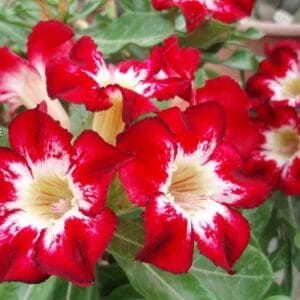
 1Mixed
 1Mixed
 1Mixed
 1Mixed
 1Mixed
 1Mixed
 1Mixed
 1Mixed
 1Mixed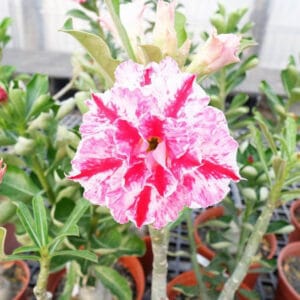
 1Mixed
 1Mixed
 1Mixed
 1Mixed
 1Mixed
 1Mixed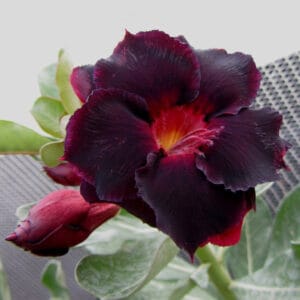
 1Mixed
 1Mixed
 1
1Adenium Obesum Desert Rose Seeds – Rare Flowering Succulent Seeds for Garden Planting, 20 Seeds Pack

 1Mixed
 1Mixed
 1Mixed
 1Mixed
 1Mixed
 1Mixed

 1
1
 1Mixed
 1Mixed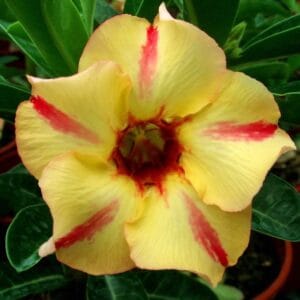
 1Mixed
 1Mixed

 1
1
 1Mixed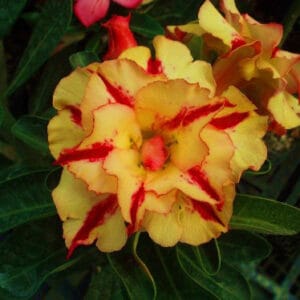
 1Mixed
 1Mixed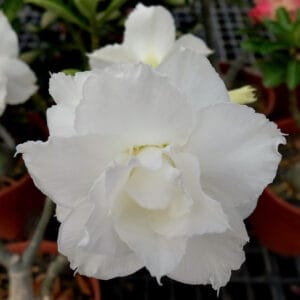
 1Mixed
 1Mixed
