Air Plant Guide
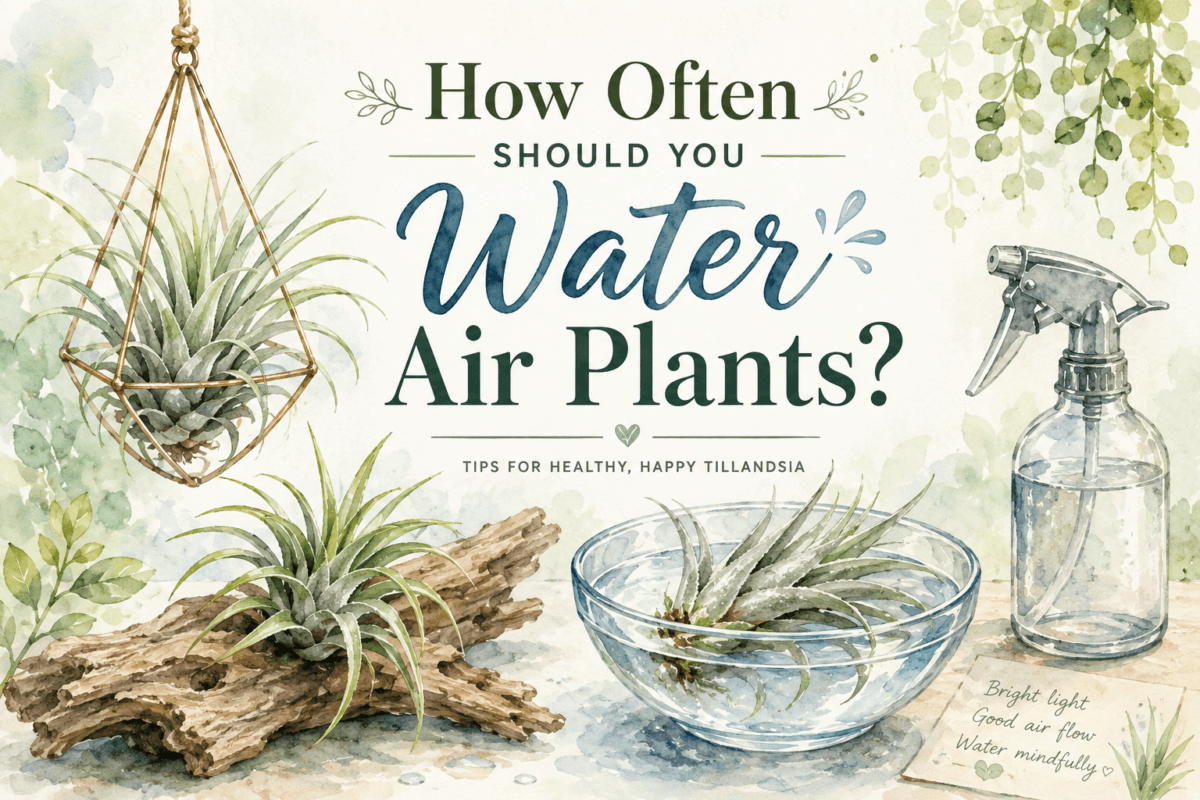
How Often Should You Water Air Plants? Complete Tillandsia Watering Guide for Beginners
Jun
Air plants, also known as Tillandsia, are unusual plants because they do not grow in soil. Instead, they absorb moisture and nutrients through tiny structures on their leaves called trichomes.
Because air plants do not have soil to hold water around their roots, their watering needs are different from ordinary houseplants. Many beginners either water them too little because they assume air plants survive only on humidity, or water them too often and leave them wet for too long.
So, how often should you water air plants?
The answer depends on your climate, indoor humidity, airflow, light, plant size, and air plant variety. However, most air plants grow well when they are thoroughly soaked about once a week and allowed to dry completely afterward.
Quick Answer: How Often Should You Water Air Plants?
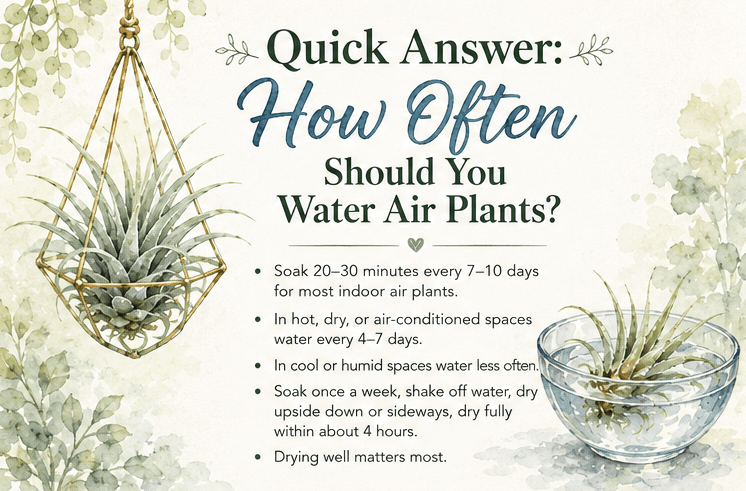
For most indoor air plants, soak them in clean water for approximately 20–30 minutes once every 7–10 days.
In hot, dry, or air-conditioned environments, air plants may need watering more often, sometimes every 4–7 days.
In cool or humid environments, they may need less frequent watering.
A simple beginner routine is:
- Soak once a week
- Shake off excess water
- Place upside down or sideways to dry
- Make sure the plant dries completely within about four hours
- Adjust the schedule according to the plant’s condition
The most important rule is not only how often you water. It is also how well the plant dries afterward.
Air plants can tolerate temporary dryness better than water trapped inside their leaves.
Why Air Plants Need Water Without Soil
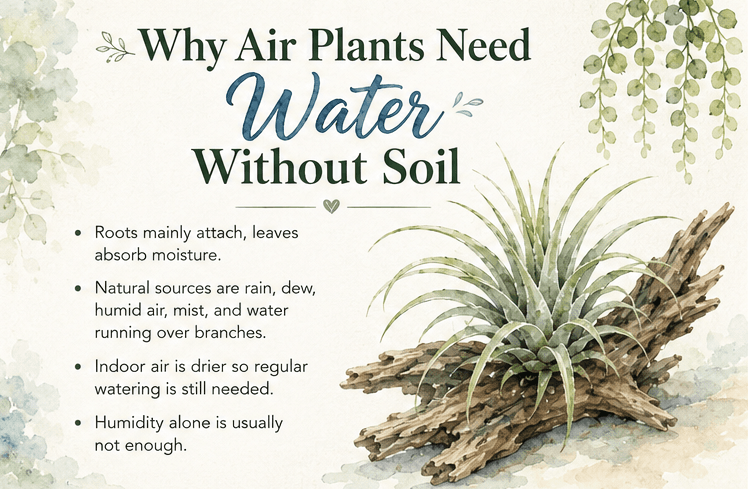
Air plants do not absorb most of their moisture through roots like traditional plants. Their roots are mainly used to attach themselves to trees, rocks, or other surfaces.
Instead, air plants absorb water through their leaves.
In their natural habitat, Tillandsia receives moisture from:
- Rain
- Morning dew
- Humid air
- Mist
- Water running over tree branches
Indoor conditions are usually much drier and less variable than their natural environment. This means indoor air plants need regular watering even if the room feels humid.
Humidity alone is usually not enough to keep most indoor air plants healthy.
What Is the Best Way to Water Air Plants?
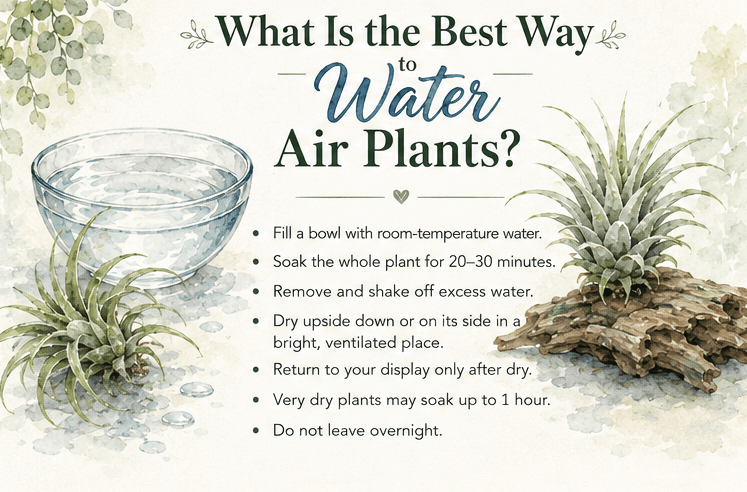
The most reliable watering method is soaking.
How to Soak Air Plants
- Fill a bowl or container with clean room-temperature water.
- Place the entire air plant in the water.
- Let it soak for about 20–30 minutes.
- Remove the plant and gently shake away excess water.
- Place it upside down or on its side in a bright, well-ventilated area.
- Allow it to dry completely before returning it to its display.
Some very dry air plants may benefit from soaking for up to one hour. However, frequent long soaking is usually unnecessary.
Do not leave air plants sitting in water overnight unless the plant is severely dehydrated and you are monitoring it carefully.
Should You Mist Air Plants?
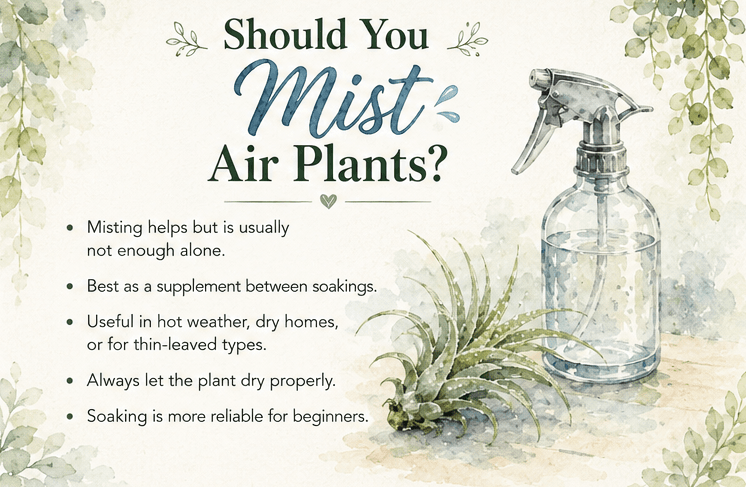
Misting can help, but it is usually not enough as the only watering method.
A light mist dries quickly and may not provide enough moisture to fully hydrate the plant. This is especially true in dry homes, warm rooms, or areas with air conditioning.
Misting works best as a supplement between weekly soakings.
You may mist air plants:
- Between soaking days
- During very hot weather
- In dry indoor environments
- When leaves begin curling slightly
- For thin-leaved varieties that dry quickly
If you mist, make sure the plant still dries properly. Repeated misting in poor airflow can encourage rot.
For most beginners, soaking is more reliable than misting alone.
How Climate Affects Air Plant Watering
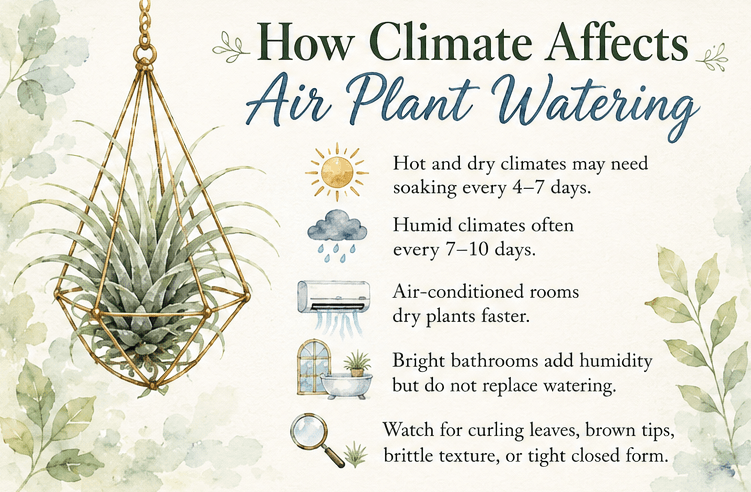
Your environment has a major effect on watering frequency.
Hot and Dry Climates
Air plants lose moisture faster in hot, dry conditions.
You may need to soak every 4–7 days and mist lightly between soakings.
Watch for:
- Curling leaves
- Dry brown tips
- Leaves feeling thin or brittle
- Plant appearing smaller or tightly closed
Humid Climates
Air plants may need less frequent soaking in humid climates because they dry more slowly.
You may soak every 7–10 days, depending on airflow and rainfall exposure.
Be especially careful during rainy seasons. High humidity combined with trapped water can cause rot.
Air-Conditioned Rooms
Air conditioning often dries the air, even in tropical climates.
Air plants near air-conditioning vents may need more frequent watering, but they should not be placed directly in cold drafts.
Bathrooms
A bright bathroom may provide useful humidity, but humidity is not a replacement for watering.
If the bathroom has poor airflow, make sure the plant does not remain wet for long periods.
How Light Affects Watering Frequency
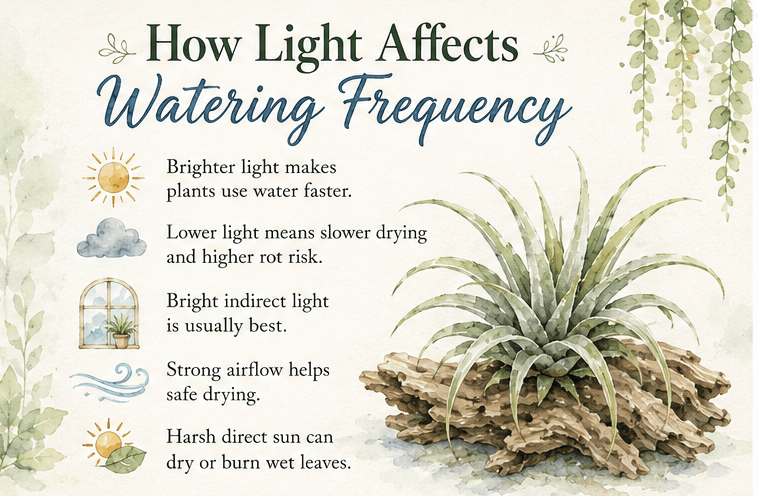
Air plants growing in brighter light usually use water faster than plants kept in dim conditions.
A plant near a bright window may need more frequent watering than one in lower light.
However, low-light plants are also at greater risk of rot because they dry more slowly and use less water.
This means:
- Brighter light may require more frequent watering
- Lower light requires more careful watering
- Strong airflow helps plants dry safely
- Harsh direct sun can dry or burn wet leaves
Air plants usually prefer bright indirect light. Gentle morning sun may be suitable for some varieties, but intense afternoon sun can cause dehydration or leaf burn.
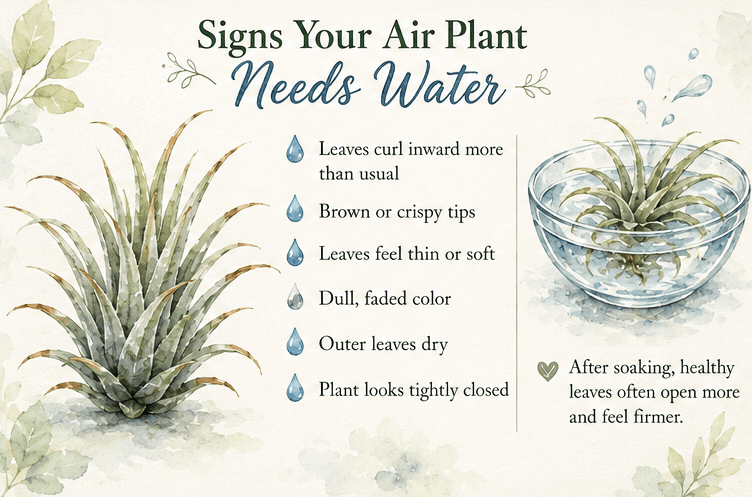
Signs Your Air Plant Needs Water
A thirsty air plant may show several visible changes.
Common signs include:
- Leaves curling inward more than usual
- Brown or crispy leaf tips
- Leaves feeling thin or soft
- Plant looking dull or faded
- Outer leaves drying
- Plant becoming tightly closed
Some air plants naturally have curled leaves, so compare the plant with its usual appearance.
If the plant looks dry, soak it thoroughly and observe it over the next day. Hydrated leaves often become more open and firm.
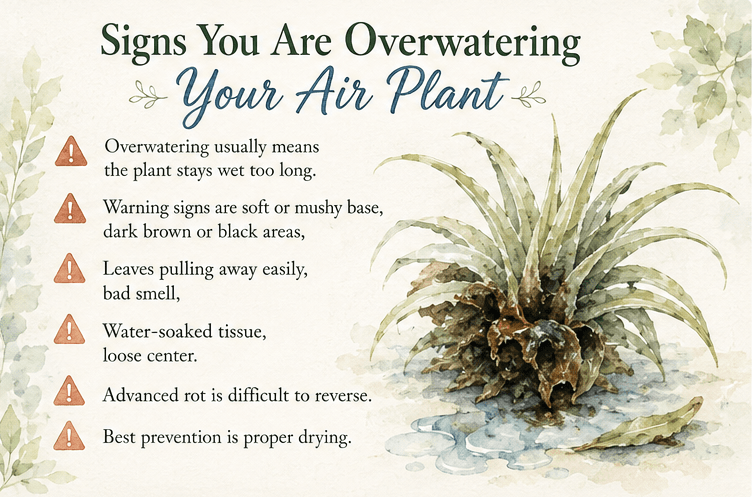
Signs You Are Overwatering Your Air Plant
Overwatering usually happens when the plant remains wet for too long, not simply because it was soaked.
Warning signs include:
- Soft or mushy base
- Dark brown or black areas
- Leaves pulling away easily
- Bad smell
- Transparent or water-soaked tissue
- Center of the plant becoming loose
If the center leaves pull out easily and the base is dark and soft, the plant may have rot.
Unfortunately, advanced rot is difficult to reverse.
The best prevention is proper drying.
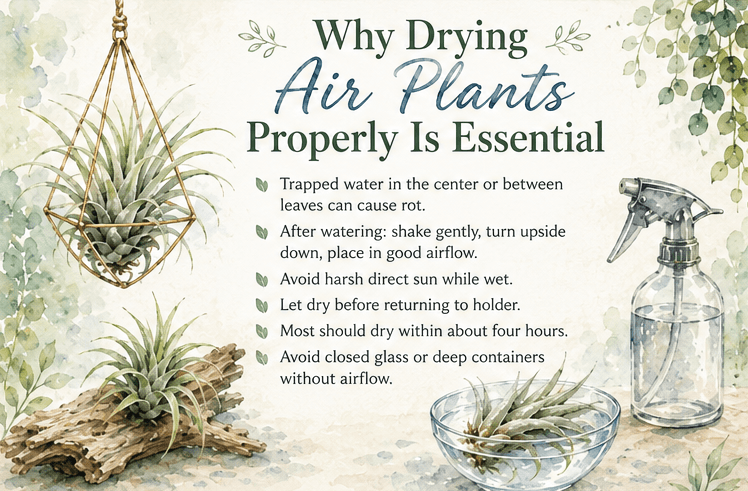
Why Drying Air Plants Properly Is Essential
Water can become trapped inside the center of the plant or between tightly layered leaves.
If the plant is returned upright to a decorative holder while still wet, water may remain at the base. This creates ideal conditions for rot.
After watering:
- Shake the plant gently
- Turn it upside down
- Place it somewhere with good airflow
- Keep it out of harsh direct sun while wet
- Let it dry before returning it to a container
Most air plants should dry completely within approximately four hours.
Avoid keeping wet air plants inside closed glass containers, deep bowls, or displays without airflow.
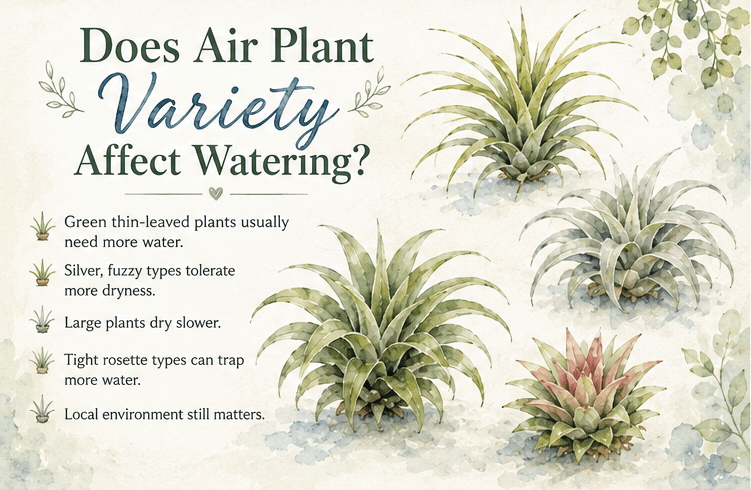
Does Air Plant Variety Affect Watering?
Yes. Different Tillandsia varieties have slightly different watering needs.
Thin-leaved, green air plants usually come from wetter environments and may need more frequent watering.
Thick-leaved, silver, or fuzzy varieties are often better adapted to drier conditions. Their dense trichomes help them absorb and conserve moisture.
In general:
- Green, thin-leaved varieties may need more water
- Silver, fuzzy varieties may tolerate more dryness
- Large plants may take longer to dry
- Tight rosette varieties may trap more water
Even within the same variety, your local conditions still matter.
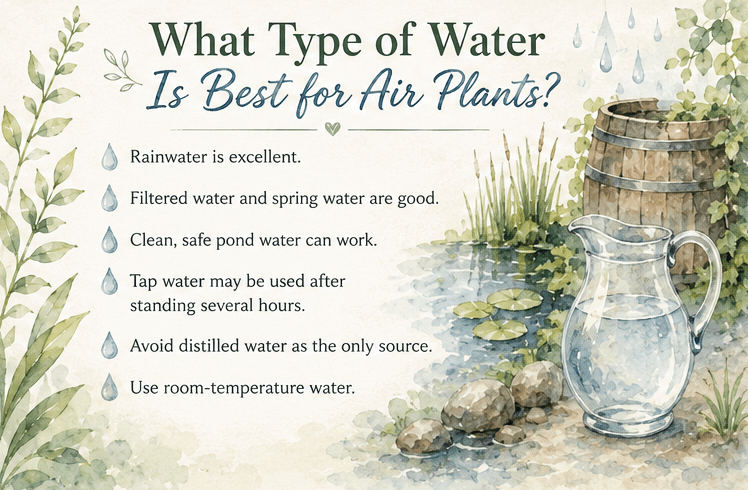
What Type of Water Is Best for Air Plants?
Rainwater is an excellent choice because it contains natural minerals and is usually free from heavy treatment chemicals.
Other suitable options include:
- Filtered water
- Spring water
- Pond water that is clean and safe
- Tap water left standing for several hours
Avoid distilled water as the only water source because it contains almost no minerals.
If your tap water is very hard, softened, or heavily treated, filtered or rainwater may be safer.
Use room-temperature water. Very cold or hot water can stress the plant.
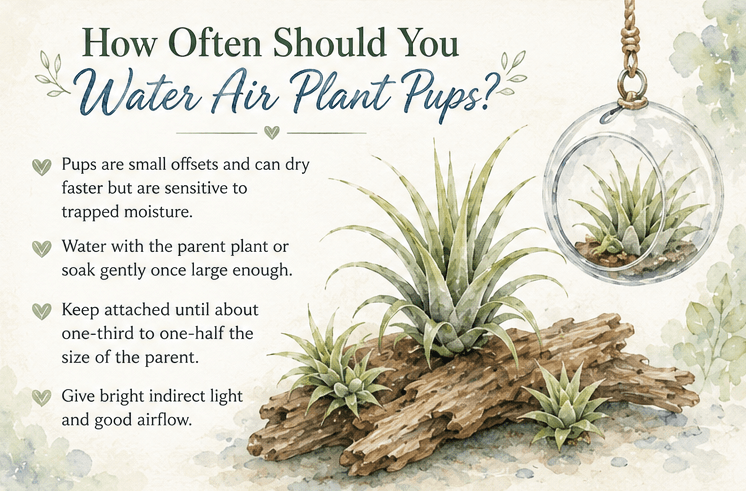
How Often Should You Water Air Plant Pups?
Air plant pups are young offsets that grow from the parent plant.
Pups can dry faster than mature plants because they are smaller. However, they can also be more sensitive to trapped moisture.
Water pups with the parent plant or soak them gently once they are large enough.
Make sure:
- Small pups do not become detached during soaking
- Water does not remain trapped around their base
- They receive bright indirect light
- They have good airflow
Do not separate pups too early. They usually grow better when left attached until they reach at least one-third to one-half the size of the parent plant.
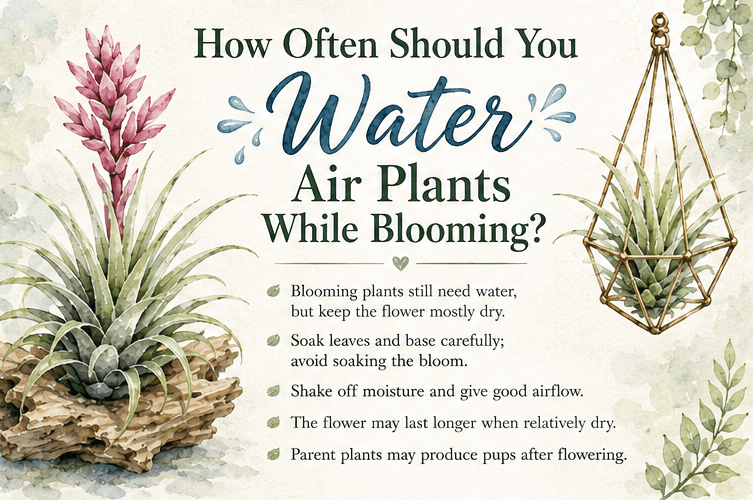
How Often Should You Water Air Plants While Blooming?
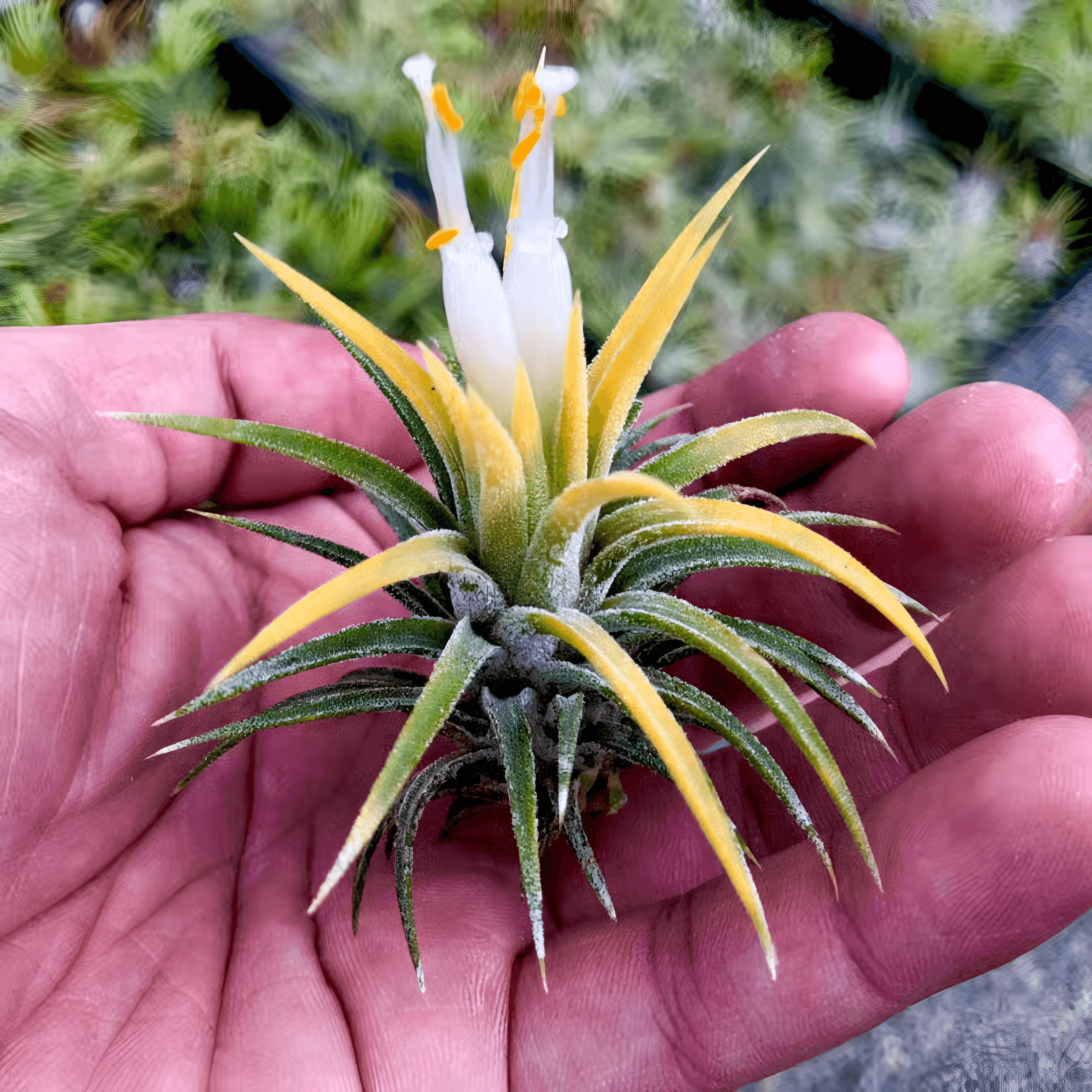
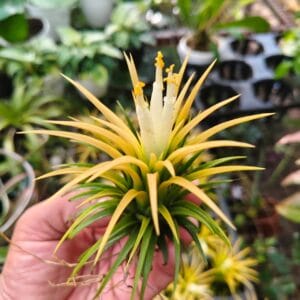
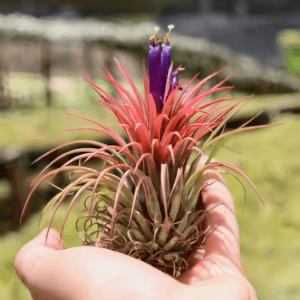
Blooming air plants still need water, but avoid soaking the flower if possible.
Flowers may become damaged, fade faster, or rot if kept wet for too long.
During flowering:
- Soak the leaves and base carefully
- Keep the flower above water if possible
- Shake away excess moisture
- Provide good airflow
- Avoid misting directly onto the bloom
The flower may last longer when it remains relatively dry.
After flowering, the parent plant may begin producing pups.
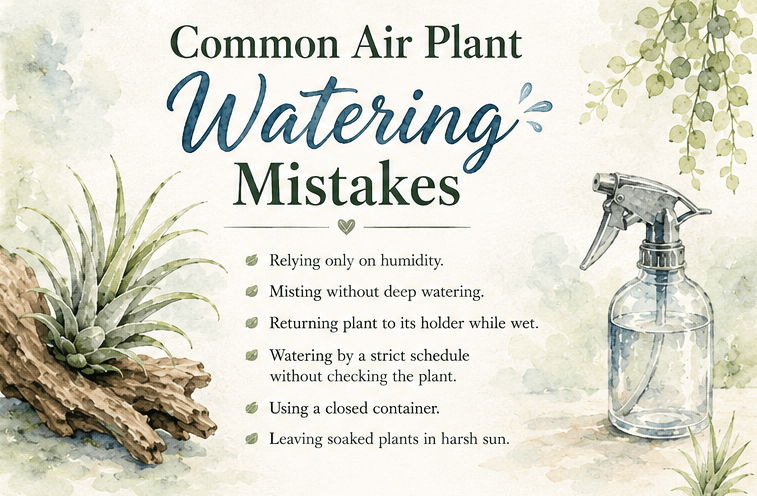
Common Air Plant Watering Mistakes
Relying Only on Humidity
Indoor humidity usually does not provide enough water by itself.
Misting Without Deep Watering
Misting may not hydrate the whole plant adequately.
Returning the Plant to Its Holder While Wet
This traps water and increases the risk of rot.
Watering on a Strict Schedule Without Checking the Plant
Watering needs change with climate, season, and indoor conditions.
Using a Closed Container
Terrariums and glass displays without airflow can remain too humid.
Leaving Air Plants in Harsh Sun After Soaking
Wet leaves can become stressed or burned in intense sunlight.
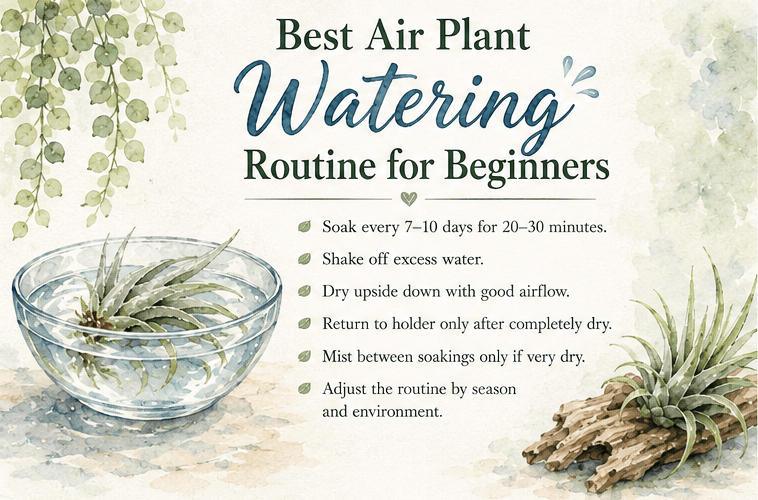
Best Air Plant Watering Routine for Beginners
A safe beginner routine is:
- Soak the air plant once every 7–10 days.
- Leave it in water for 20–30 minutes.
- Shake off excess water.
- Dry the plant upside down with good airflow.
- Return it to its display only after it is dry.
- Mist between soakings if the environment is very dry.
- Watch the leaves and adjust the schedule as needed.
During hot weather, increase watering slightly. During cool, humid conditions, reduce watering.
The plant’s appearance should guide you more than the calendar.
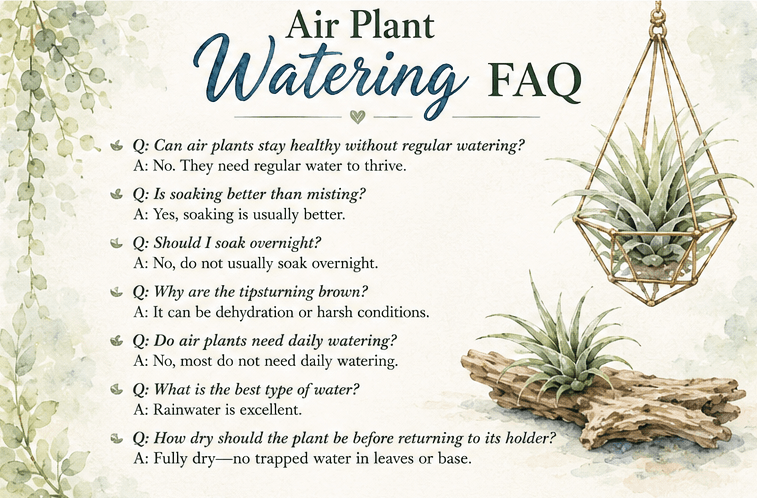
Air Plant Watering FAQ
Can air plants survive without watering?
Not for long. Although they absorb some moisture from the air, indoor air plants still need regular watering.
Is soaking or misting better for air plants?
Soaking is usually more reliable. Misting is best used as a supplement.
Can I soak air plants overnight?
It is usually unnecessary and may increase the risk of rot. A 20–30 minute soak is enough for most plants.
Why are my air plant’s tips turning brown?
Brown tips may be caused by dehydration, low humidity, hard water, excessive heat, or fertilizer buildup.
Should air plants be watered every day?
Usually no. Daily soaking or heavy misting may keep them too wet. Most plants need deep watering approximately once a week.
Can rainwater be used for air plants?
Yes. Rainwater is one of the best choices for air plants.
How do I know if my air plant is fully dry?
The leaves should no longer feel wet, water should not remain in the center, and the plant should feel light and dry before returning to its holder.
Soak Well, Then Dry Completely
Most indoor air plants should be soaked for about 20–30 minutes every 7–10 days. However, watering frequency should be adjusted according to heat, humidity, airflow, light, and plant variety.
The most important lesson is simple:
Water thoroughly, then allow the plant to dry completely.
Air plants need moisture, but they also need airflow. A plant that is watered well and dried properly is much more likely to remain healthy than one that receives frequent misting but stays damp.
Watch your plant’s leaves, check its environment, and adjust your routine through the seasons. With balanced watering and proper drying, Tillandsia can remain healthy, produce attractive growth, bloom, and eventually develop new pups.
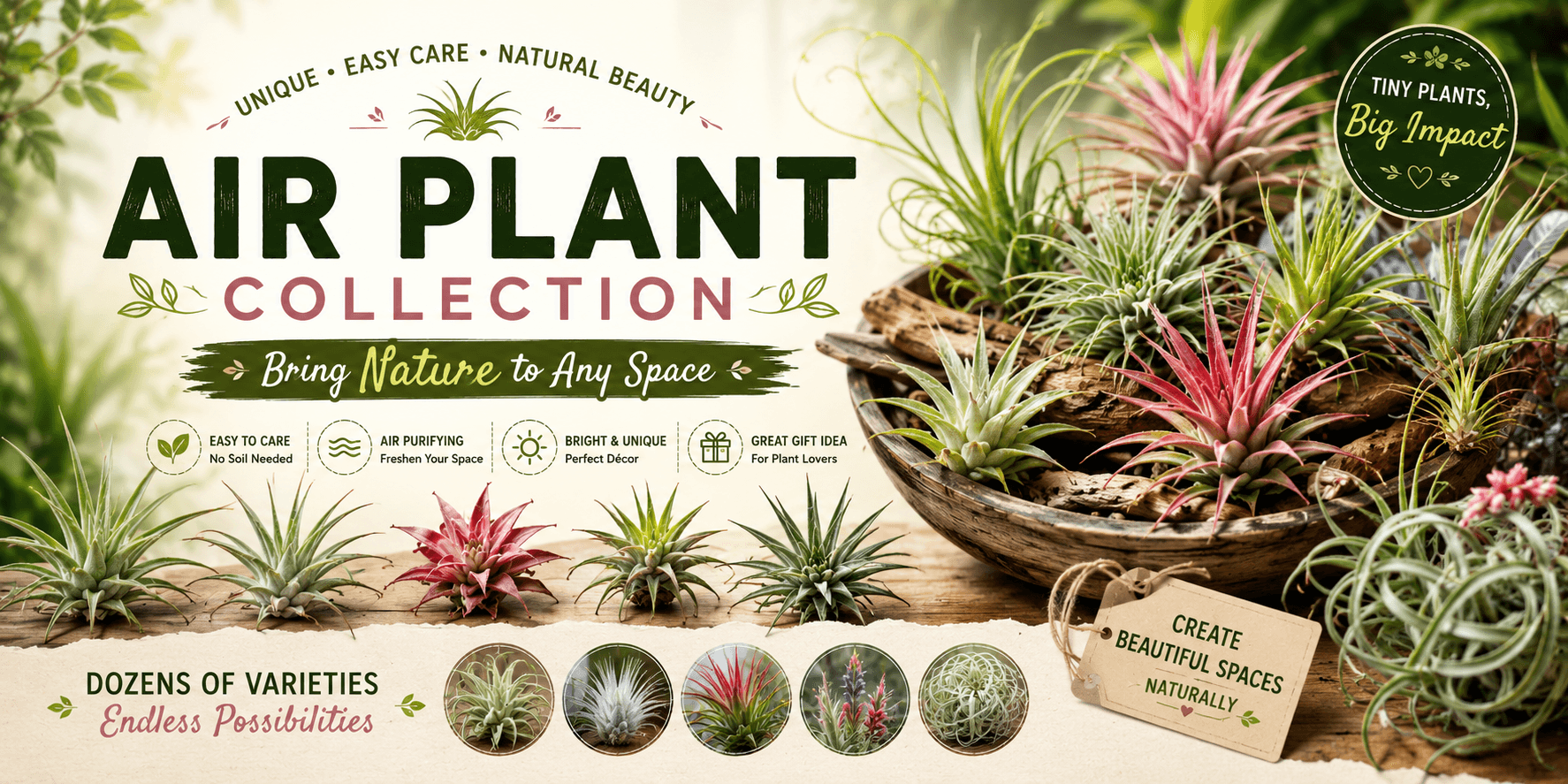
Start Your Air Plant Journey
Start growing your own air plant collection with beautiful, low-maintenance Tillandsia. Choose healthy plants, give them bright indirect light, water them properly, and enjoy watching them grow, bloom, and produce new pups over time.
Recommended Air PlantShop All