Air Plant Guide
Do Air Plants Need Sunlight? Best Light Conditions for Tillandsia

Jun
Air plants, also known as Tillandsia, are popular because they can grow without soil. They look beautiful in glass holders, wood displays, hanging planters, and small indoor arrangements. But even though they do not need soil, they still need light.
One of the most common beginner questions is:
Do air plants need sunlight?
Yes, air plants need light to stay healthy. They do not usually need harsh direct sun, but they do need bright, indirect light for good growth. Without enough light, air plants may grow slowly, lose color, weaken, or fail to bloom.
The key is finding the right balance: bright enough for healthy growth, but not so intense that the leaves burn or dry out too quickly.

Do Air Plants Need Sunlight?
Yes, air plants need sunlight, but most varieties grow best in bright indirect light rather than strong direct afternoon sun.
A good location for air plants is:
- Near a bright window
- In filtered sunlight
- Under a grow light
- In a bright room with good airflow
- Away from harsh hot afternoon sun
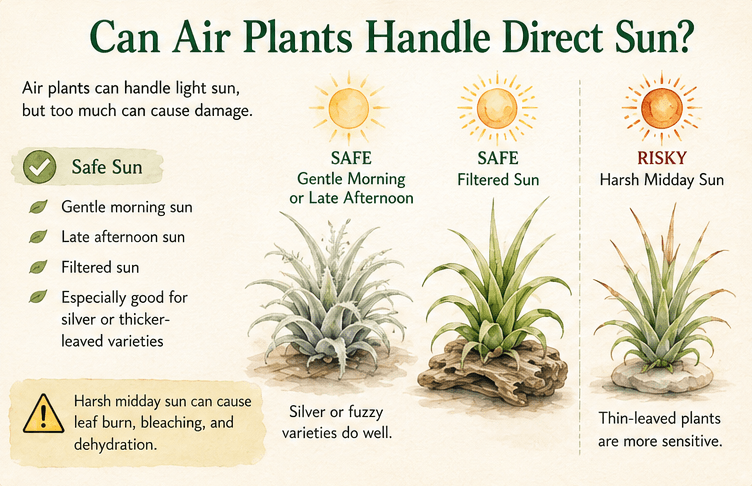
Gentle morning sun or late afternoon sun can be helpful, especially for silver or thicker-leaved varieties. However, strong direct midday sun can dry or burn many air plants.
For indoor care, bright indirect light is usually the safest choice.
Why Light Is Important for Air Plants
Air plants use light to make energy through photosynthesis. This energy supports leaf growth, color, blooming, and pup production.
Even though air plants absorb moisture through their leaves, they cannot stay healthy without enough light. A Tillandsia kept in a dark room may survive for a while, but it will slowly weaken.
Good light helps air plants:
- Grow stronger leaves
- Maintain better color
- Dry properly after watering
- Produce flowers
- Grow pups after blooming
- Stay healthier long term
Light and watering also work together. An air plant in brighter light usually uses water faster. A plant in low light dries more slowly and is more likely to rot if watered too often.

Why Light Is Important for Air Plants
Air plants use light to make energy through photosynthesis. This energy supports leaf growth, color, blooming, and pup production.
Even though air plants absorb moisture through their leaves, they cannot stay healthy without enough light. A Tillandsia kept in a dark room may survive for a while, but it will slowly weaken.
Good light helps air plants:
- Grow stronger leaves
- Maintain better color
- Dry properly after watering
- Produce flowers
- Grow pups after blooming
- Stay healthier long term
Light and watering also work together. An air plant in brighter light usually uses water faster. A plant in low light dries more slowly and is more likely to rot if watered too often.

Best Indoor Light for Air Plants
The best indoor location for most air plants is near a bright window with indirect sunlight.
East-Facing Window
An east-facing window is often excellent because it provides gentle morning sun. Morning light is bright but usually not too hot.
South-Facing Window
A south-facing window can work well if the plant is not pressed directly against hot glass. Use filtered light or place the plant slightly away from the window if the sun is intense.
West-Facing Window
A west-facing window gives strong afternoon sun. This can be too hot for some air plants, especially in warm climates. Filtered light is usually safer.
North-Facing Window
A north-facing window may be too dim for many air plants, especially if the room is already shaded. If your air plant looks dull or grows slowly, it may need brighter light.

Can Air Plants Grow in Low Light?
Air plants can tolerate lower light for short periods, but they should not be kept in dark conditions long term.
Low light can cause:
- Slow growth
- Dull leaf color
- Weak leaves
- Poor drying after watering
- Higher risk of rot
- No blooming
- Fewer pups
A room that feels bright to human eyes may still be too dim for plants. If your air plant is far from a window, inside a dark bathroom, or on a shaded shelf, it may need more light.
If natural light is weak, a grow light can help.
Can Air Plants Handle Direct Sun?
Some air plants can handle gentle direct sun, especially morning sun. However, harsh direct sunlight can burn or dehydrate them.
Air plants with thick, silver, or fuzzy leaves often tolerate brighter light better because their trichomes help reflect light and conserve moisture. Green, thin-leaved air plants usually prefer more protection from strong sun.
Direct sun is safer when it is:
- Morning sun
- Late afternoon sun
- Filtered through a curtain
- Mild and not too hot
- Paired with proper watering and airflow
Avoid placing air plants in intense midday sun, especially behind hot glass. Glass can magnify heat and cause leaf burn.

Signs Your Air Plant Needs More Light
Your Tillandsia may need more light if you notice:
- Slow or no growth
- Dull green or faded color
- Leaves becoming weak
- Plant staying wet too long after watering
- No blooming over time
- Poor pup development
- Plant looking soft or unhealthy
If your air plant is not doing well and watering seems correct, check the light next.
Move it gradually to a brighter location rather than suddenly placing it in strong sun.

Signs Your Air Plant Is Getting Too Much Sun
Too much direct sun can stress or burn air plants.
Signs include:
- Brown crispy leaf tips
- Bleached or pale patches
- Dry curled leaves
- Scorched areas
- Plant drying out very quickly
- Leaves feeling brittle
If this happens, move the plant to bright indirect light. Damaged leaves will not fully recover, but new growth can be healthier if conditions improve.
Do Air Plants Need Grow Lights?
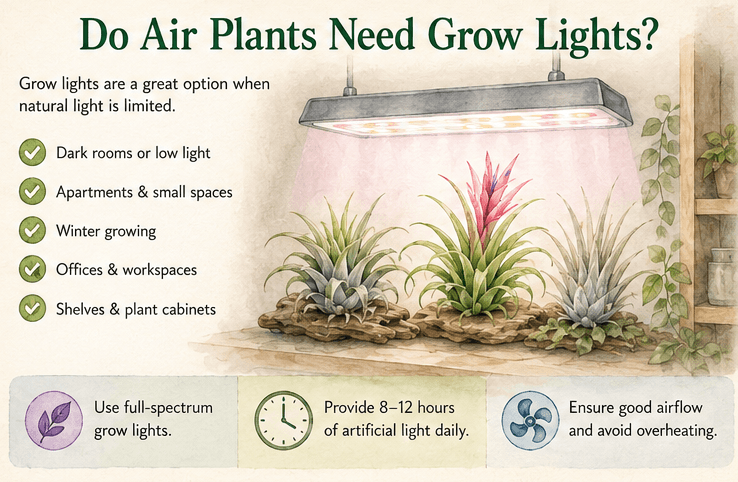
Air plants can grow under grow lights if natural light is not strong enough.
Grow lights are helpful for:
- Dark rooms
- Apartments with limited window light
- Winter growing
- Indoor displays far from windows
- Offices
- Shelves or plant cabinets
Use a full-spectrum grow light and place the air plant close enough to benefit from the light, but not so close that it overheats.
A simple indoor setup can provide 8–12 hours of artificial light per day. Make sure the plant still receives airflow and dries fully after watering.

Light and Watering Must Work Together
Light affects how often you should water your air plant.
In brighter light, the plant may dry faster and need watering more often. In lower light, the plant dries more slowly and should be watered more carefully.
A good rule is:
More light and airflow usually mean more frequent watering. Less light means slower drying and less frequent watering.
Never return an air plant to a dark or enclosed display while it is still wet. This can cause rot.
After soaking or misting, place the plant in a bright, airy spot until it dries completely.

Best Light Setup for Beginners
For beginners, the safest setup is:
- Bright indirect light
- Near an east or south-facing window
- Gentle morning sun if available
- Good airflow
- No harsh afternoon sun
- No closed dark containers
- Grow light if natural light is weak
This gives the plant enough energy without exposing it to too much heat or sun stress.

Air Plant Light FAQ
Do air plants need sunlight every day?
They should receive bright light daily. Natural sunlight or grow lights can both work.
Can air plants live in a bathroom?
Yes, if the bathroom is bright and has airflow. A dark bathroom is not ideal.
Can air plants grow under artificial light?
Yes. Full-spectrum grow lights can support healthy growth indoors.
Should air plants be placed in direct sun?
Gentle morning sun can be helpful, but harsh afternoon sun may burn them.
Why is my air plant turning brown?
Brown tips can be caused by too much sun, underwatering, dry air, hard water, or stress.
Final Thoughts: Bright Indirect Light Is Best
Air plants do need sunlight, but they do not need harsh direct sun. For most Tillandsia, bright indirect light is the best and safest condition.
A bright window, filtered sun, or grow light can help your air plant grow stronger, stay colorful, bloom, and eventually produce pups.
The most important balance is light, water, and airflow. Give your air plant enough brightness, water it properly, and always let it dry completely after watering. With the right light conditions, Tillandsia can be one of the easiest and most beautiful plants to grow indoors.
Start Your Air Plant Journey
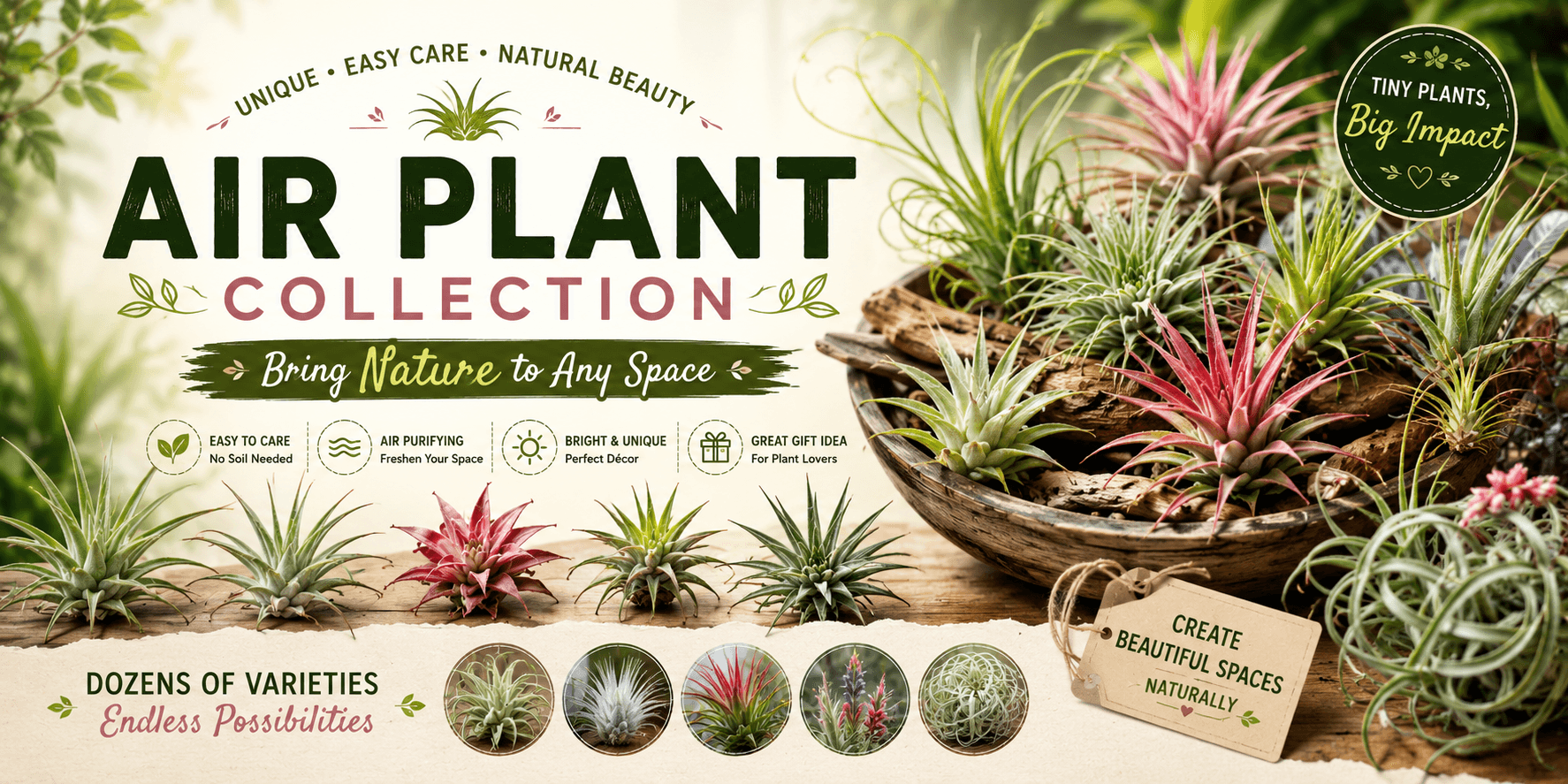
Start growing your own air plant collection with beautiful, low-maintenance Tillandsia. Choose healthy plants, give them bright indirect light, water them properly, and enjoy watching them grow, bloom, and produce new pups over time.
Recommended Air PlantShop All