

Desert Rose Guide
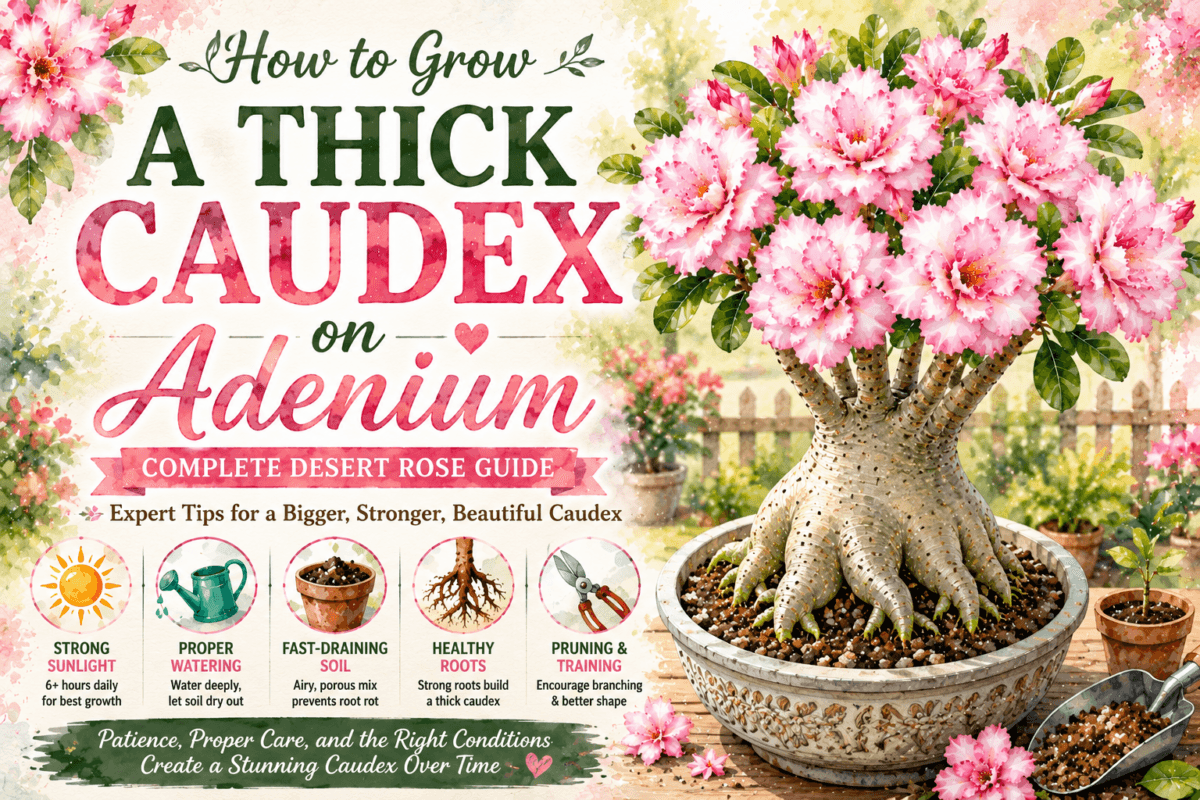
How to Grow a Thick Caudex on Adenium: Complete Desert Rose Guide
May
Why the Caudex Is the Most Valuable Part of Adenium
Adenium, commonly known as Desert Rose, is admired for its beautiful flowers, but for many growers, the most valuable feature is not the bloom — it is the caudex.
The caudex is the thick, swollen base of the plant. It stores water, gives Adenium its sculptural shape, and creates the bonsai-like appearance that makes Desert Rose so collectible. A well-developed caudex can make even a non-blooming Adenium look beautiful.
Many beginners ask the same question:
How do you grow a thick caudex on Adenium?
The answer is not one single trick. A thick caudex develops through a combination of genetics, strong light, proper watering cycles, fast-draining soil, root health, warm temperatures, correct pot choice, and time.
You cannot force an Adenium to grow a massive caudex overnight. However, you can create the right conditions that encourage stronger root development, better water storage, thicker base growth, and a more attractive plant shape over time.
In this complete guide, you’ll learn how Adenium caudex growth works, what helps it become thicker, what mistakes slow it down, and how to train your Desert Rose for a stronger, healthier, more sculptural base.
What Is the Caudex on Adenium?
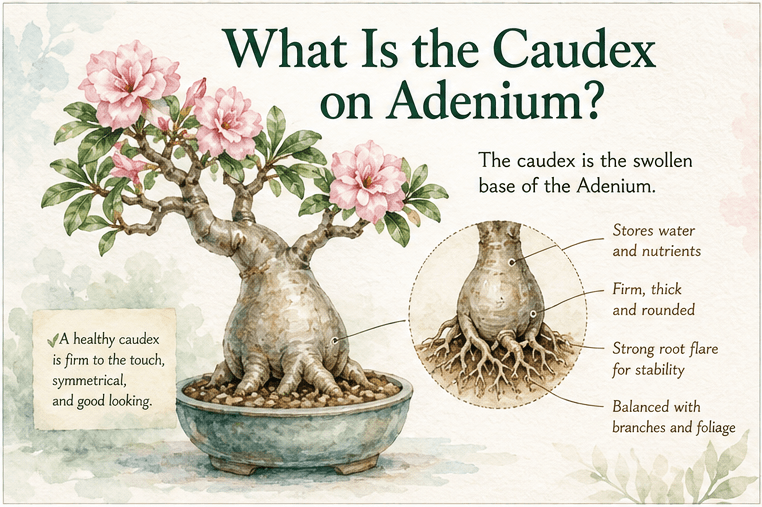
The caudex is the swollen base or trunk area of an Adenium plant. It acts as a water-storage structure, helping the plant survive dry periods.
In nature, Adenium grows in warm, dry environments where water may not always be available. The caudex allows the plant to store moisture and energy, making it more drought-tolerant than many ordinary flowering plants.
This is why Adenium behaves more like a succulent than a typical houseplant.
A healthy caudex usually looks:
- Firm
- Thick
- Slightly rounded or swollen
- Well-supported by strong roots
- Gradually larger with age
- Balanced with the plant’s branches
The caudex is also one of the main reasons Adenium is grown as a decorative container plant. It gives the plant a natural bonsai-like shape without needing extreme training.
Can You Make an Adenium Caudex Thicker?
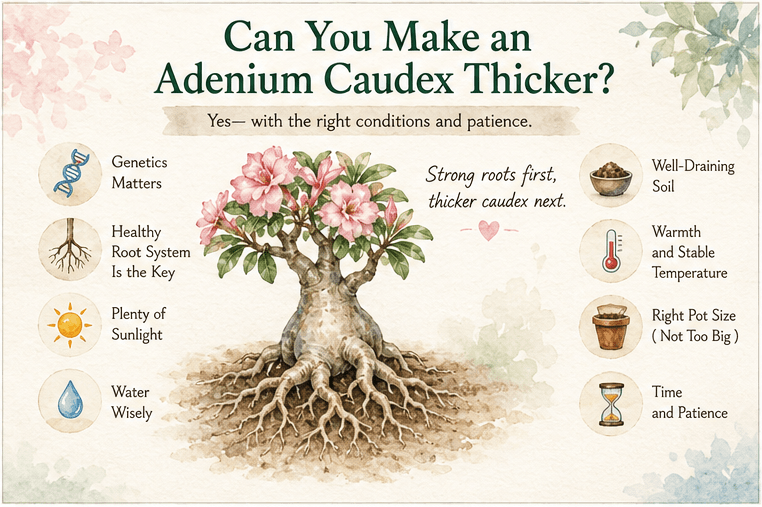
Yes, you can encourage a thicker Adenium caudex, but you need realistic expectations.
Adenium caudex growth depends on several factors:
- Genetics
- Seed-grown vs cutting-grown plants
- Age of the plant
- Root health
- Sunlight
- Watering habits
- Soil drainage
- Temperature
- Pot size and shape
- Overall plant energy
A young Adenium will not have a thick caudex immediately. The base usually thickens gradually as the plant grows stronger roots and stores more water.
The goal is not to overfeed or overwater the plant to “force” swelling. That often causes weak growth or root rot.
The better approach is:
Grow strong roots first. A thick caudex follows healthy roots.
Seed-Grown Adenium Usually Develops the Best Caudex
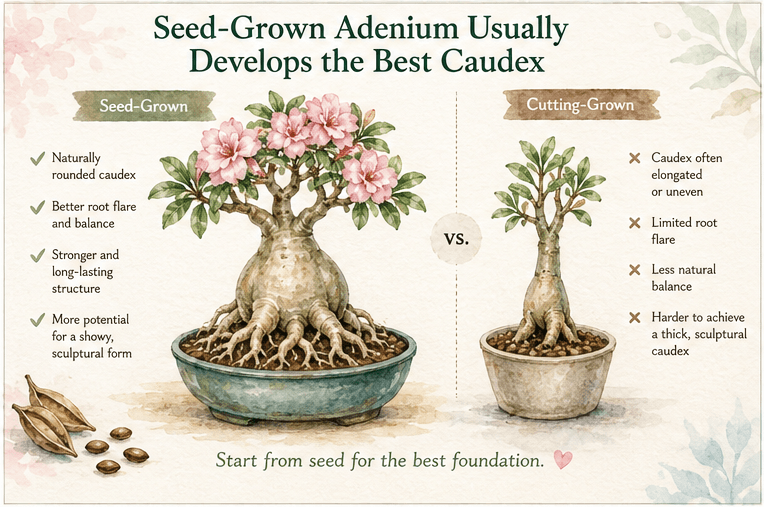
If your goal is a thick, natural caudex, seed-grown Adenium is usually the best choice.
Seed-grown Desert Rose plants often develop a more symmetrical, swollen base because the caudex forms naturally from the beginning. The main root and lower stem thicken together as the plant matures.
This is why many collectors prefer growing Adenium from seed.
Why Seed-Grown Plants Are Better for Caudex Development
Seed-grown Adeniums often produce:
- Better natural caudex shape
- Stronger root flare
- More balanced base swelling
- Unique individual plant forms
- Better long-term bonsai-style potential
Cuttings can still grow and bloom, but they often do not develop the same thick, natural caudex as seed-grown plants. A cutting-grown Adenium may form a woody stem, but the base usually lacks the same rounded swelling.
If you are starting from scratch and want the best caudex, start with fresh Adenium seeds.
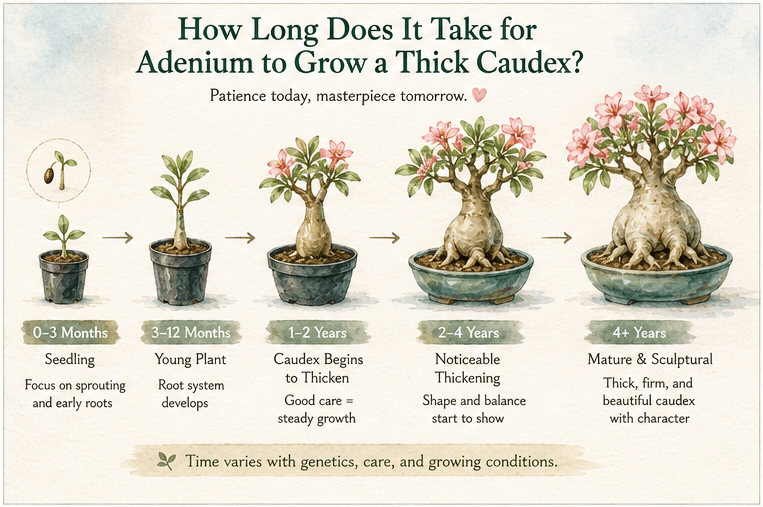
How Long Does It Take for Adenium to Grow a Thick Caudex?
Adenium caudex development takes time.
Seedlings may begin showing a slightly swollen base within the first few months, but a truly thick and attractive caudex usually takes years, not weeks.
A general timeline:
- 0–3 months: seedling stage, small stem begins to thicken
- 3–6 months: base becomes more noticeable
- 6–12 months: caudex starts developing stronger shape
- 1–2 years: visible swelling and root flare improve
- 2–4 years: caudex becomes more sculptural
- 5+ years: mature bonsai-like character becomes stronger
This timeline depends heavily on growing conditions.
Warm climates, strong light, proper watering, and healthy roots can speed up development. Low light, poor soil, overwatering, root rot, and cold conditions can slow it down significantly.
Patience is part of Adenium growing. A thick caudex is built over time.
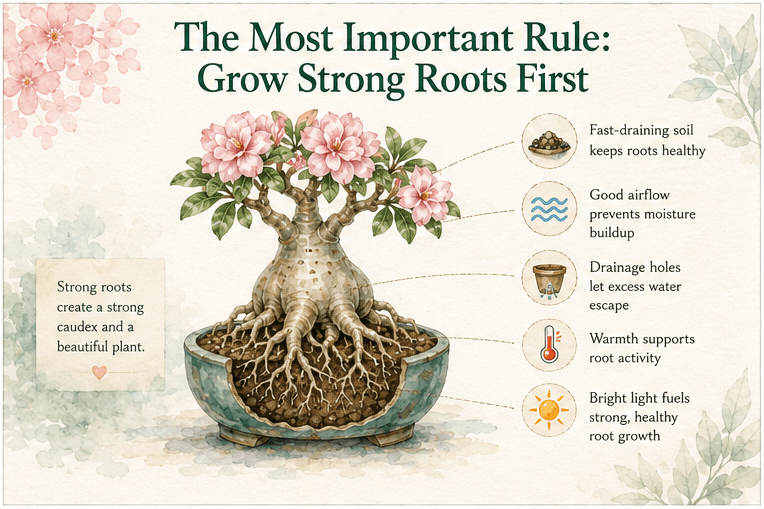
The Most Important Rule: Grow Strong Roots First
If you want a thick caudex, focus on the root system.
The caudex and roots are closely connected. A plant with weak, damaged, or rotting roots cannot build a strong base.
Healthy roots allow the plant to absorb water and nutrients efficiently. They also support better energy storage, stronger growth, and more stable caudex development.
To grow strong roots, your Adenium needs:
- Fast-draining soil
- A pot with drainage holes
- Proper watering cycles
- Warm temperatures
- Strong light
- Good airflow
- No constant soggy conditions
Many caudex problems begin when growers focus only on the visible trunk while ignoring root health.
Remember:
Healthy roots create a healthy caudex.
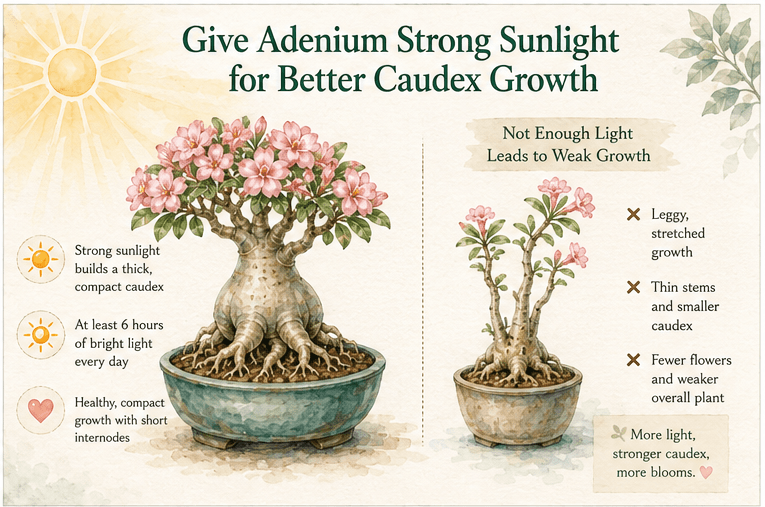
Give Adenium Strong Sunlight for Better Caudex Growth
Sunlight is one of the most important factors for thick caudex development.
Adenium needs strong light to produce energy through photosynthesis. This energy supports root growth, branch development, caudex swelling, and flowering.
Without enough light, the plant may become tall, thin, weak, and stretched. Instead of becoming compact and thick, it may grow leggy stems with poor structure.
How Much Sunlight Does Adenium Need?
For strong growth, Adenium usually needs at least:
6 hours of bright light per day
Outdoor plants often grow stronger caudexes than indoor plants because outdoor light is much more intense.
Signs Your Adenium Needs More Light
Your plant may need more light if you notice:
- Long thin stems
- Wide gaps between leaves
- Pale leaves
- Slow growth
- Weak branches
- Small or underdeveloped caudex
- No flowers
How to Increase Light Safely
If your Adenium has been indoors or in shade, do not move it suddenly into harsh full sun. Gradually increase light exposure over 7–10 days to prevent sunburn.
Start with morning sun, then slowly increase exposure.
Strong light encourages compact, sturdy growth — the type of growth that supports a thicker caudex.
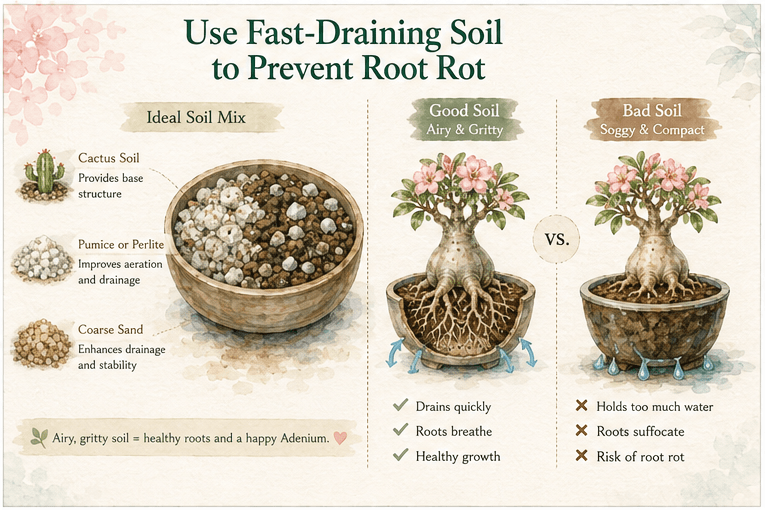
Use Fast-Draining Soil to Prevent Root Rot
Adenium needs fast-draining soil. This is essential for both root health and caudex development.
If the soil stays wet too long, roots cannot breathe. This can lead to root rot, soft caudex, yellow leaves, and plant decline.
A good Adenium soil mix should be:
- Fast-draining
- Airy
- Lightweight
- Loose
- Not compacted
- Slightly moisture-retentive but never soggy
Beginner-Friendly Soil Mix
A simple soil mix for Adenium:
- 50% cactus or succulent soil
- 25% pumice or perlite
- 25% coarse sand
For humid climates or indoor growing, you can increase drainage materials.
A stronger drainage mix:
- 40% cactus or succulent soil
- 30% pumice or perlite
- 20% coarse sand
- 10% lava rock, gravel, or bark chips
Good soil allows the plant to go through healthy wet-dry cycles. These cycles help roots breathe and support long-term caudex development.
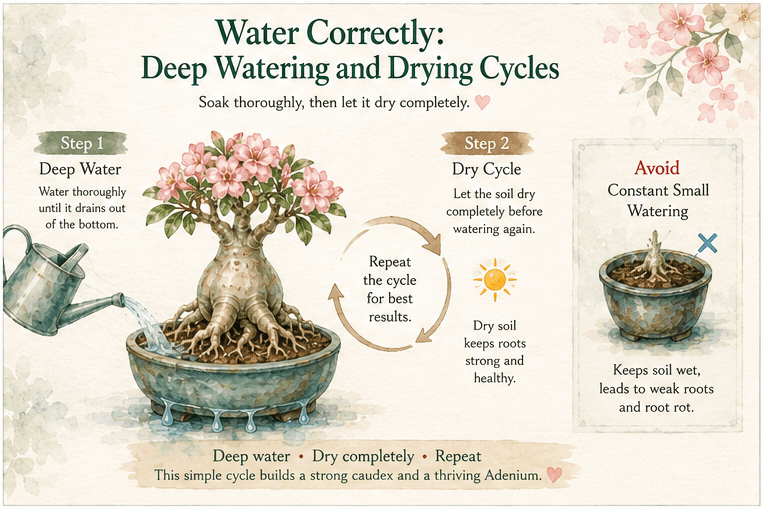
Water Correctly: Deep Watering and Drying Cycles
Watering has a major effect on caudex growth.
Adenium stores water in its caudex, so it does not like constantly wet soil. However, it also cannot grow well if it is kept extremely dry all the time during active growth.
The best approach is:
Water deeply, then let the soil dry before watering again.
This watering cycle allows the roots to absorb moisture, then breathe as the soil dries.
Why Watering Cycles Help the Caudex
Adenium responds well to a rhythm of moisture and dryness. During active growth, deep watering supports root and stem development. The drying period prevents rot and encourages the plant to use its storage system naturally.
Avoid Constant Small Watering
Do not give tiny amounts of water every day. This can keep the surface damp while failing to support deeper roots. It may also encourage shallow root growth.
Avoid Constant Wet Soil
Constant moisture is one of the fastest ways to damage the caudex. A soft, mushy caudex is often a sign of root rot or excess water.
For caudex growth, balance is key:
Not bone-dry forever. Not wet all the time. Deep water, then dry.
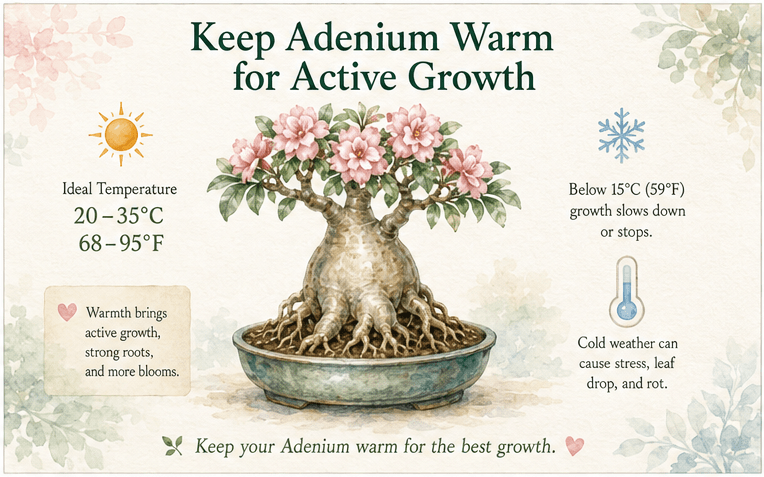
Keep Adenium Warm for Active Growth
Adenium grows best in warm conditions. Warmth encourages root activity, leaf growth, and caudex development.
Ideal growing temperature:
20–35°C / 68–95°F
When temperatures are warm and sunlight is strong, Adenium grows more actively. This is the best time for caudex thickening.
Cold conditions slow growth. If the plant is cold and wet, root rot risk increases dramatically.
Cold Weather and Caudex Growth
During cool weather or dormancy, Adenium may stop growing. It may drop leaves and use less water. This is normal, but caudex development slows during this period.
In winter or cool conditions:
- Reduce watering
- Stop or reduce fertilizer
- Keep the plant dry
- Keep it warm if possible
- Avoid repotting unless necessary
Adenium builds its caudex during active growth, not during cold dormancy.
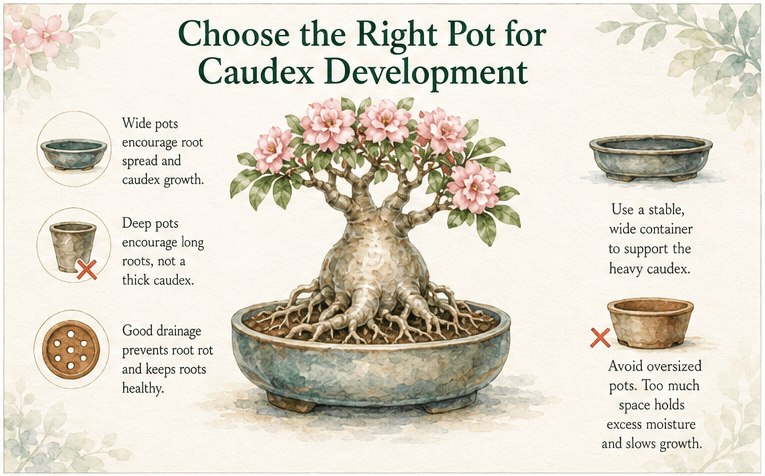
Choose the Right Pot for Caudex Development
Pot choice affects root growth, moisture control, and caudex shape.
A good Adenium pot should be:
- Wide enough for root spread
- Not too deep
- Stable
- Equipped with drainage holes
- Only slightly larger than the root system
Wide Pots Are Better Than Deep Pots
Adenium often benefits from wide, shallow-to-medium-depth pots. A wider pot allows roots to spread and helps display the caudex better.
Very deep pots can hold moisture in the lower soil, especially if the roots do not fill the pot. This increases the risk of root rot.
Avoid Oversized Pots
A pot that is too large holds too much soil. Too much soil holds too much moisture.
For Adenium, bigger is not always better.
Choose a pot that gives roots enough room to grow but still allows the soil to dry properly.
Best Pot Materials
Good options include:
- Terracotta
- Clay
- Unglazed ceramic
- Bonsai pots with drainage
- Plastic pots with careful watering
Terracotta and clay pots are excellent for beginners because they help soil dry faster.
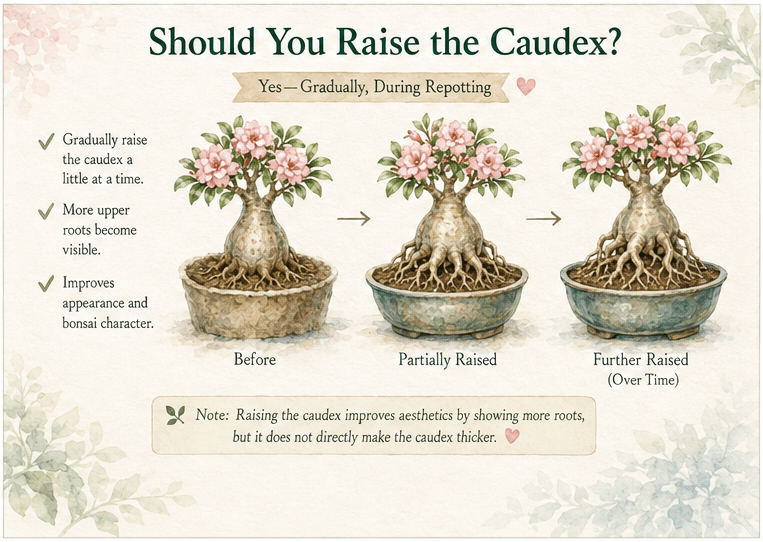
Should You Raise the Caudex?
Raising the caudex is a common technique used to create a more dramatic bonsai-like Desert Rose.
This means positioning the plant slightly higher during repotting so more of the caudex and upper roots are visible above the soil line.
Does Raising the Caudex Make It Thicker?
Raising the caudex does not directly make it thicker. It makes the caudex more visible and can improve the plant’s shape.
Actual thickening comes from healthy growth, strong roots, sunlight, and time.
When to Raise the Caudex
Raise the caudex only when:
- The plant is healthy
- Roots are strong
- The caudex is already developing
- The plant is mature enough
- You are repotting during active growth
Do not expose too much root at once. A gradual approach is safest.
Each time you repot, you can position the plant slightly higher.
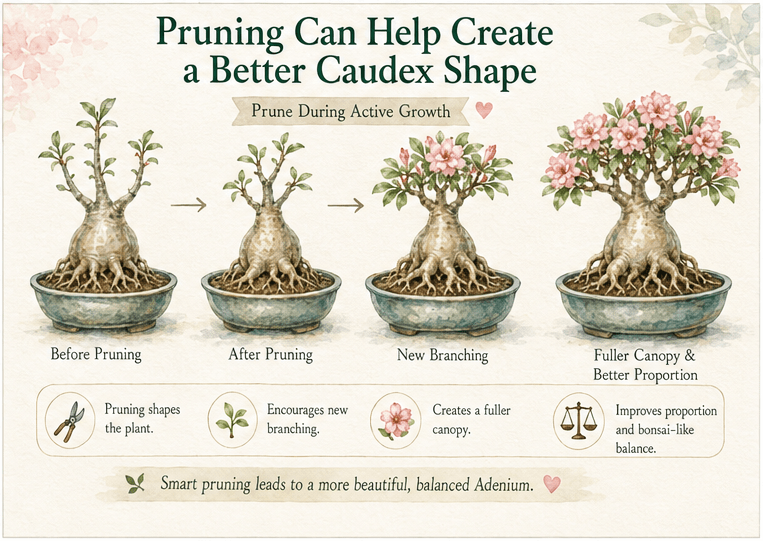
Pruning Can Help Create a Better Caudex Shape
Pruning does not directly thicken the caudex overnight, but it can help improve the overall plant structure.
When you prune Adenium during active growth, it can encourage branching. More branches can help create a fuller canopy. A balanced top growth can make the caudex look more powerful and proportionate.
Why Pruning Helps
Pruning can:
- Encourage branching
- Reduce leggy growth
- Improve bonsai-like shape
- Balance top growth with the caudex
- Create more flowering points
- Prevent the plant from looking tall and weak
When to Prune
The best time to prune Adenium is during warm active growth, usually spring or early summer.
Avoid heavy pruning during cold dormancy.
Use clean tools and allow cut areas to dry.
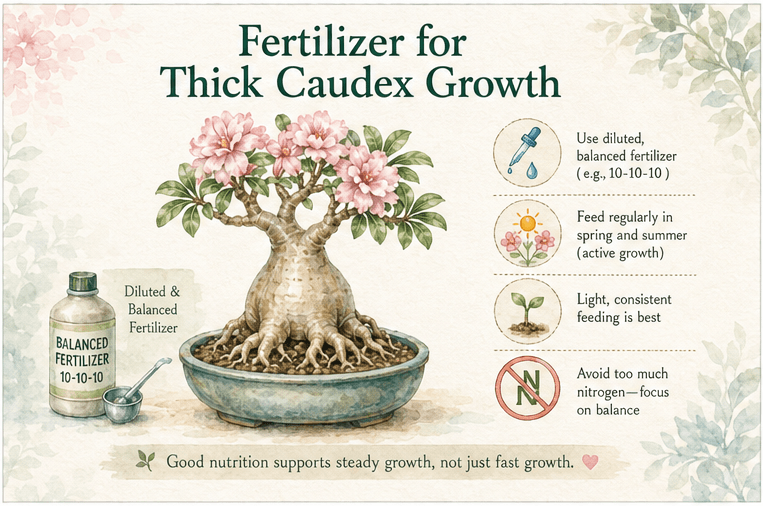
Fertilizer for Thick Caudex Growth
Fertilizer can support healthy growth, but it should be used carefully.
Too much fertilizer, especially too much nitrogen, can cause soft leafy growth instead of balanced, sturdy development. Overfeeding may also stress the roots.
Best Fertilizer Approach
During active growth, use a diluted balanced fertilizer or cactus/succulent fertilizer.
A safe approach:
- Fertilize during spring and summer
- Use diluted strength
- Feed lightly but consistently
- Avoid heavy feeding during dormancy
- Do not fertilize stressed or recently repotted plants immediately
Adenium needs nutrition, but it does not need overly rich soil or excessive fertilizer.
Good caudex growth comes from balanced care, not aggressive feeding.
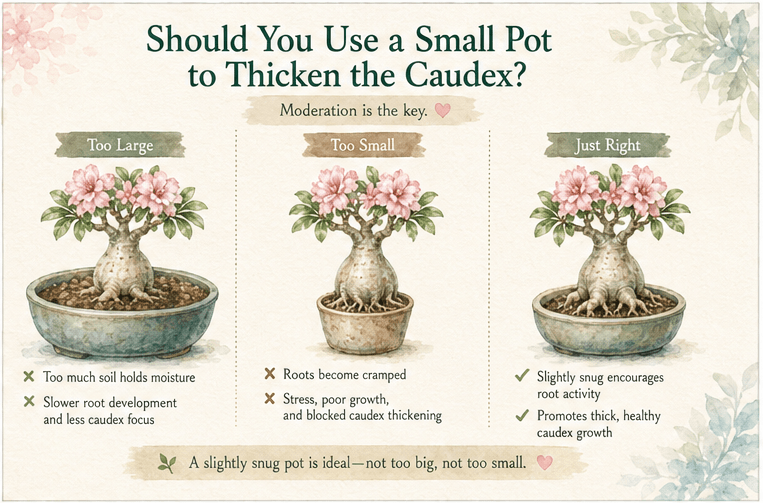
Should You Use a Small Pot to Thicken the Caudex?
Some growers believe that keeping Adenium slightly root-restricted can help improve flowering and form. A snug pot can sometimes help control growth and prevent excess moisture.
However, a pot that is too small can limit root development and slow overall growth.
The best approach is moderation.
Use a pot that is:
- Not too large
- Not too tight
- Slightly larger than the root system
- Wide enough for caudex and root spread
- Able to drain and dry properly
A slightly snug pot is fine. A severely root-bound plant may struggle.
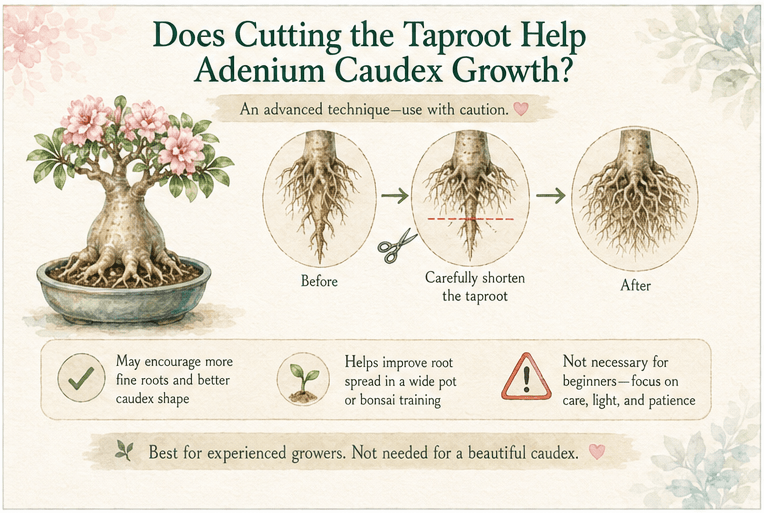
Does Cutting the Taproot Help Adenium Caudex Growth?
Some advanced Adenium growers trim or manage the taproot to encourage a flatter, wider root spread. This can improve bonsai-style appearance over time.
However, this is not necessary for beginners and can stress or damage the plant if done incorrectly.
For Beginners
Do not cut major roots unless:
- You understand the technique
- The plant is healthy
- It is warm active growing season
- You can allow wounds to dry properly
- You are using fast-draining soil
For most growers, good light, soil, watering, and repotting technique are enough to develop a beautiful caudex.
Advanced root training should be done carefully.
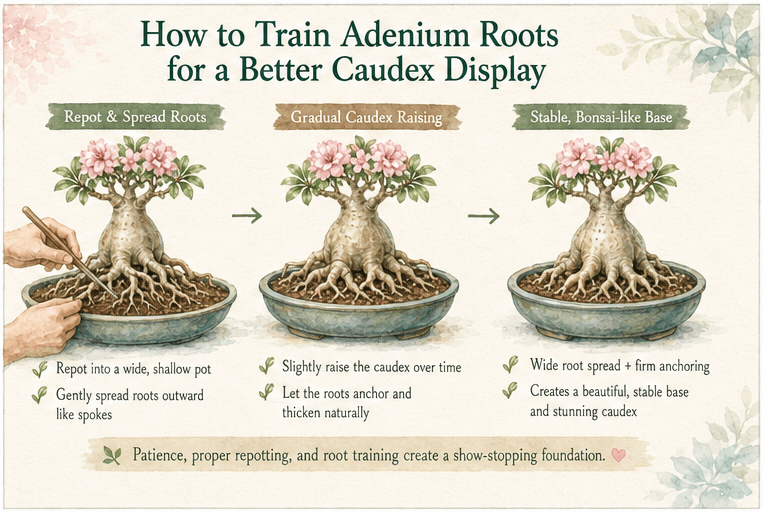
How to Train Adenium Roots for a Better Caudex Display
Root training can improve the visual appearance of a Desert Rose over time.
During repotting, you can gently spread the roots outward before adding soil. This encourages a more balanced root flare and makes the caudex look wider and more stable.
Root Training Tips
- Repot during warm active growth
- Handle roots gently
- Spread roots outward naturally
- Do not force thick roots into unnatural positions
- Use a wide pot
- Raise the caudex gradually over time
- Avoid heavy watering immediately after root trimming
The goal is to create a natural, stable, bonsai-like base.
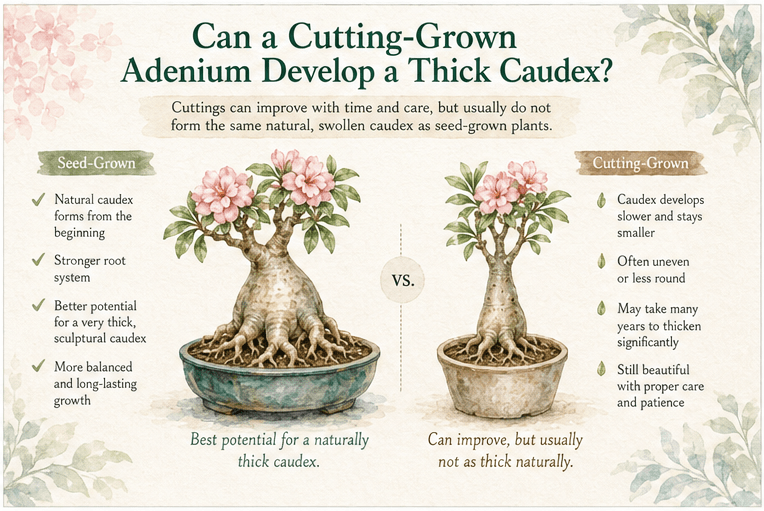
Can a Cutting-Grown Adenium Develop a Thick Caudex?
A cutting-grown Adenium can grow thicker over time, but it usually does not develop the same natural swollen caudex as a seed-grown plant.
Cuttings often form a straighter stem and may lack the rounded base that collectors prefer.
However, you can still improve the appearance of cutting-grown Adenium by:
- Growing it in strong light
- Using proper watering cycles
- Pruning for branching
- Gradually exposing roots
- Training the plant in a bonsai style
- Keeping roots healthy
If your goal is a dramatic caudex, seed-grown Adenium is usually the better choice.
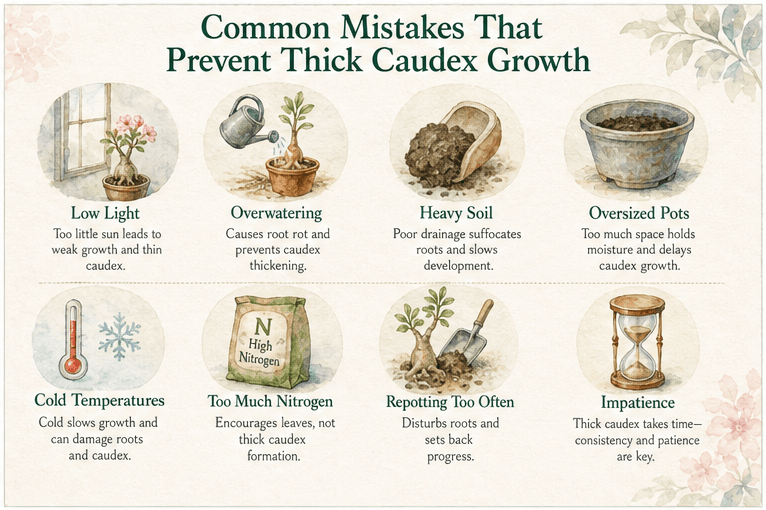
Common Mistakes That Prevent Thick Caudex Growth
Not Enough Light
Low light causes weak, stretched growth and poor caudex development.
Overwatering
Constant wet soil damages roots and can cause a soft caudex.
Heavy Soil
Dense soil reduces oxygen around the roots.
Oversized Pots
Large pots hold excess moisture and increase rot risk.
Cold Temperatures
Adenium grows slowly or becomes dormant in cool conditions.
Too Much Nitrogen
Excess nitrogen can cause leafy growth instead of sturdy structure.
Repotting Too Often
Frequent disturbance can slow growth and stress roots.
Expecting Fast Results
Caudex development takes time. Patience is necessary.
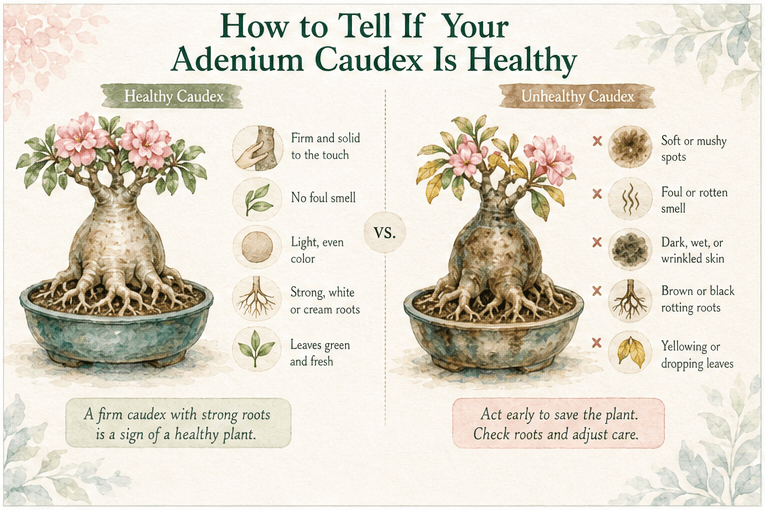
How to Tell If Your Adenium Caudex Is Healthy
A healthy caudex should feel firm, not mushy. It may become slightly wrinkled when the plant is dry, but it should not feel rotten or collapse.
Signs of a healthy caudex:
- Firm texture
- Gradual swelling over time
- No foul smell
- No black soft spots
- Strong root connection
- Balanced branch growth
- Plant remains stable in the pot
Signs of a problem:
- Mushy base
- Dark rotten patches
- Bad smell
- Sudden collapse
- Yellow leaves with wet soil
- Roots black or slimy
- Caudex shrinking while soil is wet
If the caudex is soft and the soil is wet, check the roots immediately.
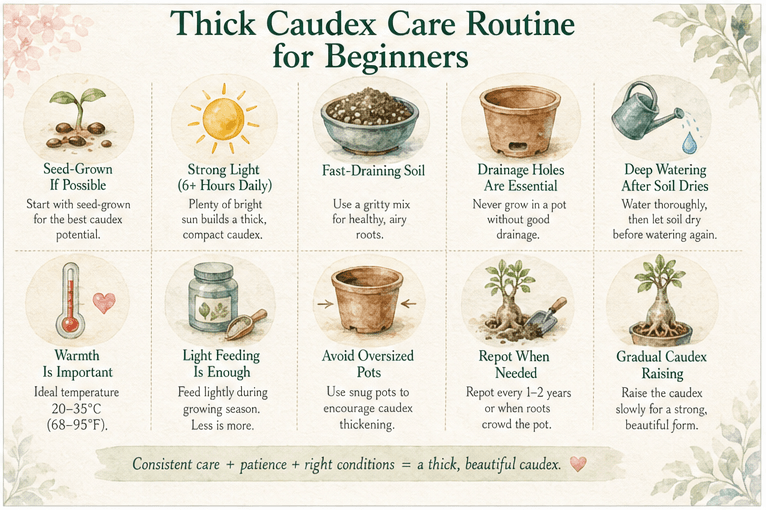
Thick Caudex Care Routine for Beginners
If you are new to Adenium, follow this simple routine:
- Grow seed-grown Adenium if possible
- Place it in strong light
- Use fast-draining soil
- Choose a pot with drainage holes
- Water deeply only when soil dries
- Keep it warm during active growth
- Fertilize lightly in spring and summer
- Avoid oversized pots
- Repot only when needed
- Raise the caudex gradually over time
This routine supports healthy roots first, then encourages stronger caudex development.
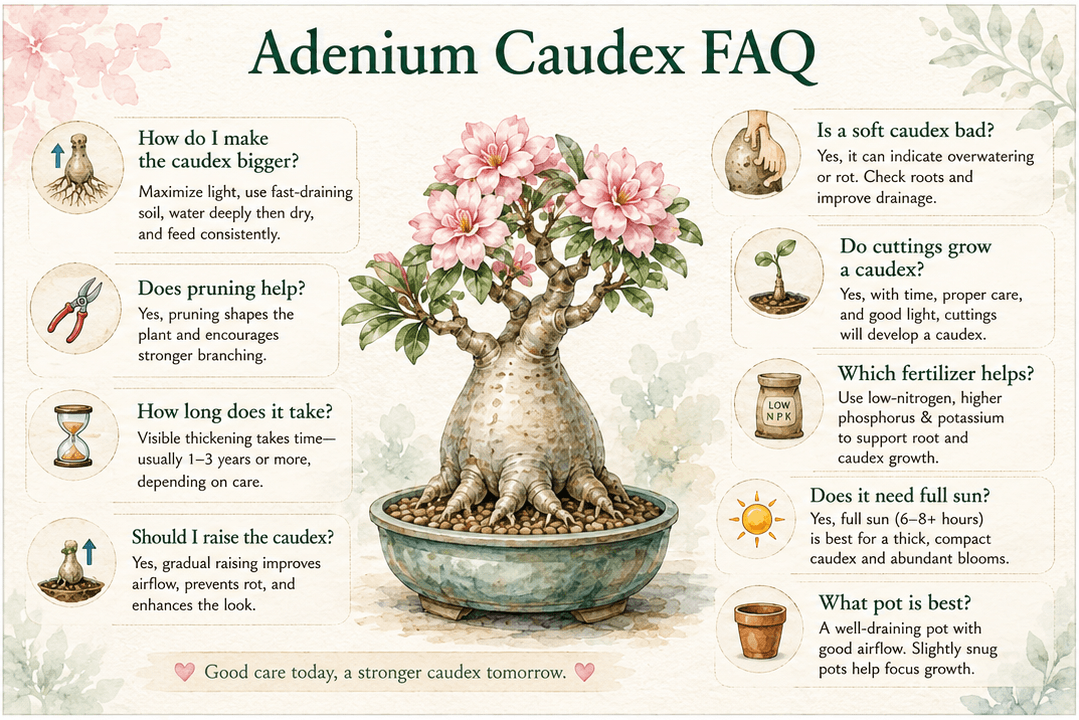
Adenium Caudex FAQ
How do I make my Adenium caudex bigger?
Give your Adenium strong sunlight, fast-draining soil, proper watering cycles, warm temperatures, and time. Seed-grown plants usually develop the best caudex.
Does pruning make Adenium caudex bigger?
Pruning does not directly thicken the caudex, but it helps improve branching and overall plant shape, making the caudex look more balanced.
How long does Adenium take to grow a thick caudex?
Visible swelling may appear within months, but a thick sculptural caudex usually takes several years.
Should I raise the caudex above the soil?
You can raise the caudex gradually during repotting to improve appearance. Do not expose too much root at once.
Is a soft caudex bad?
A soft caudex can mean dehydration or root rot. Check the soil. If the soil is dry, water carefully. If the soil is wet, inspect the roots for rot.
Do Adenium cuttings grow a caudex?
Cuttings can thicken over time, but they usually do not form the same natural swollen caudex as seed-grown Adenium.
What fertilizer helps caudex growth?
Use a diluted balanced fertilizer during active growth. Avoid too much nitrogen, which can cause soft leafy growth.
Does Adenium need full sun for a thick caudex?
Strong light is very important. Adenium grows thicker and more compact with bright sunlight, though plants should be introduced to full sun gradually.
Can overwatering shrink the caudex?
Overwatering can damage roots and cause caudex softness or rot. If roots cannot function properly, the caudex may decline.
What pot is best for caudex development?
A wide pot with drainage holes is best. Avoid oversized deep pots that hold too much moisture.
Final Thoughts: Thick Caudex Growth Takes Time, Light, and Healthy Roots
Growing a thick caudex on Adenium is one of the most rewarding parts of Desert Rose care. It transforms the plant from a simple flowering succulent into a sculptural, bonsai-like specimen.
The most important thing to understand is that caudex development does not happen instantly. It is built slowly through healthy growth.
Focus on the basics:
Strong light.
Warm temperatures.
Fast-draining soil.
Healthy roots.
Deep watering followed by drying.
Proper pot size.
Gradual caudex raising.
Patience.
If you protect the roots and give your Adenium the right growing conditions, the caudex will naturally become stronger and more attractive over time.
A beautiful caudex is not rushed. It is grown.

Start Your Desert Rose Journey from Seeds
Growing Desert Rose from seeds is one of the most rewarding ways to enjoy Adenium. Explore our selected Desert Rose seeds and start growing your own unique plants with beautiful shapes, vibrant blooms, and natural caudex development.
Recommended Desert Rose SeedsShop All

 1
1 Mixed
Mixed
 1Mixed
 1Mixed
 1Mixed
 1Mixed
 1Mixed
 1Mixed
 1Mixed
 1Mixed
 1Mixed
 1Mixed
 1Mixed
 1Mixed
 1Mixed
 1Mixed
 1Mixed
 1Mixed
 1Mixed
 1Mixed
 1Mixed
 1Mixed
 1Mixed
 1Mixed
 1Mixed
 1Mixed
 1Mixed
 1Mixed
 1Mixed
 1Mixed
 1Mixed
 1Mixed
 1Mixed
 1Mixed
 1Mixed
 1Mixed
 1Mixed
