

Desert Rose Guide
Desert Rose Care Guide

May
How to Care for Desert Rose the Right Way
Desert Rose, also known as Adenium, is one of the most beautiful and unique flowering plants you can grow at home. With its thick sculptural trunk, swollen caudex, glossy leaves, and colorful trumpet-shaped flowers, Desert Rose has the look of a bonsai, the toughness of a succulent, and the beauty of a tropical flowering plant.
However, Desert Rose care is different from caring for many common houseplants or garden flowers. This plant does not like constantly wet soil. It does not grow well in heavy potting mixes. It needs warmth, strong light, and careful watering to stay healthy.
The good news is that once you understand its natural growing habits, Desert Rose is not difficult to care for. In fact, many problems come from giving it too much water or not enough light. When grown in the right conditions, Adenium can reward you with strong growth, a thick caudex, and beautiful blooms year after year.
In this complete Desert Rose care guide, you will learn how to care for Adenium properly, including watering, sunlight, soil, fertilizer, pruning, repotting, blooming, and common problems.

What Is Desert Rose?
Desert Rose is the common name for Adenium obesum, a flowering succulent native to dry, warm regions of Africa and the Arabian Peninsula. It is best known for its thick swollen base, called a caudex, which stores water and helps the plant survive dry conditions.
This is the most important thing to understand about Desert Rose care:
Desert Rose is not a typical flowering plant. It behaves more like a succulent.
That means it prefers:
- Bright sunlight
- Warm temperatures
- Fast-draining soil
- Deep but infrequent watering
- Drying periods between watering
Because the plant stores water in its caudex and roots, it can tolerate drought much better than overwatering. In fact, overwatering is one of the most common causes of Desert Rose decline.
Desert Rose is popular because it offers both structure and flowers. Even when it is not blooming, the plant still looks attractive due to its bonsai-like trunk and sculptural shape.
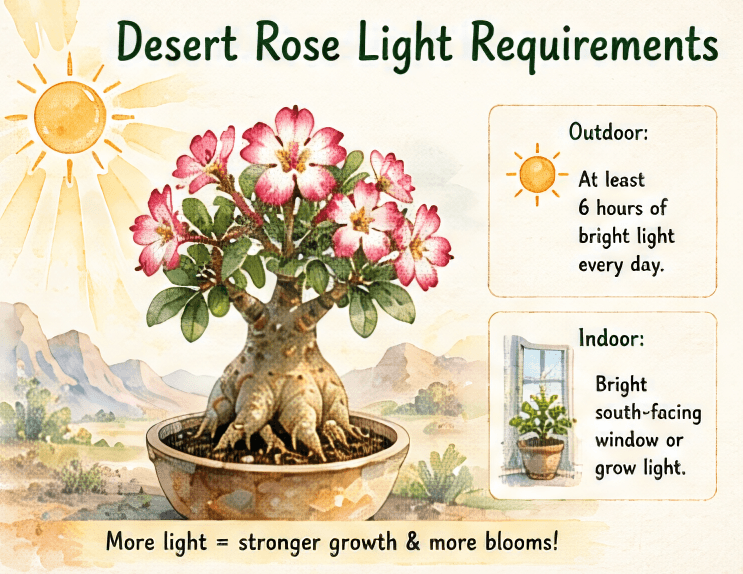
Desert Rose Light Requirements
Light is one of the most important factors in Desert Rose care. If your plant does not receive enough light, it may grow weak, stretch toward the light source, produce fewer flowers, or stop blooming altogether.
How Much Sunlight Does Desert Rose Need?
Desert Rose grows best with at least 6 hours of bright light per day. In warm climates, mature plants can often handle full sun, especially morning and late afternoon sun.
For best growth and flowering, place Desert Rose in a location with:
- Bright direct light
- Several hours of sun daily
- Good airflow
- Warm temperatures
Outdoor plants usually bloom better than indoor plants because they receive stronger light.
Can Desert Rose Grow Indoors?
Yes, Desert Rose can grow indoors, but only if it receives enough light. A bright south-facing window is usually the best indoor location. If natural light is weak, a grow light can help prevent leggy growth.
Signs your Desert Rose needs more light include:
- Long, stretched stems
- Pale leaves
- Slow growth
- Fewer flowers
- Weak branches
If your plant is indoors and not blooming, lack of light is often the main reason.
How to Move Desert Rose into Full Sun
If your Desert Rose has been indoors, shaded, or newly purchased, do not move it into intense sun immediately. Sudden exposure can burn the leaves.
Gradually introduce stronger light over 7–10 days:
- Start with bright indirect light
- Add gentle morning sun
- Increase sun exposure slowly
- Move to stronger light once the plant adjusts
This gradual transition helps the plant adapt without stress.

How Often Should You Water Desert Rose?
Watering is the part of Desert Rose care that causes the most confusion. Many beginners treat Adenium like a regular houseplant and water too frequently. This can lead to root rot, soft stems, yellow leaves, and plant decline.
The Golden Rule of Desert Rose Watering
Water deeply, then let the soil dry before watering again.
Desert Rose does not like sitting in wet soil. It needs a watering cycle that gives the roots moisture, then allows them to breathe.
How to Know When to Water
Instead of watering on a fixed schedule, check the soil.
Water when:
- The top 1–2 inches of soil feel dry
- The pot feels lighter
- The soil is no longer damp below the surface
Avoid watering if the soil still feels wet.
Watering in Warm Weather
During active growth in spring and summer, Desert Rose needs more water because it is growing leaves, stems, roots, and flowers.
In warm, sunny weather, you may water more often, especially if the plant is in a small pot or fast-draining soil.
Watering in Cool Weather
During cooler months, Desert Rose grows more slowly and may enter dormancy. During this time, it needs much less water.
Reduce watering when:
- Temperatures drop
- Growth slows
- Leaves begin to yellow and fall
- The plant is resting
In winter or cool conditions, overwatering is especially dangerous because the plant uses less water and the soil stays wet longer.

Best Soil for Desert Rose
The best soil for Desert Rose is fast-draining, airy, and not too moisture-retentive. Heavy soil is one of the biggest reasons Adenium plants develop root rot.
Why Drainage Matters
In nature, Desert Rose grows in dry, warm regions where water drains quickly. Its roots are not designed to sit in wet soil for long periods.
If the soil stays wet, the roots may suffocate and rot.
Best Soil Mix for Desert Rose
A beginner-friendly Desert Rose soil mix:
- 50% cactus or succulent soil
- 25% perlite or pumice
- 25% coarse sand
This type of mix helps water drain quickly while still holding enough moisture for the roots to absorb.
Alternative Soil Mix
For growers who want even stronger drainage:
- 40% cactus soil
- 30% pumice or perlite
- 20% coarse sand
- 10% small bark chips or gravel
The goal is not to create dry soil with no moisture at all. The goal is to create soil that becomes moist when watered but does not stay soggy.
Soil to Avoid
Avoid:
- Heavy garden soil
- Dense indoor potting soil
- Clay-like soil
- Soil without drainage amendments
- Mixes that stay wet for many days
If your Desert Rose is struggling and the soil feels heavy or compacted, repotting into a better-draining mix can make a big difference.

Best Pot for Desert Rose
Choosing the right pot is also important. Desert Rose grows best in containers that allow good drainage and do not hold excess moisture.
Drainage Holes Are Essential
Always use a pot with drainage holes. Without drainage, water collects at the bottom, increasing the risk of root rot.
Pot Size
Do not choose a pot that is much larger than the root system. Oversized pots hold more soil, which holds more water. This can keep roots wet for too long.
A good pot should be:
- Slightly larger than the root ball
- Wide enough to support caudex growth
- Not too deep
- Equipped with drainage holes
Clay vs Plastic Pots
Clay or terracotta pots dry faster, which can be helpful for Desert Rose. Plastic pots hold moisture longer, so watering must be more careful.
Both can work, but beginners often have better results with clay pots because they reduce the risk of overwatering.

Temperature and Climate Requirements
Desert Rose is a warm-climate plant. It grows best in warm temperatures and does not tolerate cold conditions well.
Ideal Temperature
Desert Rose prefers warm temperatures around:
20–35°C / 68–95°F
It grows most actively when temperatures are warm and sunlight is strong.
Cold Weather Warning
Desert Rose is sensitive to cold. Temperatures below 10°C / 50°F can stress the plant, and frost can severely damage or kill it.
If you live in a cold climate, grow Desert Rose in a pot so it can be moved indoors during winter.
Winter Dormancy
In cooler weather, Desert Rose may drop leaves and enter dormancy. This is normal.
During dormancy:
- Reduce watering
- Stop or reduce fertilizer
- Keep the plant warm and dry
- Provide bright light if possible
Dormancy is not necessarily a sign that the plant is dying. It is often a natural seasonal response.

How to Fertilize Desert Rose
Fertilizer can support healthy growth and blooming, but it must be used carefully. Too much fertilizer, especially too much nitrogen, can cause leafy growth at the expense of flowers.
When to Fertilize
Fertilize Desert Rose during its active growing season, usually spring through summer.
Avoid heavy fertilizing during winter or dormancy.
Best Fertilizer for Desert Rose
Use a balanced fertilizer or a bloom-supporting fertilizer diluted to a safe strength.
Good options include:
- Balanced liquid fertilizer
- Slow-release fertilizer
- Low-nitrogen bloom fertilizer
- Cactus or succulent fertilizer
Fertilizer Tips
For healthy growth:
- Feed lightly but consistently during active growth
- Avoid over-fertilizing young plants
- Water before fertilizing to avoid root burn
- Reduce feeding when growth slows
If your Desert Rose has healthy leaves but does not bloom, check sunlight first before increasing fertilizer. Lack of light is often the bigger issue.

How to Make Desert Rose Bloom
Many growers care for Desert Rose because of its flowers. If your plant is not blooming, it usually needs better growing conditions.
Key Factors for Blooming
Desert Rose blooms best when it receives:
- Strong sunlight
- Warm temperatures
- Proper watering cycles
- Well-draining soil
- Mature growth
- Balanced feeding
Why Desert Rose Is Not Blooming
Common reasons include:
- Not enough sunlight
- Too much water
- Too much nitrogen fertilizer
- Plant is too young
- Cool temperatures
- Root stress
Blooming Tip
Give your plant strong light and allow the soil to dry between waterings. Desert Rose often flowers better when it is grown slightly on the dry side rather than constantly moist.

How to Prune Desert Rose
Pruning helps shape Desert Rose, encourage branching, and improve its overall structure.
Why Prune Desert Rose?
Pruning can help:
- Create a fuller plant
- Encourage more branches
- Improve bonsai-like shape
- Remove weak or damaged growth
- Support more flowering points
When to Prune
The best time to prune Desert Rose is during active growth, usually spring or early summer. Avoid heavy pruning during cold weather or dormancy.
How to Prune
Use clean, sharp pruning shears. Cut above a node or branching point. After pruning, allow the cut area to dry and heal.
Be careful: Desert Rose sap can be irritating, so wearing gloves is recommended.

Repotting Desert Rose
Repotting keeps Desert Rose healthy by refreshing the soil, improving drainage, and giving roots more room.
When to Repot
Repot when:
- Roots are crowded
- Soil drains poorly
- The plant becomes unstable
- Growth slows despite good care
- The pot is too small
Most Desert Rose plants do not need frequent repotting. Every 1–2 years is often enough for young plants, while mature plants may need repotting less often.
How to Repot
- Remove the plant gently from the pot
- Check roots for rot or damage
- Trim unhealthy roots if needed
- Place in fresh fast-draining soil
- Wait a few days before heavy watering
After repotting, avoid overwatering while the roots recover.

Common Desert Rose Problems and Solutions
Yellow Leaves
Yellow leaves may be caused by overwatering, seasonal change, nutrient deficiency, or stress.
If the soil is wet, reduce watering and check drainage.
Soft Caudex
A soft caudex can be serious. It may indicate dehydration or rot.
If the soil is dry and the plant is wrinkled, it may need water. If the soil is wet and the caudex is soft, root rot may be the problem.
Root Rot
Root rot is usually caused by overwatering or poor drainage.
Signs include:
- Soft base
- Yellowing leaves
- Bad smell from soil
- Mushy roots
- Sudden decline
Solution:
- Remove the plant from wet soil
- Cut away rotted roots
- Let wounds dry
- Repot into dry, fast-draining soil
- Water carefully afterward
Leaf Drop
Leaf drop can happen due to cold temperatures, dormancy, underwatering, overwatering, or sudden environmental changes.
Look at the full growing conditions before reacting.
Leggy Growth
Leggy growth means the plant needs more light. Move it to a brighter location or provide a grow light.

Desert Rose Indoor Care Tips
If growing Desert Rose indoors, focus on light and watering.
Indoor care tips:
- Place near the brightest window
- Use grow lights if needed
- Avoid overwatering
- Use fast-draining soil
- Rotate the pot for even growth
- Keep away from cold drafts
Indoor Desert Rose plants may bloom less than outdoor plants, but they can still grow well with strong light.

Desert Rose Outdoor Care Tips
Outdoor Desert Rose plants usually grow stronger and bloom better because they receive more sunlight.
Outdoor care tips:
- Provide full sun or bright filtered sun
- Protect from heavy rain if soil stays wet
- Use pots with drainage
- Move indoors before cold weather
- Avoid placing in constantly shaded areas
In rainy climates, pot culture is often safer than planting directly in the ground because you can control drainage better.

Is Desert Rose Toxic?
Yes, Desert Rose is considered toxic if ingested. Its sap can also irritate skin.
Keep Desert Rose away from pets and children, and wear gloves when pruning or handling cut stems.
Desert Rose Care FAQ
Is Desert Rose easy to care for?
Yes, Desert Rose is easy to care for once you understand that it prefers strong light, warm temperatures, fast-draining soil, and careful watering.
How often should I water Desert Rose?
Water when the soil has dried out. During warm active growth, water more often. During cool weather or dormancy, water much less.
Does Desert Rose need full sun?
Mature Desert Rose plants grow and bloom best with strong light or full sun. Seedlings and indoor plants should be introduced to strong sunlight gradually.
Why are my Desert Rose leaves turning yellow?
Yellow leaves may be caused by overwatering, seasonal dormancy, poor drainage, lack of nutrients, or stress. Check soil moisture first.
Why is my Desert Rose not flowering?
The most common reason is not enough sunlight. Other causes include too much water, too much nitrogen fertilizer, cold temperatures, or plant immaturity.
What soil is best for Desert Rose?
Use a fast-draining mix such as cactus soil amended with perlite, pumice, or coarse sand.
Can Desert Rose grow indoors?
Yes, but it needs very bright light. A sunny window or grow light is usually necessary for healthy indoor growth.
When should I repot Desert Rose?
Repot when the plant becomes rootbound, the soil drains poorly, or the plant needs a more stable pot. Spring or early summer is usually best.
Desert Rose Care Is About Balance
Desert Rose care becomes much easier when you understand the plant’s natural needs. It is a warm-climate succulent that loves light, dislikes wet soil, and stores water in its caudex.
The most important care rules are simple:
Give it strong light.
Use fast-draining soil.
Water carefully.
Keep it warm.
Avoid overwatering.
When these basics are right, Desert Rose can become a long-lasting, beautiful plant with a thick caudex and stunning flowers.
Whether you grow it indoors, outdoors, from seed, or as part of a collection, Adenium is a plant that rewards patience and proper care.

Start Your Desert Rose Journey from Seeds
Growing Desert Rose from seeds is one of the most rewarding ways to enjoy Adenium. Explore our selected Desert Rose seeds and start growing your own unique plants with beautiful shapes, vibrant blooms, and natural caudex development.
Recommended Desert Rose SeedsShop All


 1
1 Mixed
Mixed
 1Mixed
 1Mixed
 1Mixed
 1Mixed
 1Mixed
 1Mixed
 1Mixed
 1Mixed
 1Mixed
 1Mixed
 1Mixed
 1Mixed
 1Mixed
 1Mixed
 1Mixed
 1Mixed
 1Mixed
 1Mixed
 1Mixed
 1
1
 1Mixed
 1Mixed
 1Mixed
 1Mixed
 1Mixed
 1Mixed
 1Mixed
 1Mixed
 1Mixed
 1Mixed
 1Mixed
 1Mixed
 1Mixed
 1Mixed
 1Mixed
