

Desert Rose
How Often Should You Water Desert Rose?

May
Why Watering Is the Most Important Part of Desert Rose Care
Desert Rose, also known as Adenium, is a beautiful flowering succulent loved for its thick caudex, sculptural trunk, and colorful blooms. It looks strong and drought-tolerant, but many growers still struggle with one major question:
How often should you water Desert Rose?
The simple answer is: water Desert Rose only when the soil has dried out. In most situations, Desert Rose does not need frequent watering. It prefers a cycle of deep watering followed by a drying period. This is because Desert Rose stores water in its thick caudex and roots, allowing it to survive dry conditions much better than constantly wet soil.
Many Desert Rose problems are caused by incorrect watering. Too much water can lead to root rot, yellow leaves, soft caudex, fungal problems, and plant decline. Too little water can cause wrinkling, leaf drop, slow growth, and poor flowering. The key is not watering by a fixed calendar schedule, but learning how to read the plant, the soil, the pot, and the growing environment.
In this complete guide, you’ll learn how often to water Desert Rose, how watering changes by season, how to water seedlings versus mature plants, how to identify overwatering and underwatering, and how to build a watering routine that keeps your Adenium healthy and blooming.
How Often Should You Water Desert Rose?
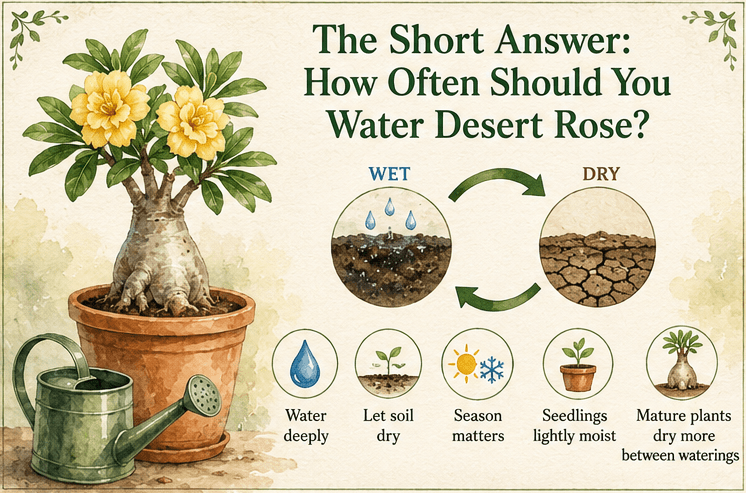
A healthy Desert Rose should be watered deeply but infrequently. You should water only after the soil has dried out, especially the top layer of soil.
For many growers, this may mean:
- Spring and summer: water more often during active growth
- Fall: reduce watering as growth slows
- Winter: water very little, especially if the plant is dormant
- Seedlings: keep slightly more evenly moist, but never soggy
- Mature plants: allow soil to dry more thoroughly between waterings
However, there is no perfect “every 3 days” or “once a week” rule that works for every Desert Rose. Watering frequency depends on temperature, sunlight, pot size, soil mix, humidity, airflow, season, and plant size.
The best rule is:
Water deeply, then wait until the soil dries before watering again.
This wet-dry cycle helps the roots absorb moisture while still getting oxygen. Desert Rose roots do not like staying wet all the time.
Why Desert Rose Does Not Like Too Much Water
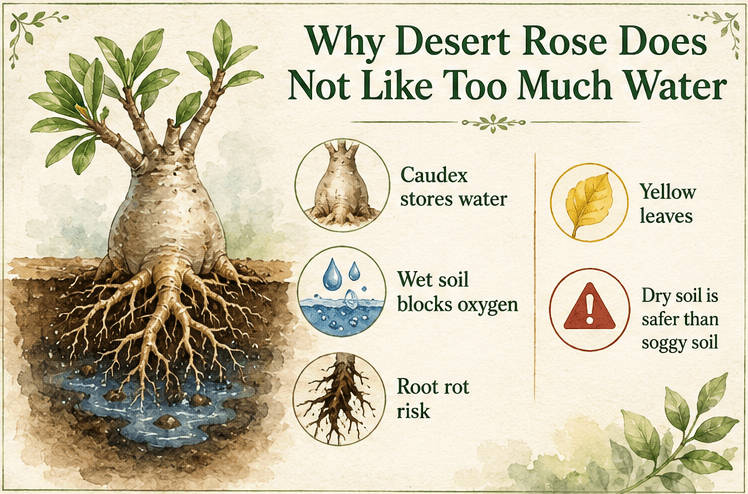
Desert Rose is not a typical tropical houseplant. It is a drought-tolerant succulent that stores water in its swollen base, known as the caudex. This caudex acts like a water reservoir, helping the plant survive dry periods.
Because of this storage ability, Desert Rose can handle short dry spells much better than waterlogged soil.
When the soil stays wet for too long, several problems can happen:
- Roots lose access to oxygen
- Fungal growth increases
- Roots begin to rot
- The caudex may soften
- Leaves may turn yellow
- The plant may stop growing or collapse
This is why overwatering is one of the most common causes of Desert Rose failure. Many beginners water too often because they think the plant is thirsty, when the real problem is that the soil has not dried yet.
Desert Rose care becomes much easier when you remember this:
Dry soil is usually safer than constantly wet soil.
How to Know When Desert Rose Needs Water
Instead of watering on a strict schedule, check the plant and soil first. Desert Rose should be watered when the soil has dried enough for the roots to breathe.
Check the Soil with Your Finger
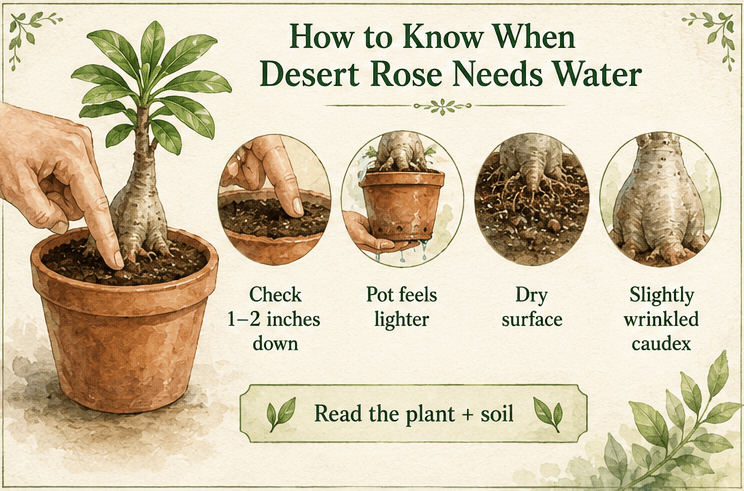
Insert your finger about 1–2 inches into the soil. If it still feels damp, wait. If it feels dry, it may be time to water.
For mature plants, especially in larger pots, it is helpful to check deeper than just the surface. Sometimes the top looks dry while the lower soil is still wet.
Lift the Pot
After watering, your pot feels heavier. As the soil dries, the pot becomes lighter. Over time, you can learn the difference between a wet pot and a dry pot by weight.
This is a very useful method for potted Desert Rose plants.
Look at the Soil Surface
Dry soil often appears lighter in color and may pull slightly away from the pot edge. Wet soil usually looks darker and feels cool.
However, do not rely only on the surface. Always check below the top layer if possible.
Observe the Plant
A thirsty Desert Rose may show:
- Slightly wrinkled caudex
- Drooping leaves
- Dry soil
- Slower growth
But symptoms can be confusing because overwatering can also cause drooping and yellow leaves. That is why checking the soil is more reliable than guessing based only on leaves.
How to Water Desert Rose Properly
Watering correctly is not just about how often you water. It is also about how you water.
Water Deeply
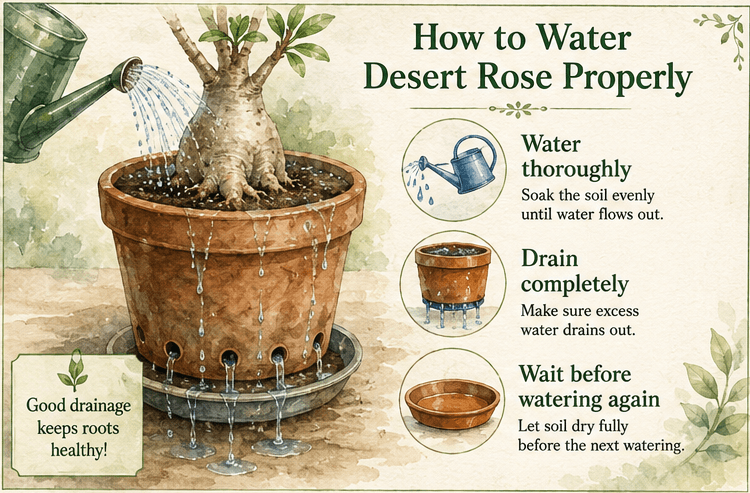
When it is time to water, water thoroughly until excess water drains from the bottom of the pot. This helps moisten the full root zone instead of only the surface.
A shallow splash of water encourages weak surface roots and may not reach deeper roots.
Let Excess Water Drain Away
After watering, never allow the pot to sit in standing water. If you use a saucer, empty it after watering.
Standing water can keep the lower soil wet and increase root rot risk.
Let the Soil Dry Before Watering Again
This is the most important part. Desert Rose needs drying periods between waterings.
The soil should not stay constantly moist like it would for many leafy houseplants.
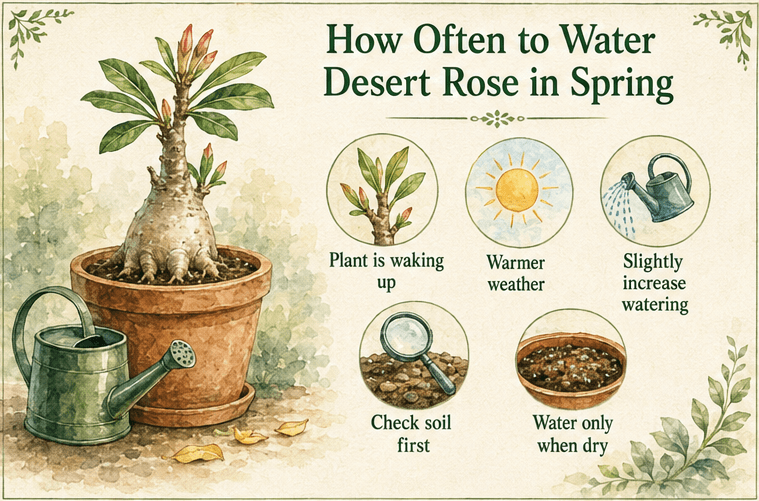
How Often to Water Desert Rose in Spring
Spring is usually the beginning of the active growing season. As temperatures rise and daylight increases, Desert Rose begins producing new leaves, roots, and branches.
During spring, you can gradually increase watering as the plant wakes up.
Water when:
- New growth appears
- Temperatures become consistently warm
- Soil dries faster
- The plant is receiving more sunlight
Do not suddenly overwater just because spring has arrived. Increase watering gradually and always check the soil first.
If your Desert Rose was dormant during winter, start with light watering and observe how the plant responds.
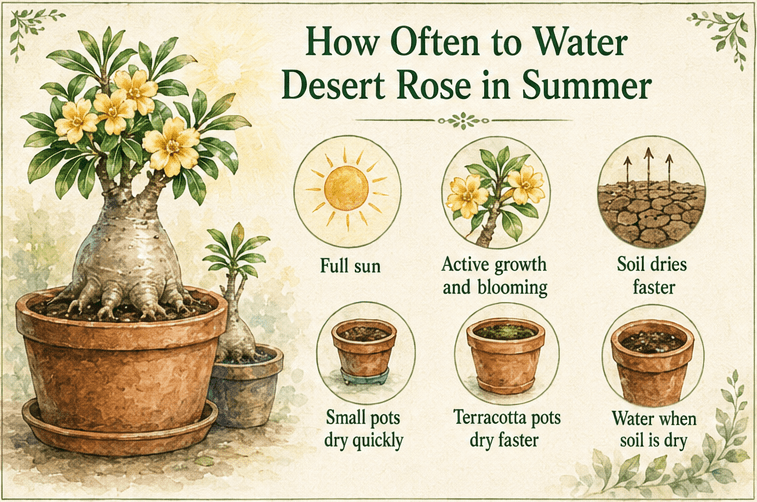
How Often to Water Desert Rose in Summer
Summer is usually when Desert Rose needs the most water, especially if it is growing outdoors in strong light.
In hot weather, soil dries faster and the plant uses more water for active growth and blooming. A potted Desert Rose in full sun may need watering more often than one grown indoors or in partial shade.
However, even in summer, the rule remains the same:
Water when the soil dries. Do not water if the soil is still wet.
Factors that increase summer watering needs:
- Full sun exposure
- High temperatures
- Small pots
- Terracotta pots
- Fast-draining soil
- Active flowering
- Strong airflow
In summer, some Desert Rose plants may need water several times a week, while others may need much less. The difference depends on your growing conditions.
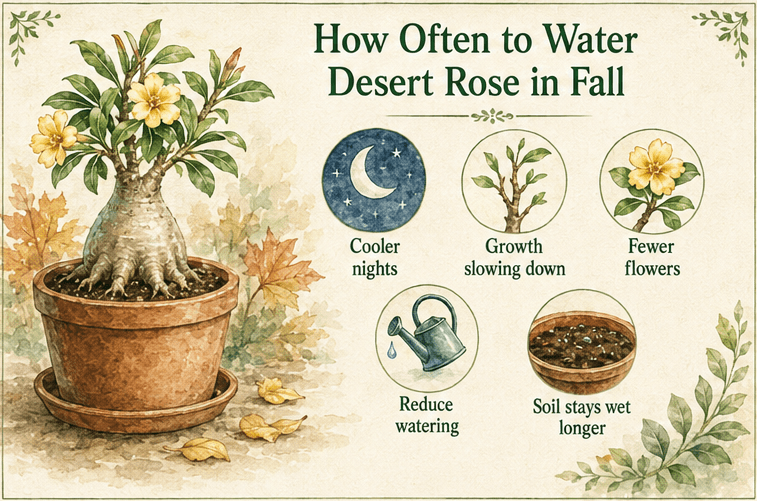
How Often to Water Desert Rose in Fall
In fall, Desert Rose growth usually begins to slow as temperatures drop and daylight decreases. This means the plant uses less water.
During this season, start reducing watering frequency.
Water less often when:
- Nights become cooler
- Growth slows
- Flowering decreases
- Leaves begin to yellow naturally
- Soil stays wet longer
Fall is a transition period. Overwatering during this time can be risky because the plant may no longer use water as quickly as it did in summer.
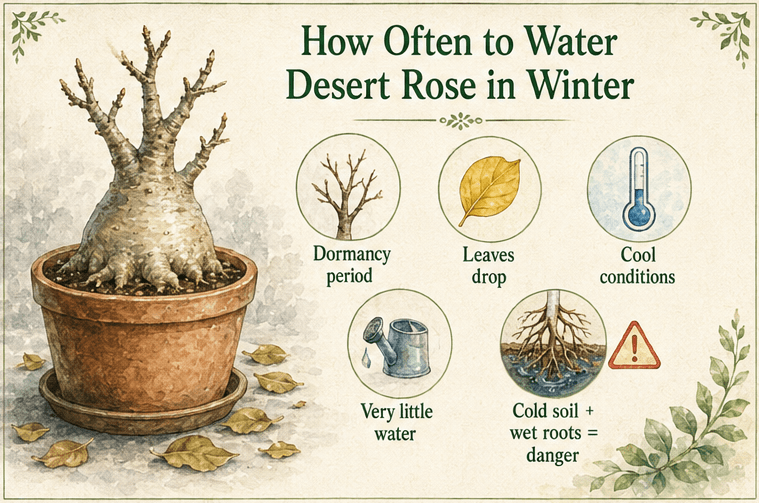
How Often to Water Desert Rose in Winter
Winter watering is one of the most important parts of Desert Rose care.
In cooler climates, Desert Rose may enter dormancy during winter. It may drop leaves, stop growing, and appear inactive. During dormancy, the plant needs very little water.
If the plant is dormant and temperatures are cool, water sparingly. In some conditions, mature Desert Rose plants may only need occasional light watering.
Winter watering depends on:
- Temperature
- Whether the plant is dormant
- Whether it still has leaves
- Indoor vs outdoor conditions
- Soil drying speed
- Pot size and material
If your Desert Rose is kept warm indoors under strong light and continues growing, it may still need some water. But if it is cool and leafless, water very little.
The most dangerous situation is cold soil + wet roots. This combination can quickly lead to rot.
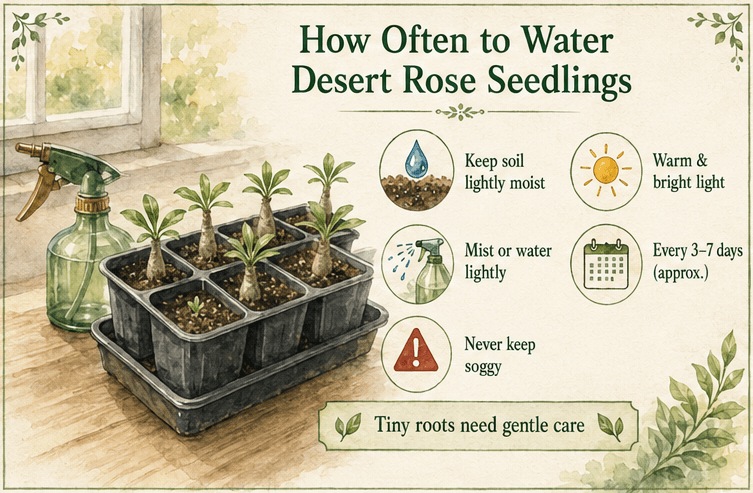
How Often to Water Desert Rose Seedlings
Desert Rose seedlings need more careful watering than mature plants. Young seedlings have smaller roots and less water stored in the caudex, so they should not dry out completely for long periods.
However, they still dislike soggy soil.
For seedlings, keep the soil:
- Lightly moist
- Warm
- Well-drained
- Never waterlogged
Seedlings may need more frequent light watering, especially during germination and early growth. Use a spray bottle or gentle watering method to avoid disturbing the roots.
As seedlings grow larger and develop thicker stems, gradually allow the soil to dry more between waterings.
A good seedling watering rule is:
Moist but not wet. Never muddy.
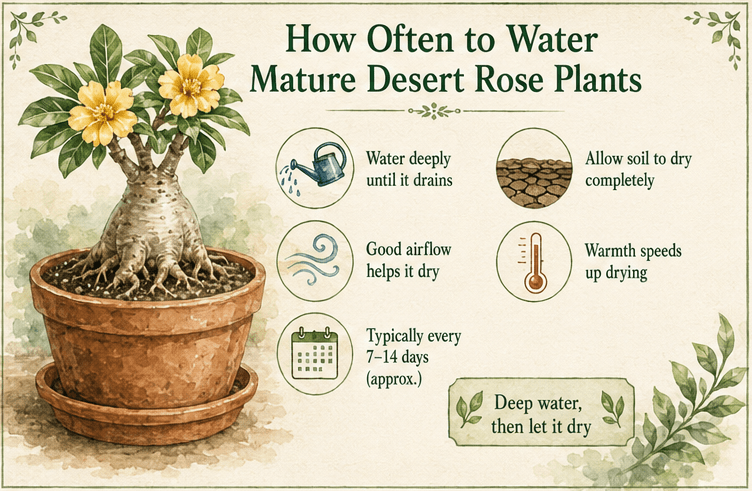
How Often to Water Mature Desert Rose Plants
Mature Desert Rose plants are more drought-tolerant than seedlings. Their larger caudex stores more water, allowing them to handle dry periods better.
For mature plants, let the soil dry more thoroughly before watering again.
A mature Desert Rose in a fast-draining mix should receive deep watering, then a drying period.
Avoid giving small amounts of water every day. Daily light watering keeps the surface damp and may encourage shallow roots or fungal issues.
Mature plants generally prefer:
- Deep watering
- Strong drainage
- Drying time
- Warm conditions
- Good airflow
This supports strong roots, healthy caudex development, and better flowering.
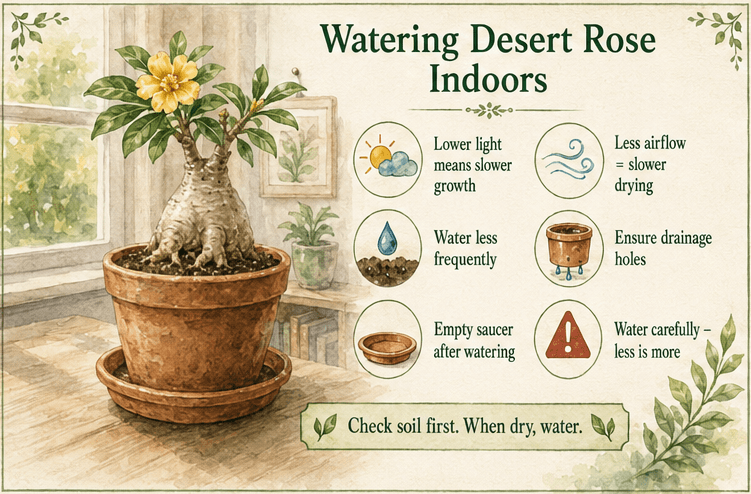
Watering Desert Rose Indoors
Indoor Desert Rose plants usually need less water than outdoor plants because indoor conditions often have:
- Lower light
- Less airflow
- Cooler temperatures
- Slower evaporation
Even if your home feels warm, indoor soil may dry more slowly than outdoor soil.
Before watering an indoor Desert Rose, always check the soil carefully. Do not water just because a week has passed.
Indoor watering tips:
- Use a pot with drainage holes
- Place the plant near strong light
- Avoid decorative pots that trap water
- Empty saucers after watering
- Reduce watering in winter
- Use fast-draining soil
If an indoor Desert Rose is not receiving strong light, it will use less water and will be more vulnerable to overwatering.
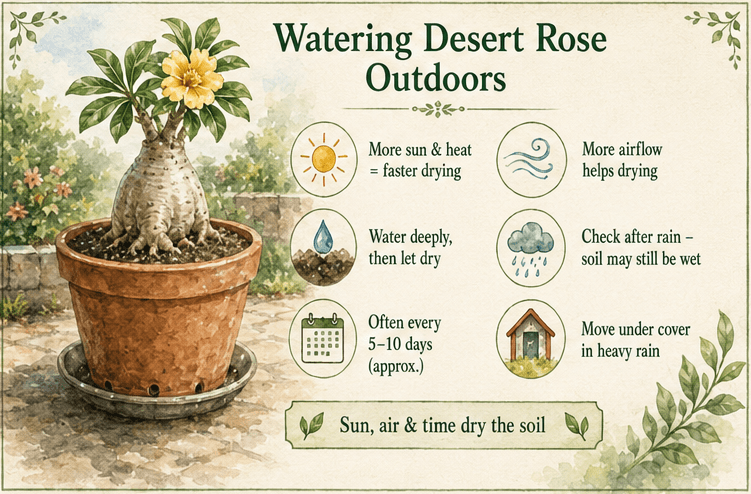
Watering Desert Rose Outdoors
Outdoor Desert Rose plants often need more water than indoor plants because they receive more sunlight, heat, and airflow.
Outdoor plants may dry faster, especially in terracotta pots or small containers. However, rain can also increase overwatering risk if the potting mix does not drain quickly.
Outdoor watering tips:
- Protect from long periods of heavy rain
- Use fast-draining soil
- Choose pots with drainage holes
- Check soil after rain
- Water more during hot, sunny weather
- Reduce watering during cool periods
In rainy climates, it is often safer to grow Desert Rose in pots rather than directly in the ground. Pots allow you to move the plant under cover when needed.
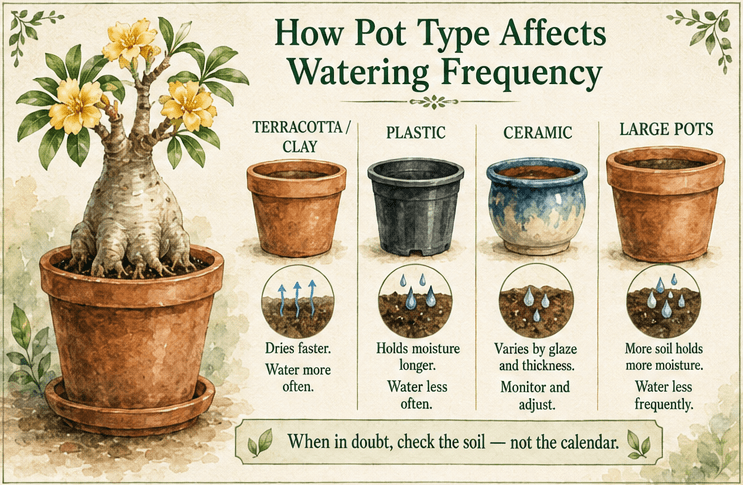
How Pot Type Affects Watering Frequency
The pot you use has a big impact on how often you should water Desert Rose.
Terracotta and Clay Pots
Terracotta and clay pots dry faster because they are porous. This is helpful for preventing overwatering, especially for beginners or humid climates.
Plants in terracotta pots may need watering more often in hot weather.
Plastic Pots
Plastic pots hold moisture longer. This can be helpful in hot, dry climates but risky in humid or low-light conditions.
If using plastic pots, be extra careful not to water too frequently.
Ceramic Pots
Glazed ceramic pots hold moisture longer, while unglazed ceramic pots dry more like clay.
Always make sure ceramic pots have drainage holes.
Large Pots
Large pots hold more soil, and more soil holds more moisture. A small Desert Rose in a large pot can stay wet too long.
Choose a pot only slightly larger than the root system.
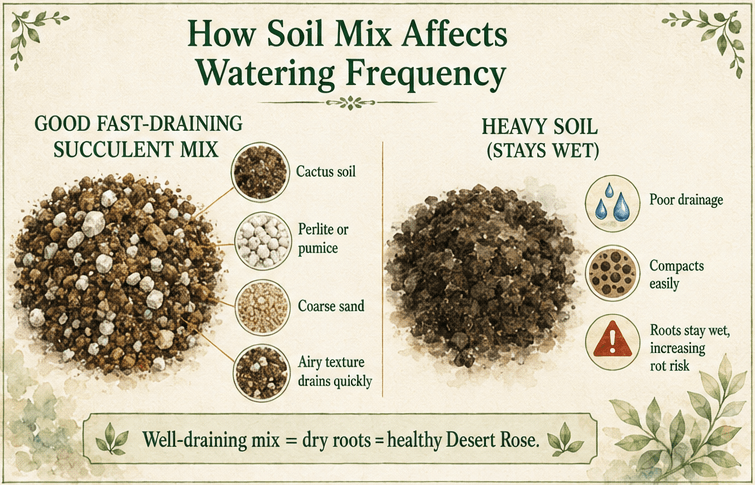
How Soil Mix Affects Watering Frequency
Soil mix is just as important as watering frequency.
A fast-draining soil mix dries quickly and reduces root rot risk. A heavy soil mix stays wet longer and makes overwatering more likely.
A good Desert Rose soil mix should be:
- Fast-draining
- Airy
- Lightweight
- Not compacted
- Suitable for succulents
A beginner-friendly mix:
- Cactus or succulent soil
- Perlite or pumice
- Coarse sand
If your soil stays wet for many days after watering, it is too moisture-retentive for Desert Rose.
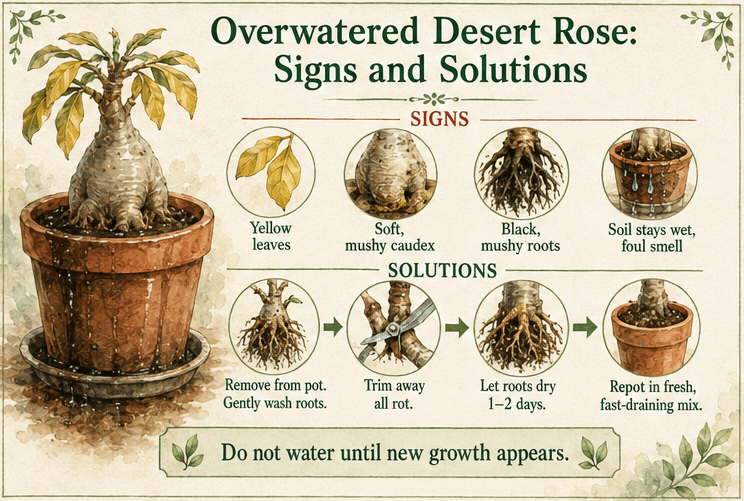
Overwatered Desert Rose: Signs and Solutions
Overwatering is the most common watering problem for Desert Rose.
Signs of Overwatering
Your Desert Rose may be overwatered if you notice:
- Yellow leaves
- Soft or mushy caudex
- Drooping leaves even when soil is wet
- Black or mushy roots
- Leaf drop
- Wet soil that does not dry
- Rotten smell from the pot
- Stem base becoming soft
What to Do If Desert Rose Is Overwatered
First, stop watering immediately. Check the soil and pot drainage.
If the plant looks seriously affected, remove it from the pot and inspect the roots. Trim away black, mushy, or rotten roots with clean tools. Allow the plant to dry before repotting into fresh fast-draining soil.
After repotting, do not water heavily right away. Let the plant recover and resume watering carefully.
Overwatering is easier to prevent than fix, so always let the soil dry before watering again.
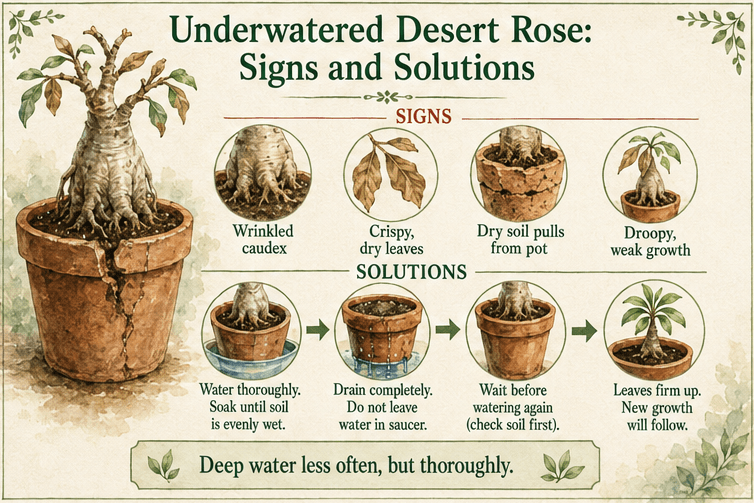
Underwatered Desert Rose: Signs and Solutions
Although Desert Rose tolerates drought, it can still become too dry, especially during hot weather or active growth.
Signs of Underwatering
Your Desert Rose may be underwatered if you notice:
- Wrinkled caudex
- Dry, crispy leaves
- Drooping leaves with very dry soil
- Slow growth
- Flower buds dropping
- Soil pulling away from the pot edges
What to Do If Desert Rose Is Underwatered
Water thoroughly until water drains from the bottom. If the soil has become extremely dry and water runs straight through, you may need to water slowly in several rounds.
Do not flood the plant repeatedly. Rehydrate gradually and observe how the caudex responds.
A wrinkled caudex caused by dryness may firm up again after proper watering.
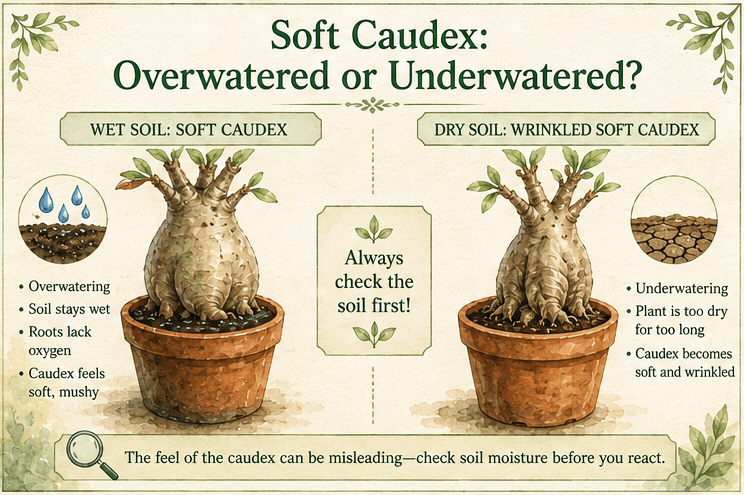
Soft Caudex: Overwatered or Underwatered?
A soft caudex can be confusing because it may be caused by either overwatering or underwatering.
The key is checking the soil.
If the soil is wet and the caudex is soft:
This may indicate root rot or overwatering. Stop watering and check the roots.
If the soil is bone dry and the caudex is wrinkled or soft:
The plant may be dehydrated. Water thoroughly and monitor recovery.
If the caudex is mushy, dark, or smells bad:
This is more likely rot and should be treated quickly.
Never diagnose a soft caudex without checking soil moisture first.
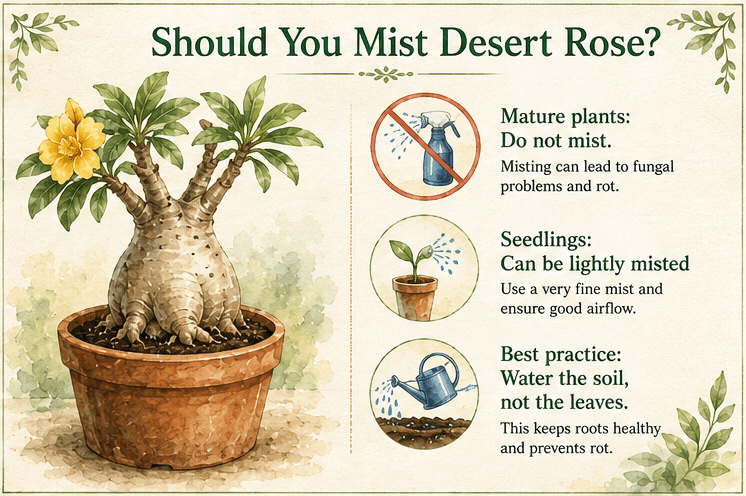
Should You Mist Desert Rose?
Misting is usually not necessary for Desert Rose. This plant does not need high humidity like tropical foliage plants.
Regular misting can increase moisture around leaves and stems, especially in low-airflow environments, which may encourage fungal problems.
For seedlings, light misting can be useful during germination, but mature plants should be watered at the soil level.
Best practice:
Water the soil, not the leaves.
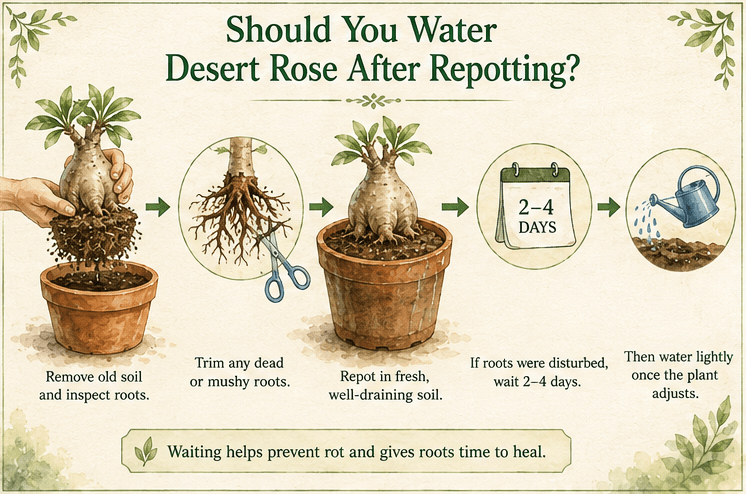
Should You Water Desert Rose After Repotting?
After repotting, watering depends on root condition.
If the roots were healthy and not heavily disturbed, you can water lightly after a short adjustment period.
If roots were trimmed or rot was removed, it is safer to wait a few days before watering. This allows cut areas to dry and reduces the risk of infection.
After repotting, avoid soaking the plant immediately. Resume normal watering only when the plant shows signs of stability and the soil begins drying properly.
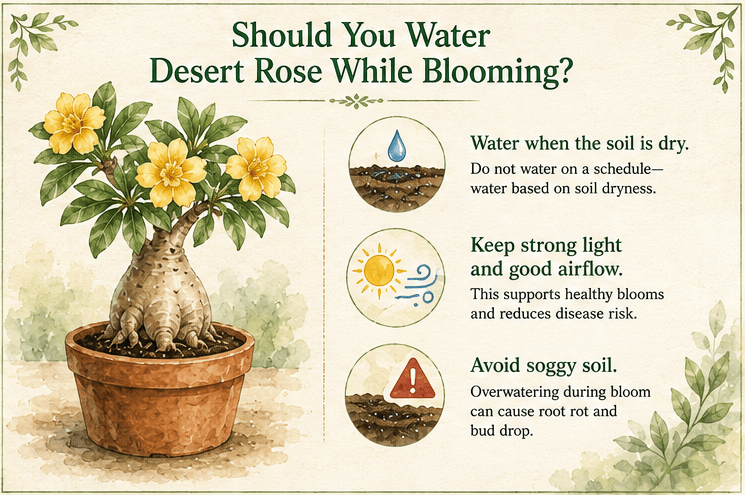
Should You Water Desert Rose While Blooming?
Yes, Desert Rose still needs water while blooming, especially during warm weather. However, do not overwater just because it is flowering.
Flowers require energy, and the plant may use more water during active bloom periods. But the soil should still dry between waterings.
During blooming:
- Keep the plant in strong light
- Water when soil dries
- Avoid soggy conditions
- Do not let the plant become severely dehydrated
- Maintain airflow
Consistent care helps blooms last longer and supports future flowering cycles.
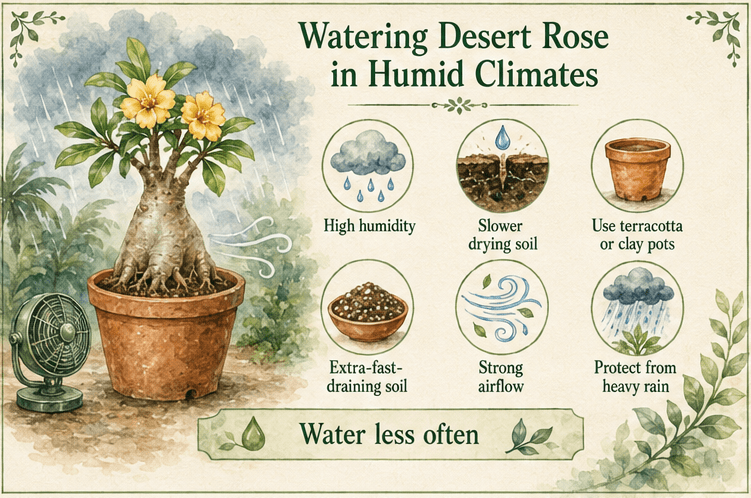
Watering Desert Rose in Humid Climates
In humid climates, soil dries more slowly, so you must water less often.
Humidity increases root rot risk because evaporation is slower and the growing medium may remain damp for longer periods.
Tips for humid climates:
- Use terracotta or clay pots
- Use extra-fast-draining soil
- Avoid oversized pots
- Provide strong airflow
- Protect from heavy rain
- Check soil before every watering
In humid areas, watering too often is usually more dangerous than watering too little.
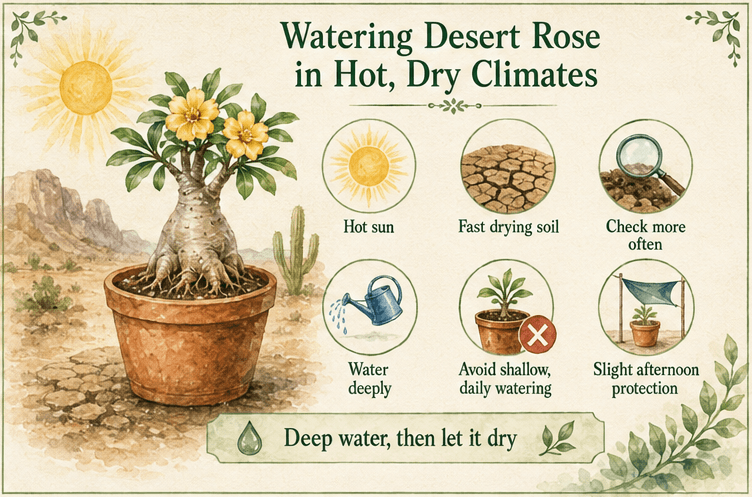
Watering Desert Rose in Hot, Dry Climates
In hot, dry climates, Desert Rose may need water more frequently because soil dries quickly.
However, the same rule still applies: water after the soil dries.
Tips for hot, dry climates:
- Check soil more often
- Water deeply when needed
- Avoid shallow daily watering
- Consider slight afternoon protection during extreme heat
- Use a pot that does not dry too fast if needed
- Watch for wrinkling during heat waves
Terracotta pots may dry very quickly in hot weather, so adjust watering based on actual soil moisture.
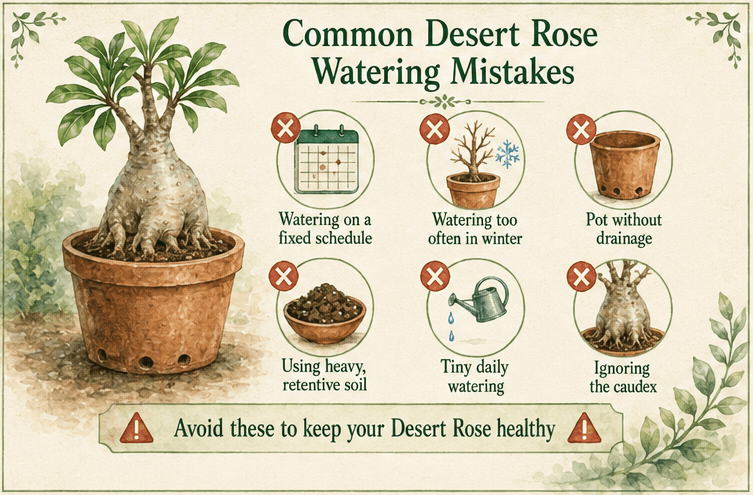
Common Desert Rose Watering Mistakes
Watering on a Fixed Schedule
A fixed schedule ignores changes in weather, season, pot size, and soil. Always check the soil first.
Watering Too Often in Winter
Winter overwatering is especially dangerous because the plant uses less water.
Using a Pot Without Drainage
Without drainage holes, water collects at the bottom and causes rot.
Using Heavy Soil
Heavy soil stays wet too long, even if you water carefully.
Giving Small Amounts of Water Every Day
Daily small watering keeps the surface damp and may prevent healthy root development.
Ignoring the Caudex
The caudex can help indicate hydration, but it must always be interpreted together with soil moisture.
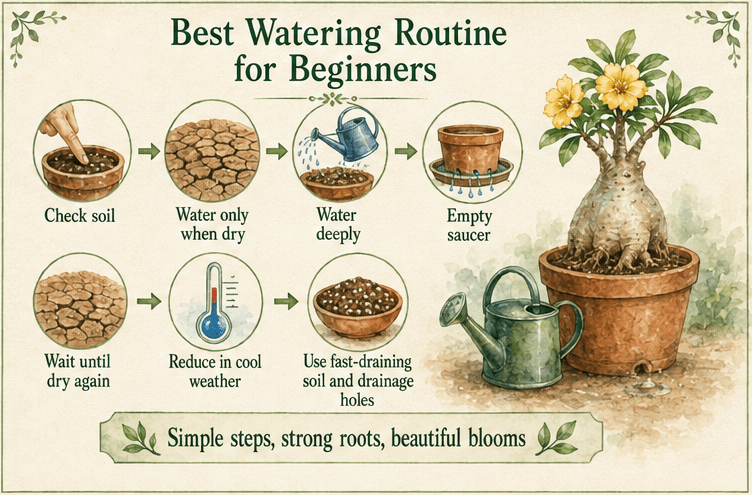
Best Watering Routine for Beginners
If you are new to Desert Rose, use this simple routine:
- Check the soil before watering
- Water only when the soil is dry
- Water deeply until excess drains out
- Empty any saucer
- Wait for the soil to dry again
- Reduce watering in cool weather
- Use fast-draining soil and a pot with drainage holes
This routine works because it follows the natural needs of the plant instead of forcing a strict schedule.
Desert Rose Watering FAQ
How many times a week should I water Desert Rose?
There is no fixed number. In warm active growth, it may need water once or several times per week depending on conditions. In winter or dormancy, it may need very little. Always check the soil first.
Should Desert Rose soil dry out completely?
Mature Desert Rose plants can handle drying out between waterings. Seedlings should stay slightly more evenly moist, but never soggy.
Can Desert Rose survive without water?
Desert Rose is drought-tolerant and can survive short dry periods because it stores water in its caudex. However, long-term severe drought can weaken the plant.
Is it better to overwater or underwater Desert Rose?
Underwatering is usually safer than overwatering. Overwatering can cause root rot, which is often more dangerous.
Why are my Desert Rose leaves turning yellow after watering?
Yellow leaves after watering may mean the soil is staying too wet or the roots are stressed. Check drainage and soil moisture.
Should I water Desert Rose during winter?
Water very lightly during winter if the plant is dormant or kept cool. If it is warm and actively growing indoors, water when the soil dries.
Can rain overwater Desert Rose?
Yes. Long periods of rain can keep soil wet too long, especially in heavy soil or pots with poor drainage.
Should I mist Desert Rose leaves?
Usually no. Desert Rose does not need regular misting. Water the soil instead.
Water Desert Rose by Soil Condition, Not by Calendar
So, how often should you water Desert Rose?
The best answer is:
Water when the soil has dried out, not according to a fixed schedule.
Desert Rose is a drought-tolerant succulent that prefers deep watering followed by drying time. It can handle dry conditions much better than soggy soil. The right watering routine depends on season, temperature, light, pot size, soil mix, and whether the plant is actively growing or dormant.
If you want your Desert Rose to grow strong and bloom beautifully, focus on the basics:
Use fast-draining soil.
Choose a pot with drainage holes.
Give strong sunlight.
Water deeply.
Let the soil dry.
Reduce watering in cool weather.
With the right balance, your Desert Rose will develop healthier roots, a stronger caudex, and better blooming potential over time.

Start Your Desert Rose Journey from Seeds
Growing Desert Rose from seeds is one of the most rewarding ways to enjoy Adenium. Explore our selected Desert Rose seeds and start growing your own unique plants with beautiful shapes, vibrant blooms, and natural caudex development.
Recommended Desert Rose SeedsShop All


 1
1 Mixed
Mixed
 1Mixed
 1Mixed
 1Mixed
 1Mixed
 1Mixed
 1Mixed
 1Mixed
 1Mixed
 1Mixed
 1Mixed
Adenium Obesum Desert Rose Seeds – Red Edge Rose Flower Seeds for Garden Planting #012, 5 Seeds Pack

 1Mixed
 1Mixed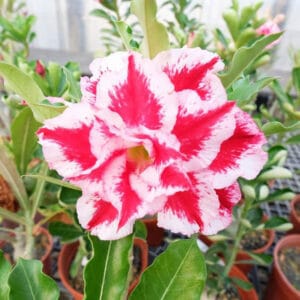
 1Mixed
 1Mixed
 1Mixed
 1Mixed
 1Mixed
 1Mixed
 1Mixed
 1Mixed
 1Mixed
 1Mixed
 1Mixed
 1Mixed
 1Mixed
 1Mixed
 1Mixed
 1Mixed
 1Mixed
 1Mixed
 1Mixed
 1Mixed
 1Mixed
 1Mixed
 1Mixed
