

Gardening Basics, Seed Starting Guide
Best Soil for Seed Starting: What Beginners Should Use

May
Why Seed Starting Soil Matters
Starting plants from seeds is exciting, but the soil you use can make a big difference in your results. Many beginner gardeners focus on seeds, water, and sunlight, but the growing medium is just as important.
Seeds do not need rich, heavy soil to germinate. In fact, young seedlings often grow better in a light, soft, well-draining seed starting mix. The right soil helps seeds sprout more evenly, supports young roots, holds gentle moisture, and reduces problems like mold, damping-off, poor germination, and weak growth.
One of the most common beginner mistakes is using regular garden soil or dense potting soil for seed starting. These soils may seem natural, but they can be too heavy for tiny roots. They may compact easily, hold too much water, dry unevenly, or contain pests and disease organisms.
Seedlings are delicate. Their roots are small, soft, and still developing. They need a growing medium that gives them the right balance of moisture and oxygen.
In this guide, you’ll learn what the best soil for seed starting is, what beginners should use, what to avoid, and how to choose or make a seed starting mix that gives your seeds the best chance to grow.

What Is the Best Soil for Seed Starting?
The best soil for seed starting is a light, fine-textured, well-draining seed starting mix that holds moisture without becoming soggy.
For beginners, the safest choice is a ready-made seed starting mix rather than regular garden soil.
A good seed starting mix should be:
- Light
- Airy
- Fine-textured
- Moisture-retentive
- Well-draining
- Loose, not compacted
- Clean and disease-free
- Easy for young roots to grow through
The goal is not to use the richest soil possible. The goal is to create the best environment for germination and early root growth.
For most beginners, this is the best option:
Use a fresh seed starting mix in clean containers with drainage holes.
Once seedlings grow stronger and develop true leaves, they can later be moved into a slightly richer potting mix if needed.
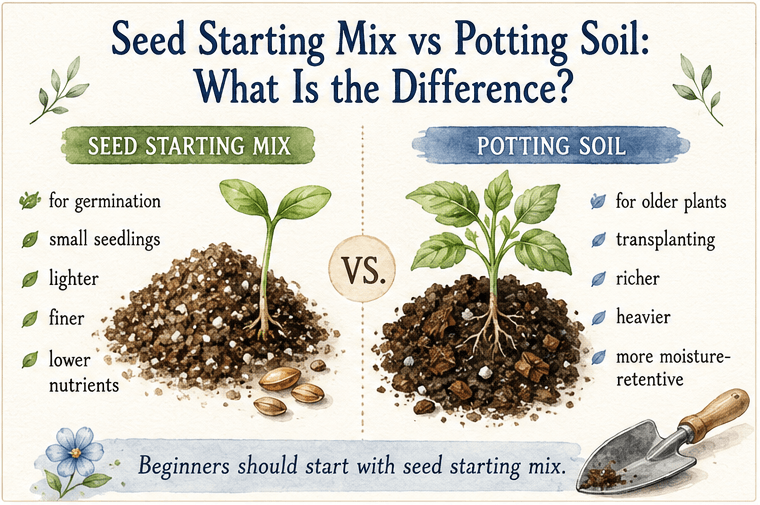
Seed Starting Mix vs Potting Soil: What Is the Difference?
Seed starting mix and potting soil may look similar, but they are not always the same.
Seed Starting Mix
Seed starting mix is designed for germination and early seedling growth. It is usually lighter and finer than regular potting soil. This makes it easier for small seeds to sprout and young roots to spread.
Seed starting mix is often lower in nutrients because seeds already contain enough energy to begin germination. At the beginning, structure and moisture control matter more than fertilizer.
Seed starting mix is best for:
- Germinating seeds
- Small seedlings
- Seed trays
- Starter cells
- Indoor seed starting
- Tiny or delicate seeds
Potting Soil
Potting soil is usually designed for older plants growing in containers. It may contain compost, fertilizer, bark, or larger particles. It can be richer, heavier, and more moisture-retentive.
Potting soil can work for some larger seeds, but it may be too dense for tiny seedlings if used alone.
Potting soil is better for:
- Transplanting seedlings
- Larger container plants
- Established herbs, vegetables, and flowers
- Plants that need more nutrients after early growth
Which Should Beginners Use?
For starting seeds, beginners should use seed starting mix.
After seedlings develop true leaves and become stronger, they can be transplanted into potting soil or a seedling-friendly potting mix.
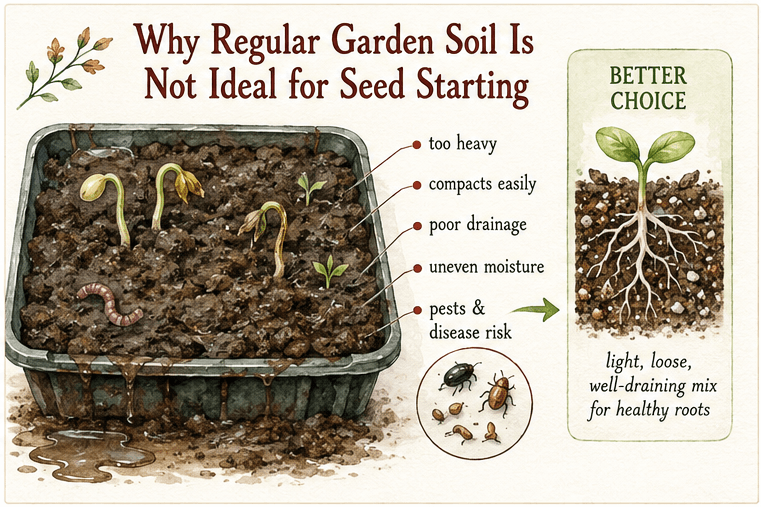
Why Regular Garden Soil Is Not Ideal for Seed Starting
Garden soil may seem like the most natural option, but it is usually not the best choice for seed starting in trays or small containers.
Garden soil can be too heavy and compact. When placed in small cells, it may become dense and block oxygen from reaching young roots.
Problems with Garden Soil
Garden soil may cause:
- Poor drainage
- Compaction
- Slow germination
- Weak root growth
- Mold or fungal problems
- Damping-off disease
- Uneven moisture
- Pests or weed seeds
- Soil crusting on the surface
Seedlings need oxygen around their roots. If soil becomes muddy or compacted, roots may struggle to grow.
Garden soil may work outdoors in garden beds, but seed trays are different. Small containers need a lighter mix that drains well and stays airy.
For beginner seed starting, avoid using garden soil straight from the ground.
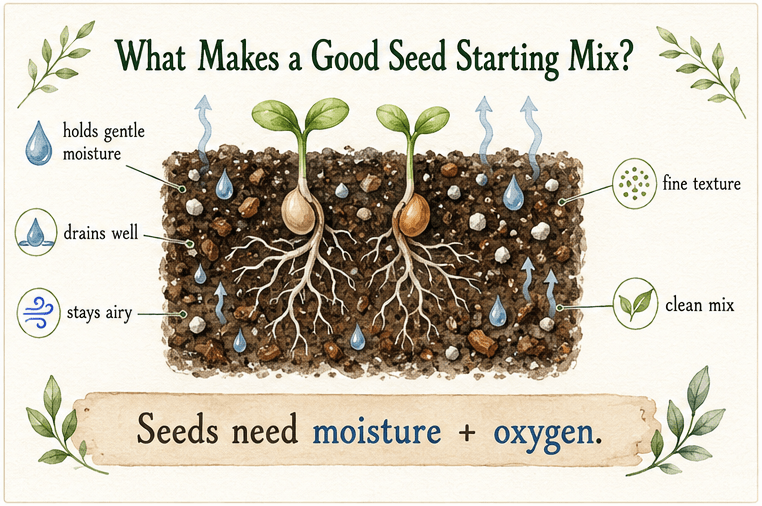
What Makes a Good Seed Starting Mix?
A good seed starting mix must balance two important needs:
Moisture and oxygen.
Seeds need moisture to germinate, but seedlings also need oxygen around their roots. If the mix dries out too quickly, seeds may fail to sprout. If it stays too wet, roots may rot or seedlings may collapse.
A Good Seed Starting Mix Should Hold Gentle Moisture
The mix should stay lightly moist long enough for seeds to absorb water and germinate.
It should not dry out too quickly during the early stage.
A Good Seed Starting Mix Should Drain Well
Excess water should be able to drain away. The mix should not become muddy or waterlogged.
A Good Seed Starting Mix Should Stay Airy
Young roots need air. The mix should have enough pore space so roots can breathe.
A Good Seed Starting Mix Should Be Fine-Textured
Small seeds need close contact with the growing medium. A fine texture helps seeds stay in place and germinate evenly.
A Good Seed Starting Mix Should Be Clean
Fresh mix reduces the risk of pests, weeds, fungus, and disease.
This is especially important for indoor seed starting.

Best Ingredients for Seed Starting Mix
Many seed starting mixes use a combination of lightweight materials that help with moisture retention, drainage, and airflow.
Below are the most common ingredients.
Coco Coir
Coco coir is made from coconut husk fibers. It is commonly used in seed starting mixes because it holds moisture well while still staying relatively light.
Benefits of Coco Coir
Coco coir is useful because it:
- Holds moisture
- Has a light texture
- Supports root growth
- Is easy to rehydrate when prepared properly
- Works well for many seeds
Coco coir is often used as a base ingredient in seed starting mixes.
Things to Watch For
Coco coir can hold a lot of water, so it should be mixed with drainage materials such as perlite or vermiculite. If used alone and watered too often, it may stay too wet.
Some coco coir products may also contain salts if not properly rinsed, so choose a quality gardening-grade product.
Peat Moss
Peat moss has been used for seed starting for many years. It is lightweight and holds moisture well.
Benefits of Peat Moss
Peat moss can:
- Hold moisture
- Create a fine texture
- Support germination
- Stay lightweight
- Work well in seed trays
Things to Watch For
Peat moss can become difficult to re-wet if it dries out completely. It is also naturally acidic, so many commercial mixes balance it with lime.
Because of environmental concerns around peat harvesting, many gardeners now prefer coco coir as an alternative.
Both peat-based and coir-based seed starting mixes can work well when properly formulated.
Perlite
Perlite is a lightweight volcanic material that looks like small white particles. It improves drainage and airflow in soil mixes.
Benefits of Perlite
Perlite helps:
- Improve aeration
- Prevent compaction
- Improve drainage
- Keep the mix light
- Reduce soggy conditions
Perlite is especially useful when seed starting indoors because indoor soil often dries more slowly than outdoor soil.
Things to Watch For
Perlite is very light and may float to the surface when watered heavily. This is usually not a major problem, but gentle watering helps keep the mix stable.
Vermiculite
Vermiculite is a lightweight mineral that holds moisture well. It is often used in seed starting because it helps keep seeds evenly moist during germination.
Benefits of Vermiculite
Vermiculite helps:
- Hold moisture
- Support germination
- Keep tiny seeds from drying out
- Improve seed-to-soil contact
- Add lightness to the mix
Vermiculite is especially useful for seeds that need consistent moisture.
Perlite vs Vermiculite
Perlite improves drainage and airflow more strongly.
Vermiculite holds moisture more strongly.
Many seed starting mixes use both.
Compost
Compost contains nutrients and organic matter, but it should be used carefully in seed starting mixes.
Can You Use Compost for Seed Starting?
Compost can be helpful in small amounts, but too much compost may make the mix heavy, rich, or uneven. It may also contain pests, weed seeds, or fungal organisms if not properly processed.
For beginners, it is usually safer to start seeds in a clean seed starting mix and add nutrients later after true leaves appear.
When Compost Works Better
Compost is more useful for:
- Transplanting seedlings
- Outdoor beds
- Larger containers
- Established plants
For tiny seedlings, a clean, fine-textured mix is usually better.
Sand
Sand can improve drainage, but it must be the right kind.
Use Coarse Sand Only
Coarse horticultural sand can improve texture and drainage.
Avoid fine sand, beach sand, or play sand. Fine sand can compact and make drainage worse.
Sand is not always necessary in seed starting mix, but it may be useful for certain plants that prefer grittier conditions.

Should Seed Starting Mix Have Fertilizer?
This is a common beginner question.
Seeds contain stored energy that helps them germinate. They do not need strong fertilizer at the very beginning.
In fact, too much fertilizer can burn young roots.
When Fertilizer Is Not Needed
Fertilizer is usually not necessary before seeds sprout or during the earliest seedling stage.
A light, clean mix is enough for germination.
When Seedlings Need Nutrients
Once seedlings develop true leaves, they may begin needing light feeding. This is especially true if they stay in seed starting mix for several weeks.
At that point, use a diluted balanced fertilizer.
A safe beginner approach:
- Wait until true leaves appear
- Use weak fertilizer strength
- Feed lightly
- Avoid fertilizing dry or stressed seedlings
- Do not overfeed
If seedlings are yellow because of overwatering or poor drainage, fertilizer will not fix the problem. Correct the growing conditions first.

Best Store-Bought Soil for Seed Starting
For beginners, a store-bought seed starting mix is often the easiest and safest choice.
Look for products labeled:
- Seed starting mix
- Seed starter mix
- Germination mix
- Seedling mix
What to Look For
Choose a mix that is:
- Light
- Fine-textured
- Well-draining
- Fresh
- Suitable for seed trays
- Not too chunky
- Not overly rich
Avoid mixes that are very heavy, wet, dense, or full of large bark chunks.
Is Potting Mix Okay?
Potting mix can work for larger seeds or stronger seedlings, but for small seeds and indoor seed trays, seed starting mix is usually better.
If your potting mix is too heavy, you can improve it by adding perlite or coco coir.

Seed Starting Mix for Vegetables
Most vegetable seeds grow well in a light, moisture-retentive seed starting mix.
Good vegetables for seed starting include:
- Tomatoes
- Peppers
- Lettuce
- Cabbage
- Kale
- Eggplant
- Herbs
- Leafy greens
A good vegetable seed starting mix should hold moisture evenly but not stay soggy.
For vegetables, a basic seed starting mix with coco coir or peat, perlite, and vermiculite works well.
Once vegetable seedlings develop true leaves, they may need light fertilizer because many vegetables grow quickly.
Seed Starting Mix for Flowers
Flower seeds vary widely. Some are large and easy to handle, while others are tiny and delicate.
For flower seeds, a fine-textured seed starting mix is helpful because it allows small seeds to make good contact with the surface.
Good flower seeds for beginners include:
- Zinnia
- Marigold
- Cosmos
- Sunflower
- Aster
- Alyssum
- Calendula
- Snapdragon
Some tiny flower seeds need light to germinate and should not be buried deeply. A fine seed starting mix makes this easier.
For flowers, avoid heavy soil that crusts over the surface, because tiny seedlings may struggle to push through.
Seed Starting Mix for Herbs
Herbs often grow well in a light, well-draining seed starting mix. Many herb seedlings are small and slow at first, so gentle moisture control is important.
Good herbs to start from seed include:
- Basil
- Dill
- Parsley
- Cilantro
- Thyme
- Oregano
- Chives
- Lemon balm
Some herbs take longer to germinate than vegetables. For example, parsley can be slower than basil.
Keep the mix evenly moist during germination, but avoid soggy conditions.
Once herbs develop true leaves, provide strong light to prevent leggy growth.
Seed Starting Mix for Succulents and Cactus Seeds
Succulent and cactus seeds need a different approach from many vegetable and flower seeds.
They usually need a mix that is fine enough for germination but drains well enough to avoid rot.
A beginner-friendly succulent seed mix may include:
- Coco coir or fine cactus mix
- Perlite or pumice
- Coarse sand or fine grit
The mix should stay lightly moist during germination but should not become muddy.
For succulent seedlings, airflow and careful watering are important because they are sensitive to rot.
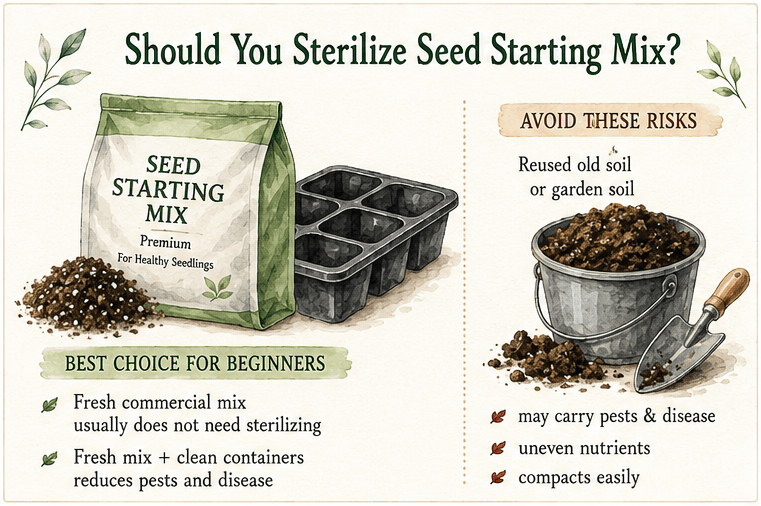
Should You Sterilize Seed Starting Mix?
If you use a fresh commercial seed starting mix, sterilizing is usually not necessary.
However, if you reuse old soil or use garden soil, the risk of pests, fungus, and disease is higher.
For beginners, the simplest solution is:
Use fresh seed starting mix and clean containers.
This reduces the chance of damping-off, fungus gnats, mold, and poor germination.
Reusing old seed starting mix is possible, but it is not ideal for delicate seedlings unless you refresh and handle it carefully.

Should You Reuse Seed Starting Mix?
You can reuse seed starting mix in some cases, but it is not always recommended for starting new seeds.
Used mix may contain:
- Old roots
- Fungal spores
- Pest eggs
- Salt buildup
- Compacted material
- Reduced structure
- Low nutrients
For valuable seeds or delicate seedlings, fresh mix is safer.
If you reuse mix, remove old roots, refresh with perlite or new coir, and avoid reusing soil from plants that had disease or pests.
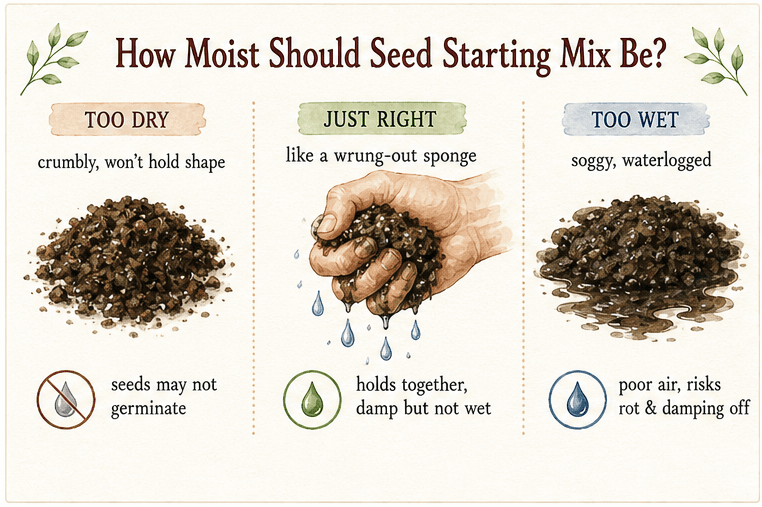
How Moist Should Seed Starting Mix Be?
Seed starting mix should be evenly moist, not wet.
A good moisture level feels like a wrung-out sponge. It should hold moisture, but water should not drip out when squeezed.
Too Dry
If the mix dries out completely during germination, seeds may stop sprouting or die.
Too Wet
If the mix stays soggy, seeds may rot and seedlings may develop damping-off disease.
Best Moisture Practice
Moisten the mix before sowing seeds. After planting, water gently as needed to maintain light moisture.
Use a spray bottle, misting nozzle, or bottom watering method to avoid disturbing seeds.
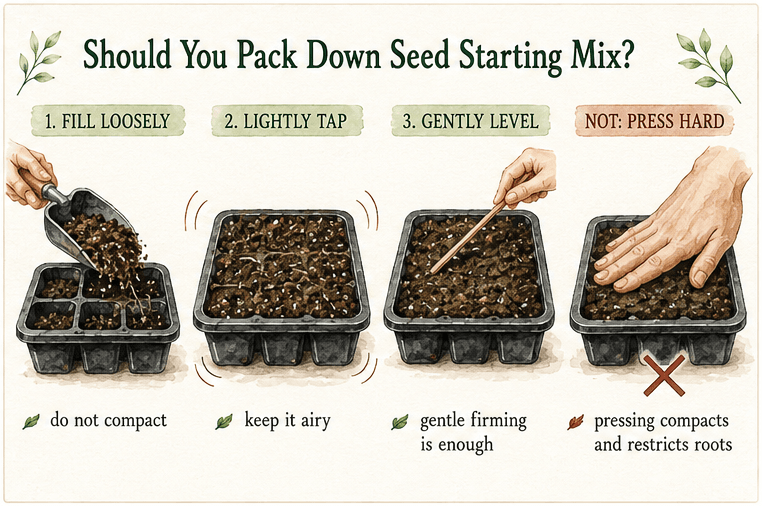
Should You Pack Down Seed Starting Mix?
Do not pack seed starting mix too tightly.
Gently firming the surface is fine, but heavy compression removes air spaces and makes it harder for roots to grow.
A good approach:
- Fill the tray loosely
- Tap lightly to settle
- Gently level the surface
- Avoid pressing hard
- Water gently
The mix should stay loose and airy.
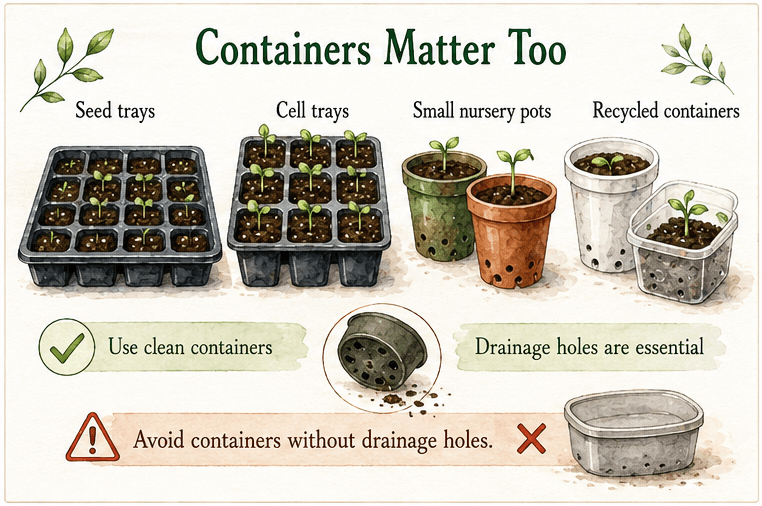
Containers Matter Too
Even the best seed starting mix can fail if the container does not drain.
Use containers with drainage holes. Seed trays, cell trays, small nursery pots, or recycled containers can all work if they drain properly.
Avoid Containers Without Drainage
Without drainage holes, water collects at the bottom and can cause seed rot or root problems.
Use Clean Containers
Dirty containers may carry disease organisms. Wash reused trays before planting.
Clean containers plus fresh mix create a healthier seed starting environment.

Common Soil Mistakes Beginners Make
Using Garden Soil
Garden soil is often too heavy for seed trays.
Using Dense Potting Soil
Some potting soils hold too much water for tiny seedlings.
Overpacking the Mix
Compacted mix reduces oxygen around roots.
Keeping the Mix Too Wet
Soggy soil encourages mold, rot, and damping-off.
Letting the Mix Dry Out Completely
Seeds need consistent moisture to germinate.
Using Old or Contaminated Soil
Old soil can carry pests, fungi, or disease.
Adding Too Much Fertilizer
Young seedlings do not need strong feeding early on.

Signs Your Seed Starting Soil Is Too Wet
Your mix may be too wet if you notice:
- Mold on the surface
- Algae growth
- Seeds rotting
- Seedlings falling over
- Soil staying dark and heavy
- Bad smell
- Fungus gnats
- Yellow seedlings
- Slow growth
How to Fix Wet Seed Starting Mix
Improve airflow, reduce watering, remove humidity covers after germination, and make sure containers drain well.
If the mix is very heavy, transplant healthy seedlings into a lighter mix when they are strong enough.

Signs Your Seed Starting Soil Is Too Dry
Your mix may be too dry if:
- Seeds fail to germinate
- Soil pulls away from tray edges
- Seedlings wilt
- Leaves become crispy
- Germination is uneven
- The surface looks dusty or crusted
How to Fix Dry Seed Starting Mix
Water gently and evenly. If the mix has become very dry and repels water, moisten slowly in several rounds.
Bottom watering can help rehydrate dry mix more evenly.

Best Soil for Indoor Seed Starting
Indoor seed starting often needs extra attention because indoor conditions may have less airflow and weaker light.
For indoor seed starting, use a clean, light, well-draining mix.
A good indoor mix should:
- Hold moisture evenly
- Drain well
- Resist compaction
- Stay airy
- Work well with grow lights
- Reduce mold risk
Avoid dense, wet soil indoors. Indoor trays dry more slowly than outdoor containers, especially in low light or cool rooms.
Use a fan for gentle airflow and remove humidity domes after germination.
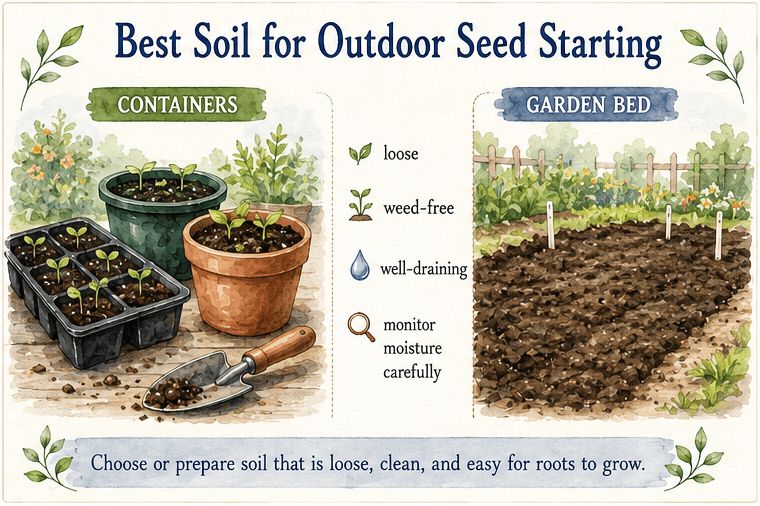
Best Soil for Outdoor Seed Starting
Outdoor seed starting can work well, but conditions are less controlled. Sun, rain, wind, and temperature changes can affect the soil.
For outdoor seed starting in containers, use a seed starting mix or light potting mix.
Outdoor mixes may dry faster, so monitor moisture carefully.
If sowing directly into garden beds, improve the surface soil by loosening it and removing rocks, weeds, and clumps. Fine seeds need a smooth surface to germinate evenly.
Outdoor seed starting soil should be:
- Loose
- Weed-free
- Well-draining
- Moist but not soggy
- Fine enough for seed contact

How to Fill Seed Trays Correctly
Filling seed trays properly helps seeds germinate evenly.
Step 1: Moisten the Mix First
Pre-moisten the mix before filling trays. Dry mix can be hard to wet evenly after seeds are planted.
Step 2: Fill Loosely
Add mix to each cell without packing it tightly.
Step 3: Level the Surface
Gently level the top so seeds sit evenly.
Step 4: Sow Seeds
Plant seeds at the correct depth according to the seed packet.
Step 5: Cover Lightly
Cover seeds only as needed. Tiny seeds may need little or no covering.
Step 6: Water Gently
Use misting or bottom watering to avoid washing seeds away.

How to Tell If Your Seed Starting Mix Is Good
A good seed starting mix should pass a few simple tests.
After watering, it should:
- Absorb water evenly
- Let excess water drain
- Feel moist but not muddy
- Stay loose and airy
- Not form a hard crust
- Not smell sour
- Support steady germination
If water pools on top or the mix becomes dense and sticky, it may be too heavy.
If it dries out extremely fast, it may need more moisture-retentive material.

Beginner Seed Starting Soil Checklist
Before planting seeds, check these points:
- Is the mix fresh?
- Is it light and fine-textured?
- Does it drain well?
- Does it hold gentle moisture?
- Is it free from pests and weeds?
- Are containers clean?
- Do containers have drainage holes?
- Is the mix pre-moistened?
- Are seeds planted at the correct depth?
- Is the tray placed in the right light and temperature?
This checklist helps prevent many common seed starting problems.
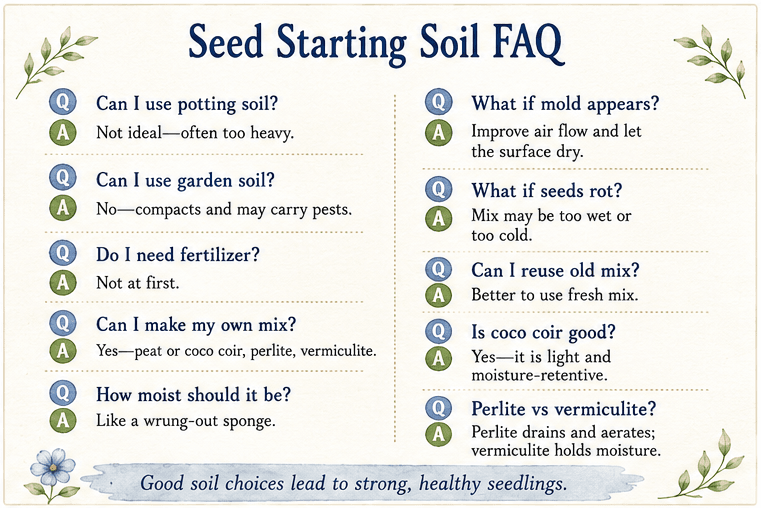
Seed Starting Soil FAQ
Can I use regular potting soil to start seeds?
You can use potting soil for some larger seeds, but seed starting mix is usually better for beginners because it is lighter and finer.
Can I use garden soil for seed starting?
It is not recommended. Garden soil is often too heavy for trays and may contain pests, weed seeds, or disease organisms.
Does seed starting mix need fertilizer?
Not at the beginning. Seeds contain enough stored energy to sprout. Light feeding can begin after true leaves appear.
What is the best DIY seed starting mix?
A simple mix is 50% coco coir or peat moss, 25% perlite, and 25% vermiculite.
Should seed starting mix be wet or dry?
It should be evenly moist, like a wrung-out sponge. It should not be soggy or muddy.
Why is mold growing on my seed starting soil?
Mold usually means the mix is staying too wet and airflow is poor. Reduce watering and improve ventilation.
Why are my seeds rotting in the soil?
Seeds may rot if the mix is too wet, too cold, poorly drained, or if seeds are planted too deeply.
Can I reuse seed starting mix?
It is safer to use fresh mix for new seeds. Used mix may contain pests, disease, old roots, or compacted material.
Is coco coir good for seed starting?
Yes, coco coir is good as a base ingredient because it holds moisture and stays light, especially when mixed with perlite or vermiculite.
Is perlite or vermiculite better for seed starting?
Both are useful. Perlite improves drainage and airflow, while vermiculite holds moisture. Many mixes use both.

Start Seeds in Light, Clean, Well-Draining Soil
The best soil for seed starting is not heavy, rich garden soil. It is a light, clean, fine-textured mix that helps seeds germinate and supports young roots.
For beginners, the easiest choice is a fresh seed starting mix in clean containers with drainage holes.
Focus on the basics:
Use light seed starting mix.
Avoid heavy garden soil.
Keep the mix moist, not soggy.
Do not compact the soil.
Use clean containers.
Provide good light after germination.
Feed lightly only after true leaves appear.
When seeds start in the right soil, seedlings grow stronger from the beginning. Healthy roots lead to healthier plants, better transplant success, and a more rewarding gardening experience.
Recommended Seeds


 1
1

 1
1


 1
1


 1
1

 1
1


 1
1

 1
1 2
2 3
3 4
4


 1
1 Mixed
Mixed

 1
1
 1
1 2
2 3
3 4
4


 1Mixed

 1
1

 1
1 2
2 3
3 4
4


 1Mixed
 1
1Adenium Obesum Desert Rose Seeds – Yellow Siam Flower Bonsai Seeds for Garden Planting, 5 Seeds Pack


 1
1 2
2 3
3 4
4


 1Mixed


 1
1

 1
1 2
2 3
3 4
4


 1
1



 1
1 2
2 3
3 4
4


 1
1
 1Mixed



 1Mixed
 1Mixed
 1
1
