Gardening Basics
How Much Light Do Seeds Need to Germinate? Complete Beginner Guide
May
Do Seeds Need Light Before They Sprout?
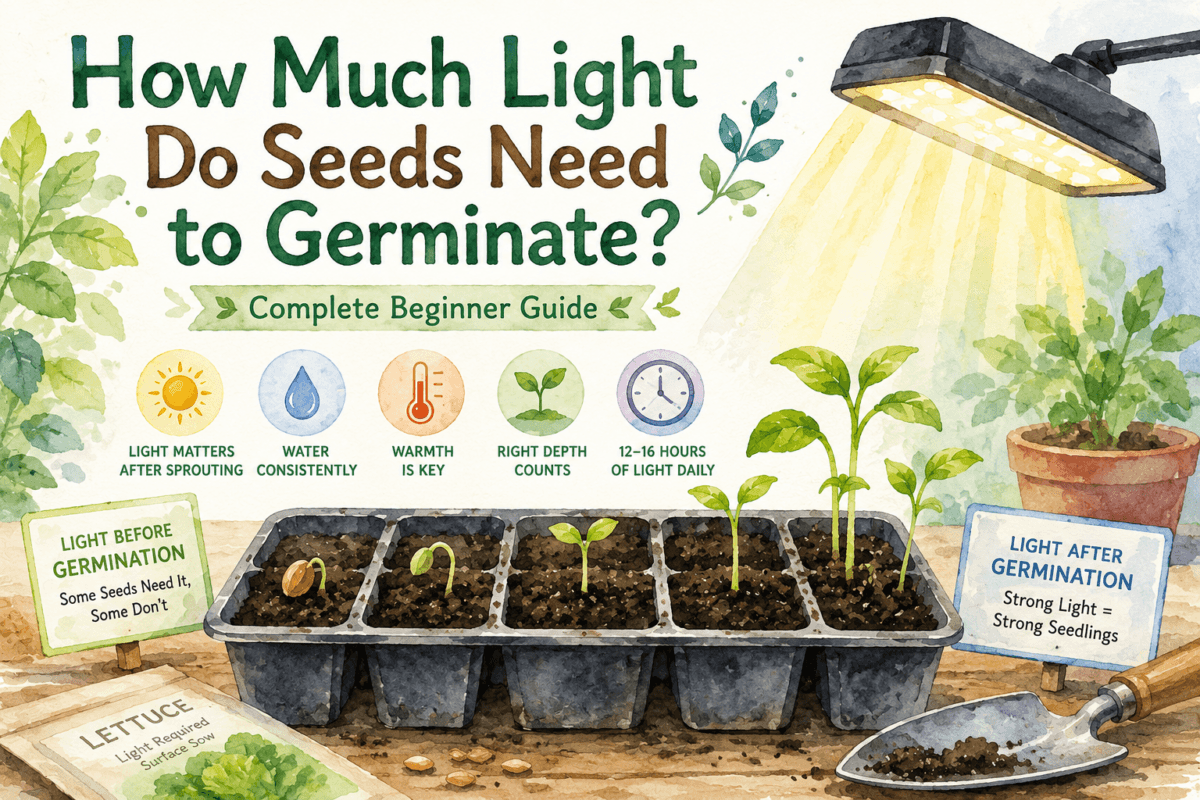
Light is one of the most confusing parts of seed starting. Many beginner gardeners wonder whether seeds need sunlight to germinate, whether they should place seed trays under grow lights immediately, or whether seeds should be kept in darkness until they sprout.
The answer depends on the type of seed.
Some seeds need light to germinate. Some seeds germinate better in darkness. Many common garden seeds do not strictly need light before sprouting, but they need strong light immediately after germination to grow into healthy seedlings.
This is where many beginners make a mistake. They focus only on getting the seed to sprout, but forget that once the seedling emerges, light becomes one of the most important factors for strong growth.
Without enough light after germination, seedlings may become tall, thin, pale, weak, and leggy. Even if germination is successful, poor light can quickly lead to unhealthy seedlings.
In this complete guide, you’ll learn how much light seeds need to germinate, which seeds need light, which seeds prefer darkness, when to use grow lights, and how to prevent weak seedlings after sprouting.
How Much Light Do Seeds Need to Germinate?
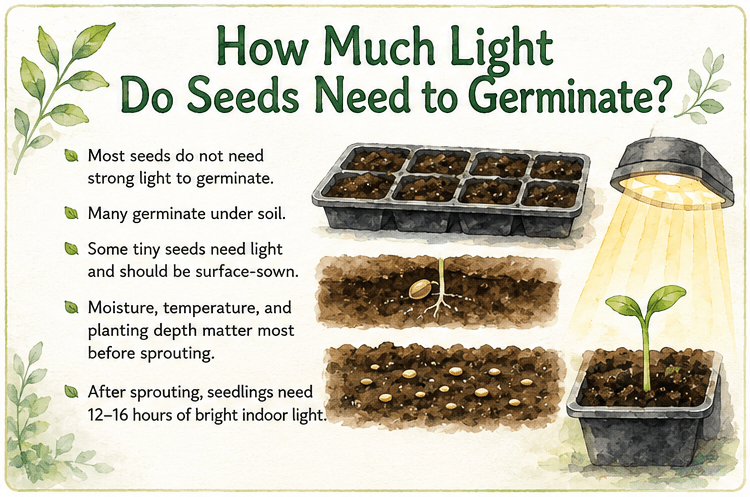
Most seeds do not need strong light to germinate. Many seeds germinate underground, where they are covered by soil and receive little to no light.
However, some small seeds need light to germinate and should be surface-sown or only lightly covered.
A simple beginner rule is:
Seeds need the right moisture, temperature, and planting depth to germinate. Seedlings need strong light immediately after they sprout.
For many common vegetables, herbs, and flowers, light is not required before germination, but bright light is essential after germination.
Once seedlings appear, they usually need:
12–16 hours of bright light per day indoors
This helps them grow short, green, sturdy, and healthy.
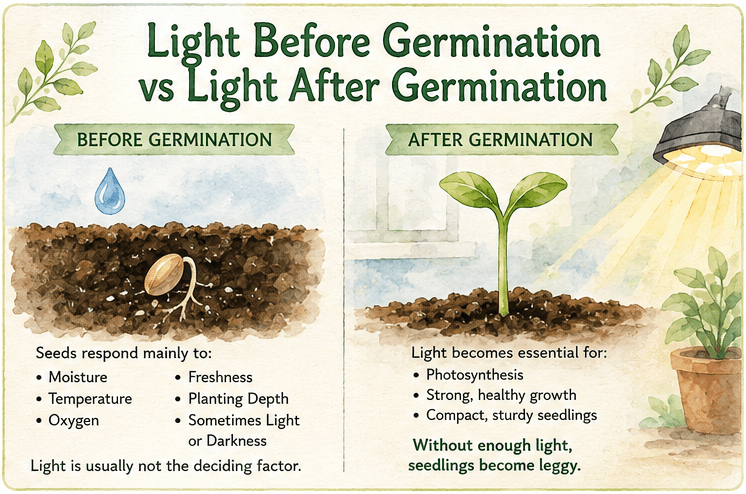
Light Before Germination vs Light After Germination
It helps to separate seed starting into two stages.
Before Germination
Before germination, the seed is still closed. It is mainly responding to:
- Moisture
- Temperature
- Oxygen
- Planting depth
- Seed freshness
- Sometimes light or darkness
At this stage, many seeds can germinate without light as long as moisture and temperature are correct.
After Germination
After germination, the seedling begins growing leaves. Once leaves appear, light becomes essential.
The seedling needs light to make energy through photosynthesis. Without enough light, it may stretch upward searching for a stronger light source.
This causes leggy growth.
So the key point is:
Light may or may not matter before sprouting, but it matters immediately after sprouting.
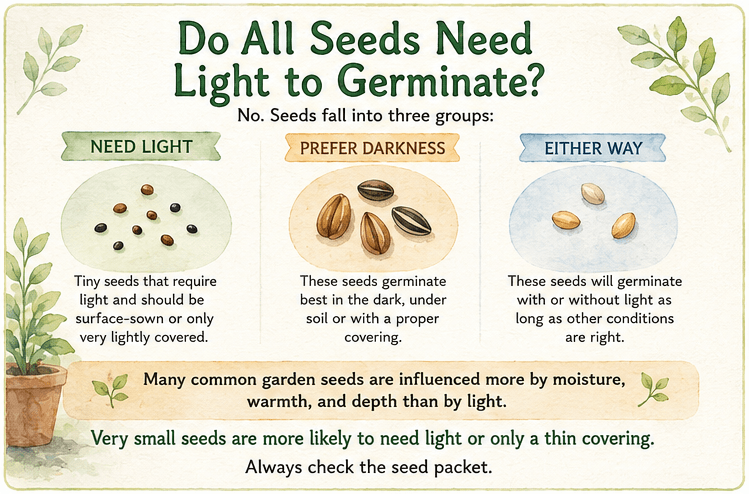
Do All Seeds Need Light to Germinate?
No, not all seeds need light to germinate.
Seeds can generally be divided into three groups:
- Seeds that need light to germinate
- Seeds that prefer darkness to germinate
- Seeds that germinate with or without light
Many beginner-friendly garden seeds fall into the third group. They are more affected by moisture, temperature, and planting depth than by light exposure.
However, very small seeds are often more likely to need light or only a very thin soil covering.
This is why reading the seed packet is important. It usually tells you whether the seed should be covered, lightly covered, or surface-sown.
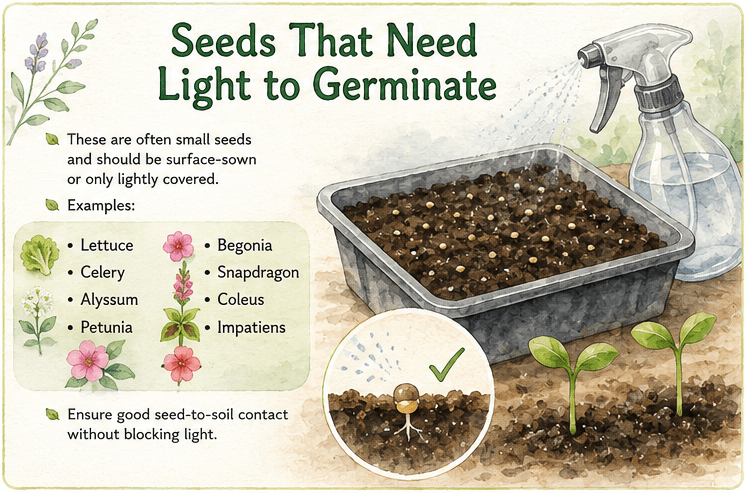
Seeds That Need Light to Germinate
Some seeds germinate better when exposed to light. These seeds are usually planted on the soil surface or covered with only a very thin layer of fine soil or vermiculite.
Light-dependent seeds are often very small. If they are buried too deeply, they may not sprout well.
Examples of seeds that often need light or very shallow planting include:
- Lettuce
- Celery
- Alyssum
- Petunia
- Begonia
- Snapdragon
- Coleus
- Impatiens
- Some herbs and tiny flower seeds
For these seeds, do not bury them deeply. Press them gently onto the surface of moist seed starting mix so they make good contact with the soil.
If needed, cover them with only a very thin dusting of fine mix or vermiculite.
The goal is:
Good seed-to-soil contact without blocking light.
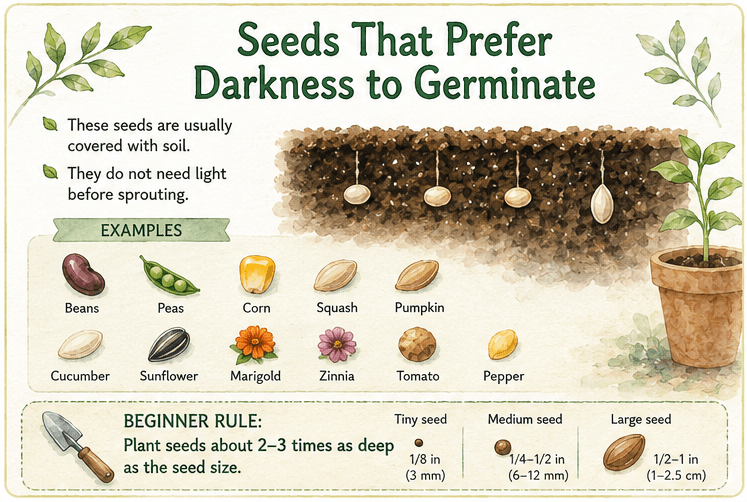
Seeds That Prefer Darkness to Germinate
Some seeds germinate better when covered with soil and kept darker during the germination stage.
These seeds are usually planted at a proper depth based on seed size.
Examples of seeds that are commonly covered include:
- Beans
- Peas
- Corn
- Squash
- Pumpkin
- Cucumber
- Sunflower
- Marigold
- Zinnia
- Tomato
- Pepper
These seeds do not need to be exposed to light before germination. They usually germinate well when planted at the correct depth in warm, moist soil.
A common planting rule is:
Plant seeds about 2–3 times as deep as the seed size.
Large seeds are usually planted deeper. Tiny seeds are usually planted shallowly.
What Happens If Seeds That Need Light Are Buried Too Deep?
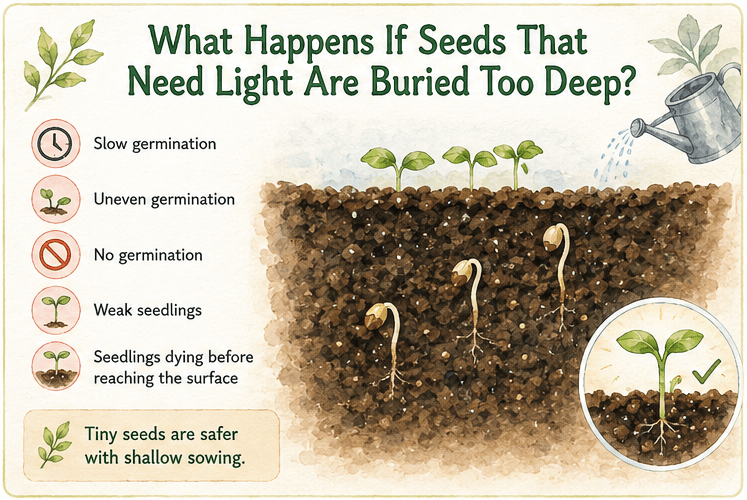
If light-loving seeds are buried too deeply, they may germinate poorly or fail completely.
Small seeds have limited stored energy. If they are planted too deep, they may not have enough strength to push through the soil surface.
Possible problems include:
- Slow germination
- Uneven germination
- No germination
- Weak seedlings
- Seedlings dying before reaching the surface
If you planted tiny seeds too deeply and they have not sprouted, the best fix may be to restart and sow them on the surface or with a very light covering.
For tiny seeds, shallow planting is usually safer than deep planting.
What Happens If Seeds That Need Darkness Are Left on the Surface?
Some seeds need darkness or soil coverage to germinate properly. If these seeds are left uncovered on the surface, they may dry out too quickly or fail to germinate evenly.
Possible problems include:
- Seeds drying out
- Poor seed-to-soil contact
- Uneven moisture
- Birds or pests disturbing seeds outdoors
- Lower germination rate
- Weak root anchoring
For seeds that should be covered, use the recommended planting depth on the seed packet.
If you do not have instructions, use the 2–3 times seed-size rule as a general guide.
Do Seeds Need Sunlight to Germinate Indoors?
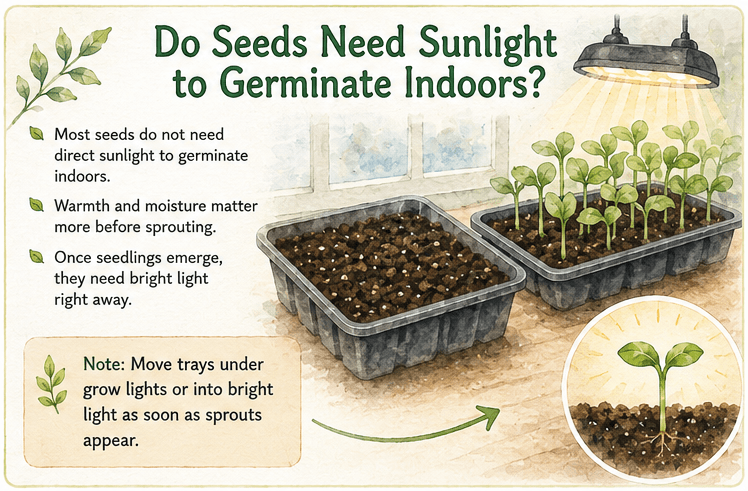
Most seeds do not need direct sunlight to germinate indoors. In fact, harsh direct sun can sometimes dry out seed trays too quickly.
Before seeds sprout, warmth and moisture are usually more important than sunlight.
However, once seedlings emerge, they need bright light right away.
If you start seeds indoors, it is best to place the tray somewhere warm for germination, then move it under grow lights or into bright light as soon as sprouts appear.
Do not wait several days after sprouting to add light. Seedlings can become leggy very quickly.
Should Seed Trays Be Under Grow Lights Before Germination?
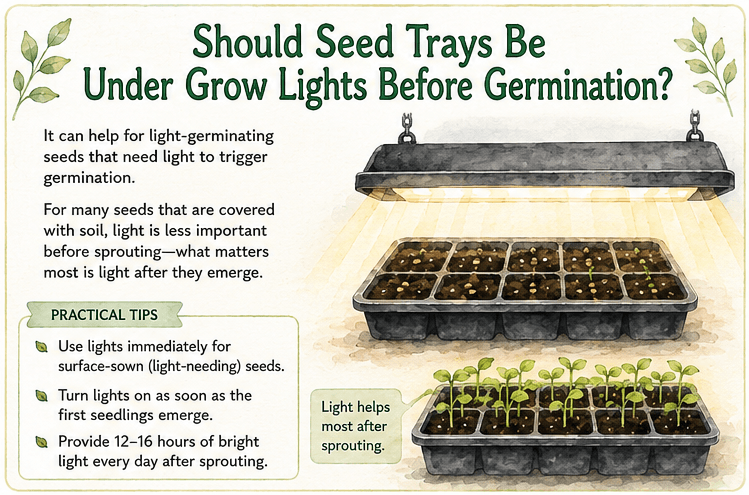
You can place seed trays under grow lights before germination, but it is not always necessary.
For seeds that need light to germinate, grow lights can help. For seeds that germinate in darkness, grow lights are mainly useful after the seedlings emerge.
A practical beginner approach:
- Use grow lights immediately for surface-sown, light-loving seeds
- Use warmth and moisture for covered seeds
- Turn on grow lights as soon as the first seedlings appear
- Keep lights on 12–16 hours per day after sprouting
If your seed tray contains many different seed types, keeping the tray under grow lights from the start is usually fine, as long as moisture is controlled and the surface does not dry out.
How Much Light Do Seedlings Need After Germination?
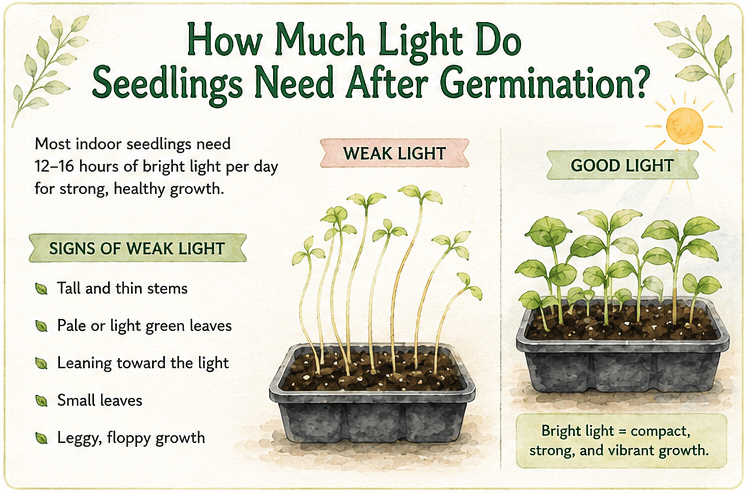
After germination, most seedlings need strong light for healthy growth.
Indoors, seedlings usually need:
12–16 hours of bright light per day
This is because indoor light is usually much weaker than outdoor sunlight. Even a bright window may not provide enough light for strong seedling growth.
Seedlings that do not receive enough light often become:
- Tall
- Thin
- Pale
- Weak
- Leaning
- Leggy
- Easy to fall over
Strong light helps seedlings grow compact, green, and sturdy.
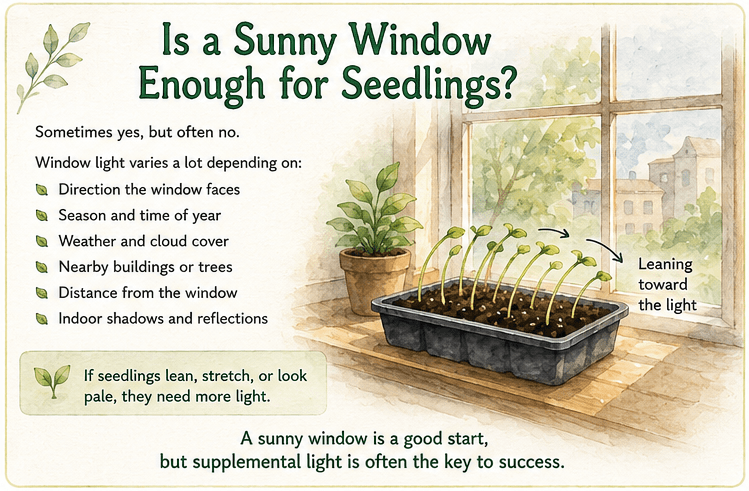
Is a Sunny Window Enough for Seedlings?
A sunny window may be enough for some seedlings, but it is often not enough for strong indoor seed starting.
Window light can be limited by:
- Window direction
- Cloudy weather
- Short winter days
- Screens or tinted glass
- Nearby buildings or trees
- Distance from the window
- Indoor shadows
A window may look bright to your eyes but still be weak for plants.
If seedlings lean toward the window, stretch upward, or become pale, they need more light.
For best results indoors, a grow light is usually more reliable than window light.
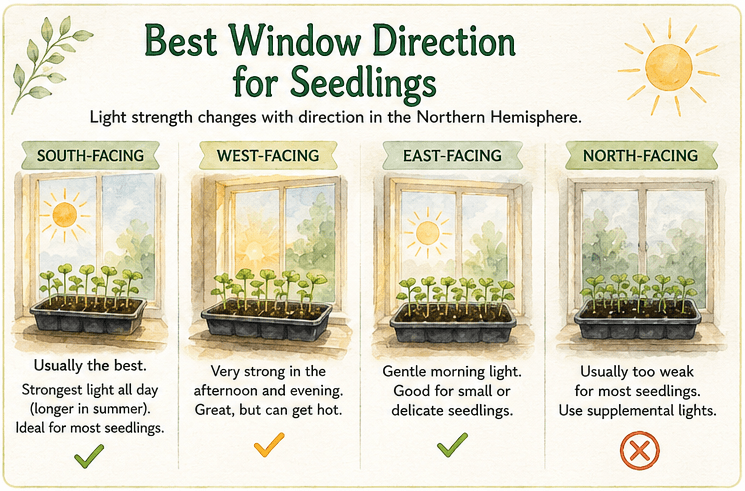
Best Window Direction for Seedlings
Window direction matters because different windows receive different amounts of light.
South-Facing Window
A south-facing window is usually the brightest option in the Northern Hemisphere. It is often the best window for seedlings.
West-Facing Window
A west-facing window provides strong afternoon light. It can work well, but may become hot.
East-Facing Window
An east-facing window provides gentle morning light. It may work for some seedlings, but may not be strong enough for all plants.
North-Facing Window
A north-facing window is usually too weak for most seedlings.
If seedlings are growing indoors and you do not have a bright window, use a grow light.
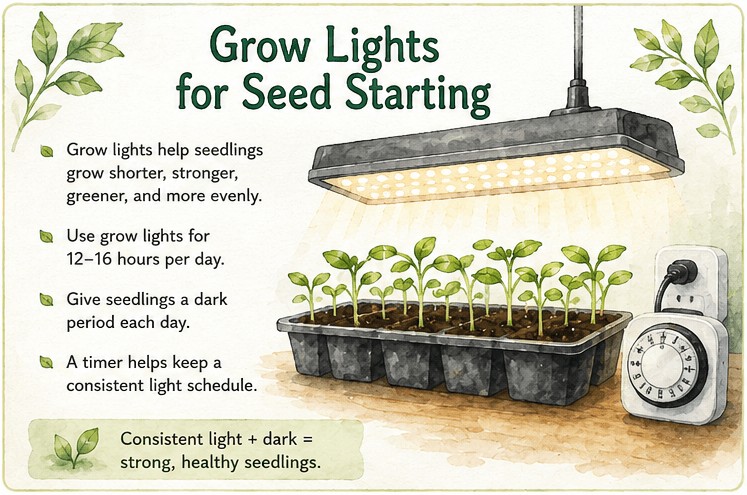
Grow Lights for Seed Starting
Grow lights are one of the best tools for growing strong seedlings indoors.
A grow light provides consistent brightness and helps prevent leggy growth. This is especially useful for vegetables, herbs, flowers, and indoor seed starting during cloudy or cool seasons.
Why Grow Lights Help
Grow lights help seedlings:
- Grow shorter and stronger
- Develop greener leaves
- Avoid stretching
- Grow more evenly
- Start earlier indoors
- Stay healthier before transplanting
How Long Should Grow Lights Stay On?
For most seedlings, keep grow lights on for:
12–16 hours per day
Seedlings also need a dark period, so do not leave lights on 24 hours a day.
A simple setup is:
- 14–16 hours of light
- 8–10 hours of darkness
Using a timer makes this easier.
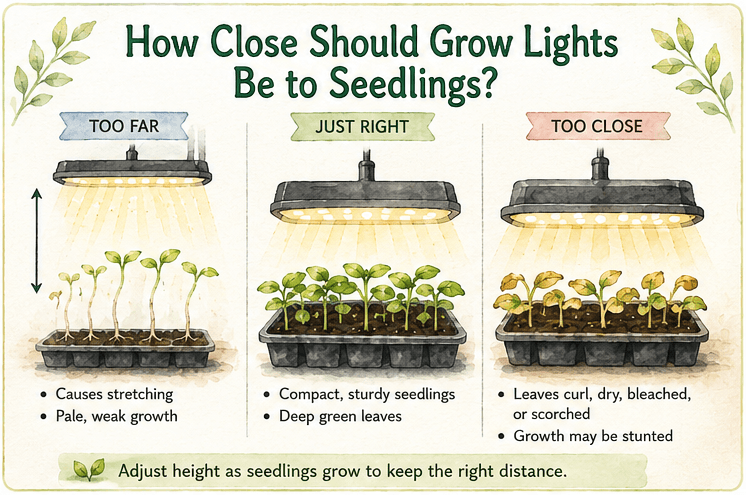
How Close Should Grow Lights Be to Seedlings?
Grow light distance depends on the strength and type of light.
If the light is too far away, seedlings stretch.
If the light is too close, leaves may burn or curl.
A good beginner rule is to watch the seedlings.
Signs the Light Is Too Far Away
- Seedlings grow tall and thin
- Stems lean toward the light
- Leaves look pale
- Growth is weak
- Large gaps appear between leaves
Signs the Light Is Too Close
- Leaves curl upward
- Leaf edges dry or brown
- Seedlings look stressed
- The top leaves look bleached or scorched
Good Light Position
Keep the grow light close enough that seedlings stay compact and green, then raise it gradually as they grow.
For many seedling grow lights, this may mean placing the light a few inches above the seedlings, depending on light strength.
Always follow your grow light’s instructions if available.
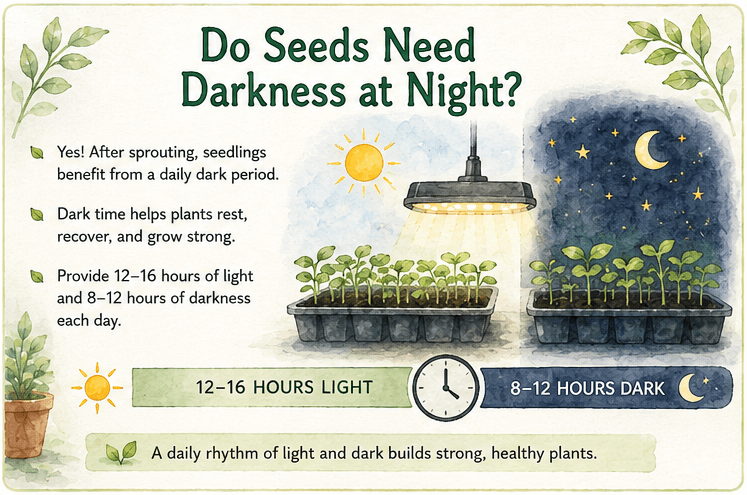
Do Seeds Need Darkness at Night?
Yes, seedlings benefit from a daily dark period after they sprout.
Plants use light for photosynthesis, but they also have natural day-night rhythms. Keeping lights on all day and all night is usually unnecessary and may stress plants.
A healthy indoor lighting schedule is:
- 12–16 hours of light
- 8–12 hours of darkness
This gives seedlings enough energy while still allowing a rest period.
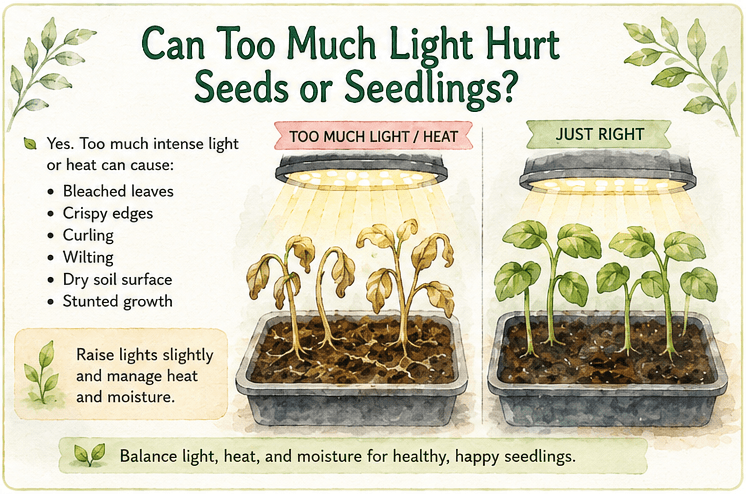
Can Too Much Light Hurt Seeds or Seedlings?
Yes, too much intense light can stress seedlings, especially when combined with heat or dry soil.
This is more likely after germination than before germination.
Signs of too much light or heat may include:
- Bleached leaves
- Crispy leaf edges
- Curling leaves
- Wilting
- Dry soil surface
- Stunted growth
- Brown patches
If this happens, raise the grow light slightly, reduce heat, improve watering balance, or move seedlings out of harsh direct sun.
Seedlings need bright light, but they also need stable moisture and temperature.
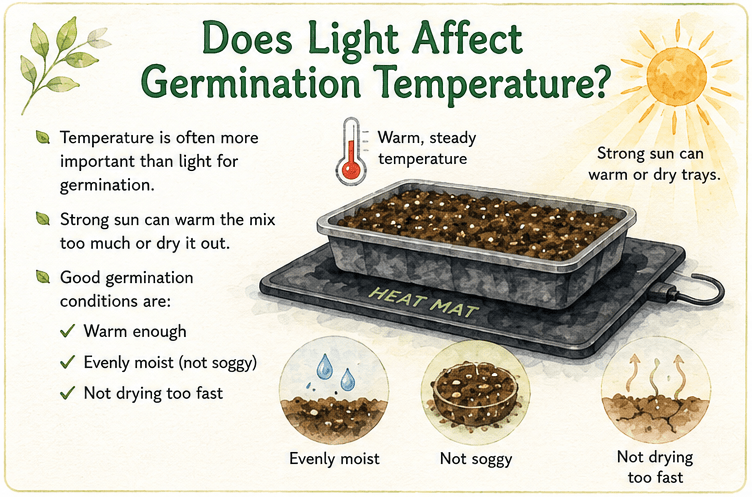
Does Light Affect Germination Temperature?
Light itself is not usually the main temperature requirement, but strong light can warm or dry seed trays.
For germination, temperature is often more important than light. Many seeds germinate best in warm soil.
If the growing area is too cold, seeds may sprout slowly or fail.
If trays are placed in hot direct sun, the soil surface may dry out too quickly.
A good germination environment should be:
- Warm enough for the seed type
- Evenly moist
- Not soggy
- Not drying out too fast
- Properly planted
- Light or dark depending on seed needs
For warmth-loving seeds, a heat mat can help. But once seedlings sprout, make sure they also get enough light.
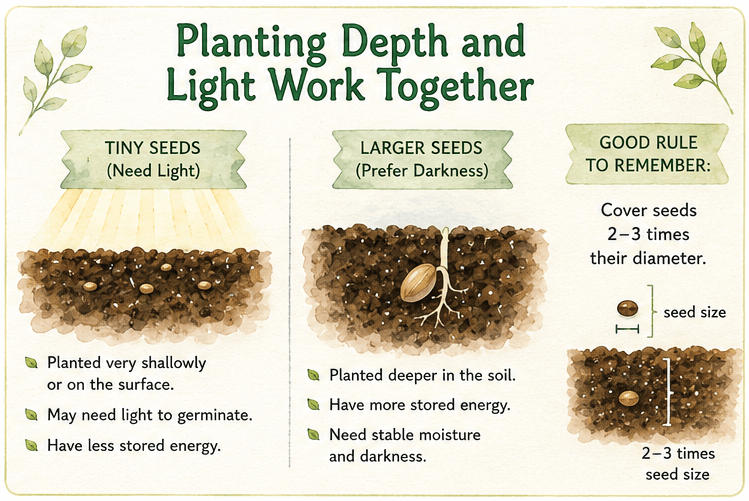
Planting Depth and Light Work Together
Planting depth is one of the biggest reasons seeds fail to germinate.
Light requirement and planting depth are closely connected.
Tiny seeds are often planted shallowly because:
- They may need light
- They have less stored energy
- They cannot push through deep soil easily
- They need close contact with the surface
Larger seeds are often planted deeper because:
- They have more stored energy
- They need stable moisture
- They anchor better when covered
- They are less likely to dry out
A general rule:
Plant seeds 2–3 times as deep as the seed size.
But for tiny seeds or seeds that need light, surface sowing or very light covering is better.
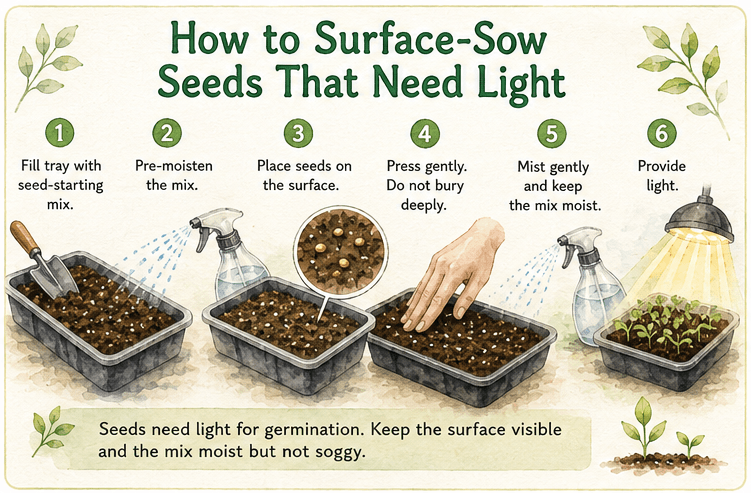
How to Surface-Sow Seeds That Need Light
Surface-sowing means placing seeds on top of the growing mix instead of burying them deeply.
This is common for tiny seeds and light-germinating seeds.
How to Surface-Sow Seeds
- Fill the tray with seed starting mix
- Moisten the mix before sowing
- Sprinkle or place seeds on the surface
- Press seeds gently into the mix
- Do not bury deeply
- Mist gently to settle them
- Keep the surface moist but not soggy
- Provide bright indirect light or grow light
For very tiny seeds, it may help to mix them with a small amount of fine sand before sowing to spread them more evenly.
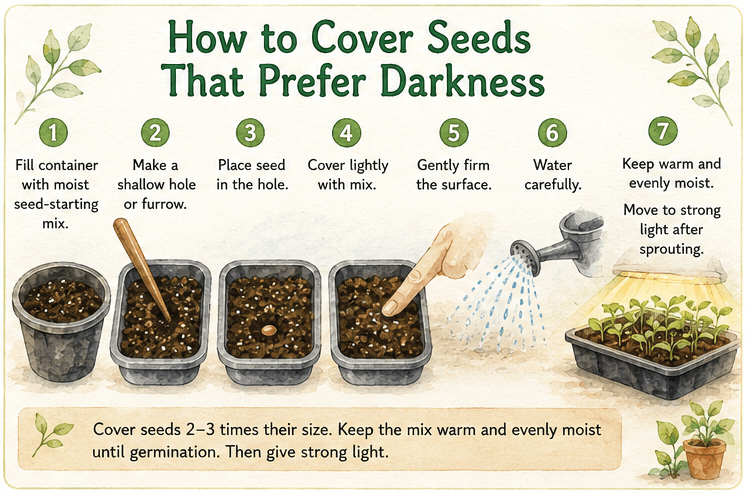
How to Cover Seeds That Prefer Darkness
For seeds that prefer darkness or need to be covered, plant them at the correct depth.
How to Cover Seeds Properly
- Fill containers with moist seed starting mix
- Make a small hole or shallow furrow
- Place the seed at the correct depth
- Cover lightly with mix
- Gently firm the surface
- Water carefully
- Keep warm and evenly moist
- Move to strong light after sprouting
Do not pack the soil too tightly. Seeds need oxygen as well as moisture.
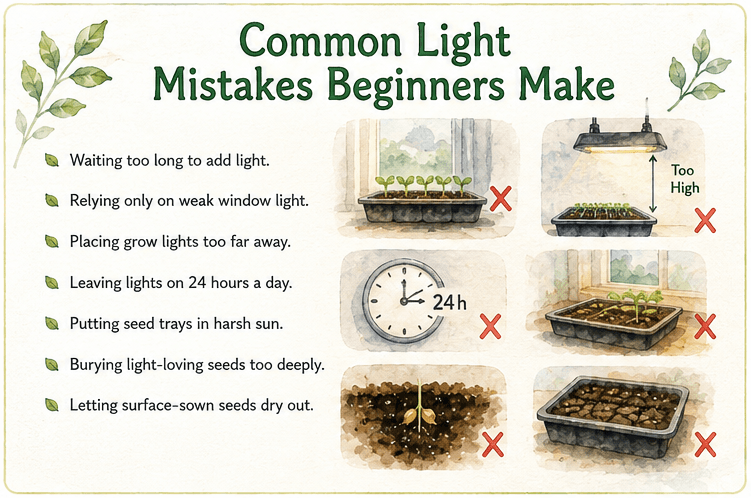
Common Light Mistakes Beginners Make
Waiting Too Long to Add Light
Seedlings need bright light immediately after they emerge. Waiting even a few days can cause leggy growth.
Relying Only on Weak Window Light
Many seedlings need stronger light than a windowsill provides.
Placing Grow Lights Too Far Away
If the light is too far, seedlings stretch toward it.
Leaving Lights On 24 Hours a Day
Seedlings usually need a dark period.
Putting Seed Trays in Harsh Sun
Strong direct sun can dry the soil surface and stress tiny seedlings.
Burying Light-Loving Seeds Too Deeply
Tiny seeds that need light may fail if covered too heavily.
Letting Surface-Sown Seeds Dry Out
Surface-sown seeds dry faster, so moisture must be monitored carefully.
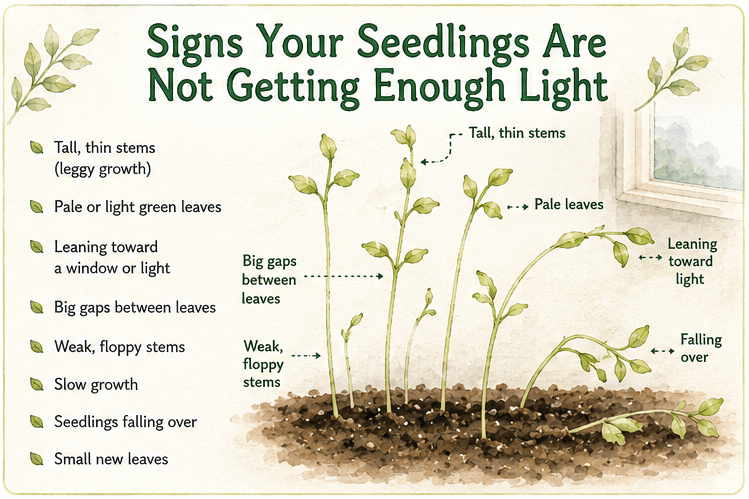
Signs Your Seedlings Are Not Getting Enough Light
Seedlings usually show clear signs when light is too weak.
Watch for:
- Tall, thin stems
- Pale green or yellow leaves
- Seedlings leaning toward the window
- Large gaps between leaves
- Slow growth
- Weak stems
- Seedlings falling over
- Small new leaves
- Plants stretching immediately after sprouting
If you see these signs, increase light as soon as possible.
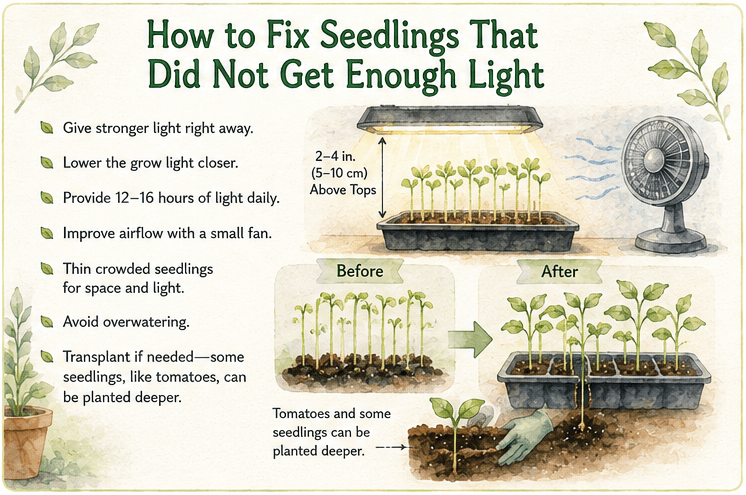
How to Fix Seedlings That Did Not Get Enough Light
If seedlings have already stretched, you can often improve them, especially if they are not too weak.
Steps to Fix Low-Light Seedlings
- Move seedlings to stronger light
- Lower the grow light if it is too far
- Keep lights on 12–16 hours daily
- Improve airflow with a small fan
- Thin crowded seedlings
- Avoid overwatering
- Transplant if seedlings need more space
Some seedlings can be transplanted slightly deeper for support. Tomatoes are a good example. But not all seedlings tolerate deep planting, so be careful.
If seedlings are extremely thin, pale, and collapsing, restarting may be better.
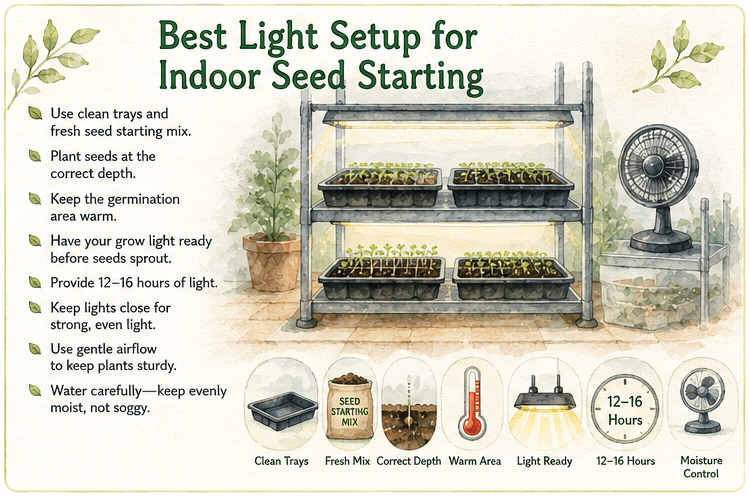
Best Light Setup for Indoor Seed Starting
A reliable indoor seed starting setup includes:
- Clean seed trays
- Fresh seed starting mix
- Correct planting depth
- Warm germination area
- Grow light ready before sprouting
- 12–16 hours of light after germination
- Light placed close enough to prevent stretching
- Gentle airflow
- Careful moisture control
This setup helps seeds germinate properly and helps seedlings grow strong immediately after sprouting.
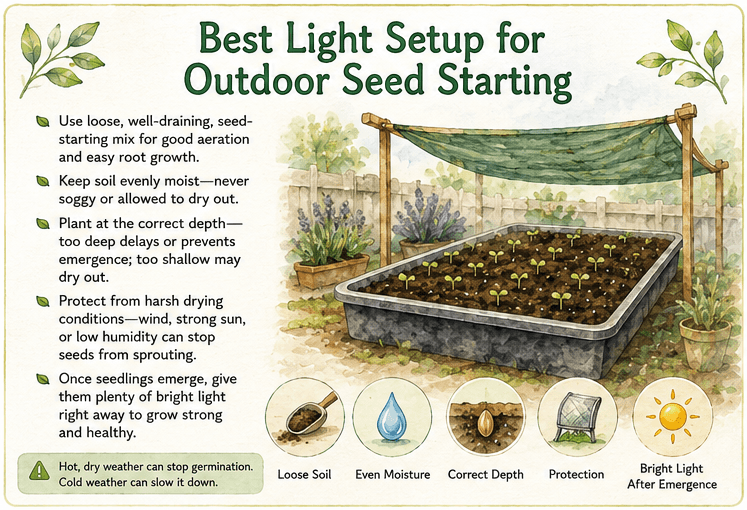
Best Light Setup for Outdoor Seed Starting
Outdoor seed starting depends on the season, weather, and seed type.
For direct sowing outdoors, follow the planting depth on the seed packet. Some seeds can be covered, while tiny seeds may need shallow planting.
Outdoor seed beds should have:
- Loose soil
- Even moisture
- Correct planting depth
- Protection from harsh drying conditions
- Enough sunlight after seedlings emerge
If the weather is very hot and dry, newly planted seeds may need protection from intense sun until they germinate.
If the weather is too cold, germination may be slow.
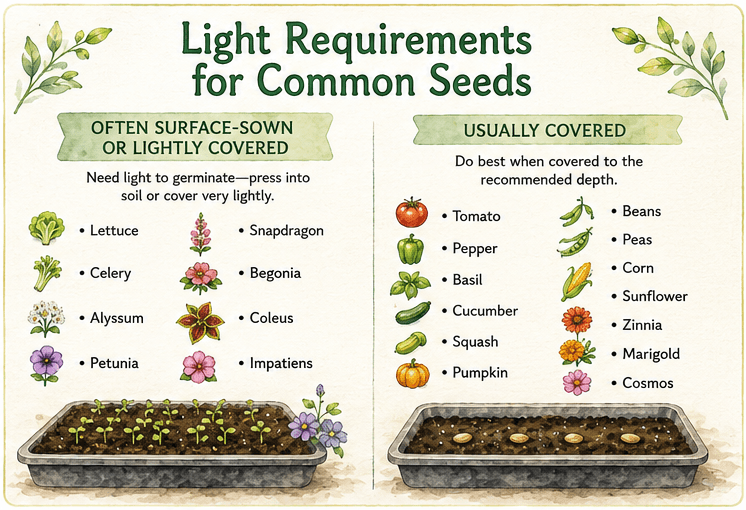
Light Requirements for Common Seeds
Different seeds have different needs, but here are general examples.
Often Surface-Sown or Lightly Covered
- Lettuce
- Celery
- Alyssum
- Petunia
- Snapdragon
- Begonia
- Coleus
- Impatiens
Usually Covered
- Tomato
- Pepper
- Basil
- Cucumber
- Squash
- Pumpkin
- Beans
- Peas
- Corn
- Sunflower
- Zinnia
- Marigold
- Cosmos
Always check the seed packet when possible, because requirements can vary by variety.
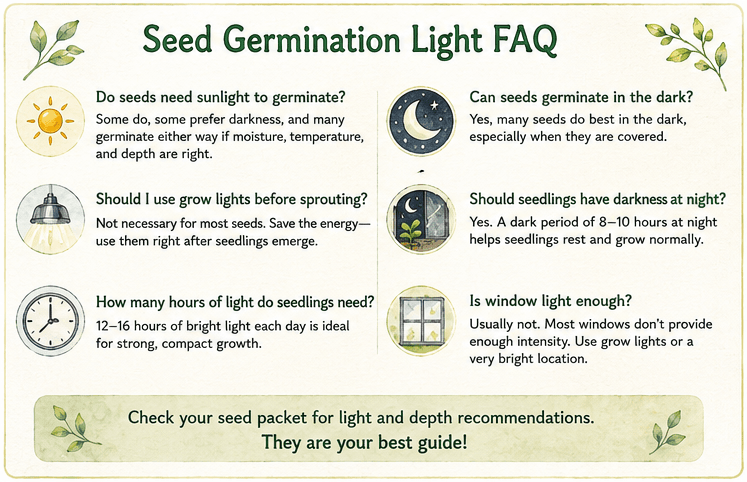
Seed Germination Light FAQ
Do seeds need sunlight to germinate?
Some do, but many do not. Most seeds need moisture, warmth, and proper planting depth more than sunlight before sprouting.
Should I put seeds under grow lights before they sprout?
You can, especially for seeds that need light to germinate. For many covered seeds, grow lights are most important after sprouting.
How many hours of light do seedlings need?
Most indoor seedlings need 12–16 hours of bright light per day after germination.
Can seeds germinate in the dark?
Yes, many seeds germinate in darkness or under soil.
Which seeds need light to germinate?
Tiny seeds such as lettuce, petunia, alyssum, snapdragon, celery, and some herbs or flowers often need light or very shallow planting.
What happens if seedlings do not get enough light?
They become tall, thin, pale, weak, and leggy.
Can seedlings get too much light?
Yes, if the light is too intense, too close, too hot, or left on too long without rest.
Should seedlings have darkness at night?
Yes. A daily dark period helps maintain a healthy growth rhythm.
Is window light enough for seedlings?
Sometimes, but often not. Grow lights are usually more reliable for indoor seed starting.
When should I turn on grow lights?
Turn on grow lights as soon as seedlings begin to emerge.
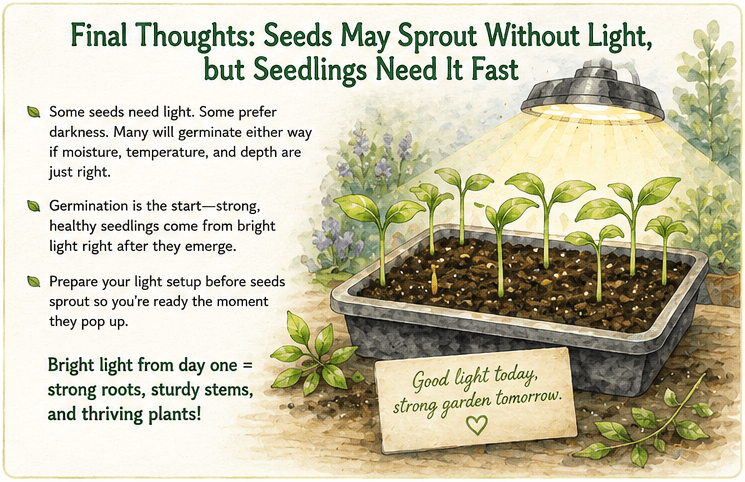
Seeds May Sprout Without Light, but Seedlings Need It Fast
Seeds do not all have the same light requirements. Some need light to germinate, some prefer darkness, and many will germinate either way if moisture, temperature, and planting depth are correct.
For beginners, the most important lesson is this:
Seeds need the right conditions to sprout. Seedlings need strong light immediately after they sprout.
If you are starting seeds indoors, prepare your light setup before germination. Once the first seedlings emerge, provide bright light for 12–16 hours per day.
Use the correct planting depth, keep the seed starting mix evenly moist, avoid harsh sun that dries the surface, and move seedlings into strong light as soon as they appear.
When seeds receive the right germination conditions and seedlings receive strong light early, they grow healthier, sturdier, and more successfully from the start.
Recommended Seeds


 1
1

 1
1

 1
1 2
2 3
3 4
4


 1
1 Mixed
Mixed
 1
1

 1
1

 1
1 2
2 3
3 4
4


 1Mixed


 1Mixed

 1
1
 1Mixed



 1
1




 1
1 2
2 3
3 4
4


 1
1


 1Mixed
 1Mixed


 1
1

 1
1 2
2 3
3 4
4


 1
1


 1
1
 1Mixed



 1Mixed
 1
1


 1Mixed
 1Mixed